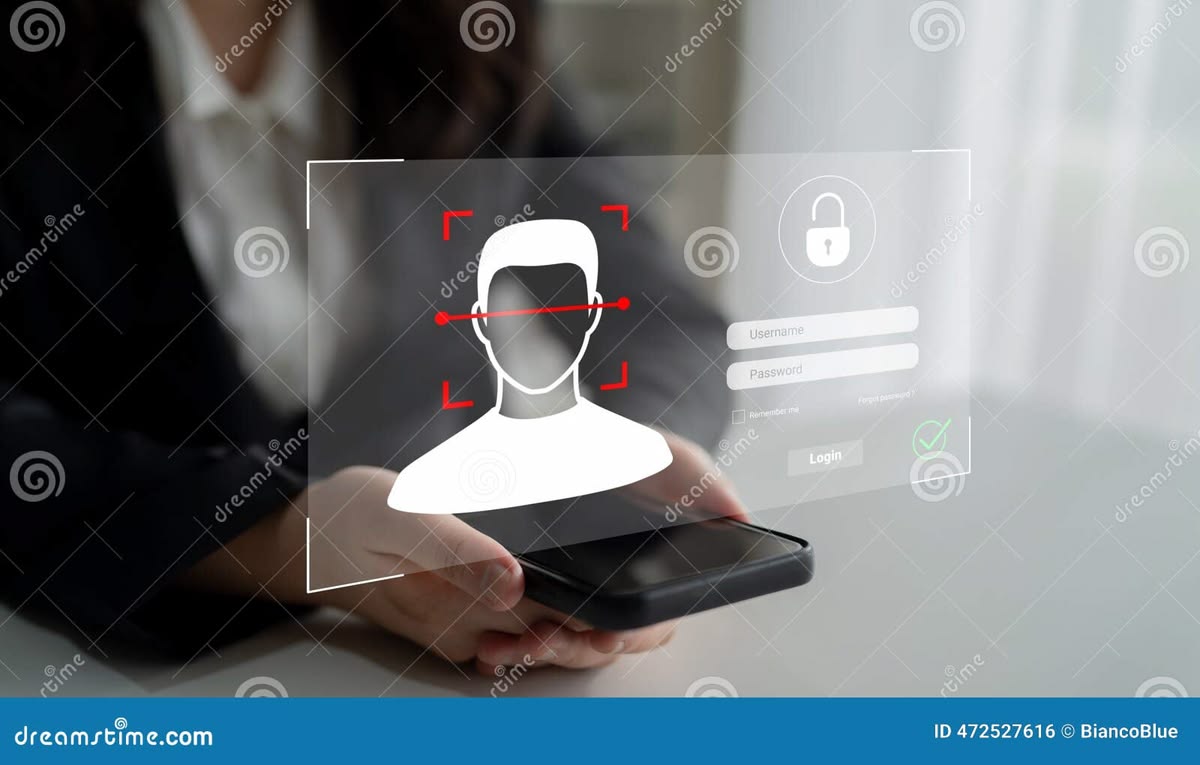
The main objective of this project is to develop a secure message transmission platform that provides multiple protection mechanisms before confidential information is accessed by an intended recipient.
The system combines three important technologies:
1. Face-Based Authentication
Facial recognition is used to verify a registered user's identity before allowing access to protected communication features. The application captures a face image and compares its extracted features with the registered user's face data.
2. AES Encryption
AES is a symmetric encryption algorithm used to convert plain text messages into ciphertext. Only a user with the correct decryption key and configuration can recover the original message.
3. Image Steganography
Steganography is the process of hiding information within another digital medium. In this project, encrypted message data is embedded into an image so that the information is not immediately visible to someone viewing the image normally.
Project objectives include:
Develop a web-based secure messaging application.
Implement face-based user authentication.
Protect confidential messages using AES encryption.
Hide encrypted messages inside digital images.
Provide message embedding and extraction functionality.
Allow authorized recipients to retrieve protected information.
Improve the privacy of digital message transmission.
Key Features & Benefits
Key Features of the Proposed System
The application contains several modules that work together to support secure communication.
1. User Registration
New users can register by providing the required account details and completing the face registration process. The system stores the necessary authentication information for future verification.
2. Face-Based Login
Registered users can access the application through facial verification. The captured face is processed and compared with the registered face representation to determine whether the user matches the enrolled account.
3. Secure Message Encryption
Before transmission, the sender's message is encrypted using AES. The encryption process converts readable text into ciphertext, helping protect the message contents from unauthorized access.
4. Image-Based Message Hiding
The encrypted message is embedded into a selected image using an appropriate steganography technique. The resulting image can be shared with the intended recipient.
5. Message Extraction
The recipient can upload or access the received image and extract the hidden encrypted information using the application's extraction module.
6. Message Decryption
After extracting the encrypted content, the recipient uses the correct AES key to recover the original readable message.
7. User Dashboard
A centralized dashboard can provide access to authentication, message encryption, image embedding, message extraction, and account management features.
Implementation Guide
Technologies and Algorithms Used
The project combines web development, biometric processing, cryptographic algorithms, and digital image processing.
Python: Used for backend programming, application logic, encryption operations, and image processing.
Flask / Django: A Python web framework can be used to manage application routes, user requests, authentication workflows, and communication between frontend and backend modules.
HTML5 and CSS3: Used to create registration pages, login screens, messaging interfaces, and dashboard layouts.
JavaScript: Supports interactive frontend functionality, form validation, and communication with backend services.
OpenCV: Can be used for face image processing, face detection, and preparation of facial data for authentication.
Face Recognition Model: A suitable facial feature extraction model can generate face representations for comparison with registered users. The actual model depends on the selected implementation.
AES Encryption: Advanced Encryption Standard is used to encrypt and decrypt message content. A secure implementation should use an authenticated encryption mode, such as AES-GCM, with proper key management and unique nonces.
Image Steganography: A technique such as Least Significant Bit (LSB) embedding can be used to hide encrypted message data inside image pixels.
Database: MySQL or SQLite can store user account information, authentication records, and message-related metadata.
Technical Specifications
System Architecture and Implementation Process
The proposed application follows a sequence of authentication, encryption, embedding, transmission, extraction, and decryption operations.
Step 1: User Registration
The user creates an account and completes the required face enrollment process. The system stores the account details and an appropriate facial representation for later verification.
Step 2: Facial Authentication
When the user attempts to log in, the application captures a face image and processes it using the selected face recognition model. The system compares the extracted representation with the registered data.
Step 3: Message Creation
After successful authentication, the sender enters the confidential message that needs to be transmitted to the intended recipient.
Step 4: AES Encryption
The application encrypts the message using AES. The encryption process produces ciphertext that cannot be understood as ordinary readable text without the appropriate decryption key.
Step 5: Image Steganography
The encrypted message is converted into a suitable data representation and embedded inside an image using the selected steganography algorithm.
Step 6: Secure Image Transmission
The resulting image is shared with the intended recipient through the application's supported communication or file-transfer mechanism.
Step 7: Message Extraction and Decryption
The recipient accesses the image, completes the required authentication, and extracts the hidden ciphertext. The application then decrypts the ciphertext using the correct AES key to display the original message.
This workflow demonstrates how multiple security techniques can be combined to protect message content and control access to application functionality.
Conclusion & Next Steps
Conclusion
Secure Face-Based Authentication and Message Transmission Using AES Encryption and Image Steganography demonstrates a layered approach to protecting digital communication. By combining facial authentication, AES encryption, and image-based information hiding, the project provides a practical example of how different security technologies can work together in a web application.
The system is useful for students exploring Python web development, biometric authentication, cryptography, and digital image processing. With future enhancements such as authenticated encryption, liveness detection, and secure key management, the application can be developed into a more comprehensive secure messaging platform.