ABSTRACT
The rapid increase in road accidents, particularly involving two-wheeler riders, highlights the critical need for advanced safety solutions that operate in real time and without relying on human intervention. Traditional helmets offer physical protection but fail to detect risky situations such as drowsiness, distraction, alcohol influence, or sudden impact. This gap demands a smarter, AI-enabled approach that enhances rider safety by integrating intelligent monitoring and automated emergency response. The proposed AI-Powered Smart Helmet with Eye-Tracking and Automated Emergency Services is an innovative solution designed to address these challenges using a combination of embedded sensors, computer vision, machine learning, and IoT-based communication modules. This system actively monitors the rider’s physiological behaviour, vehicle condition, and environmental factors to reduce the chances of accidents and to enable immediate assistance when an incident occurs.
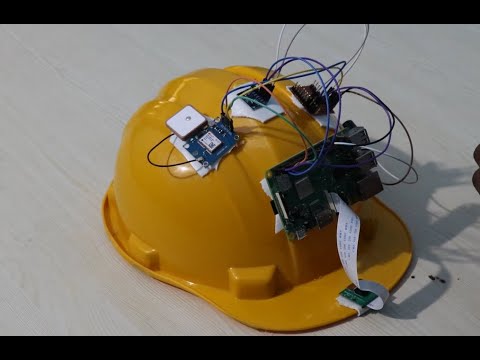
The core component of the system is an AI-based eye-tracking module that continuously analyzes the rider’s eye movements using a miniature camera positioned inside the helmet. Advanced deep learning algorithms detect signs of fatigue, drowsiness, distraction, or micro-sleep events with high accuracy. The helmet also integrates an accelerometer/gyroscope (MPU6050) to detect sudden impacts, abnormal tilting, or fall events. Additionally, optional modules such as an alcohol sensor can be used to prevent drunk driving by disabling ignition if unsafe conditions are detected. All sensor outputs are processed using a Raspberry Pi or similar embedded controller capable of handling real-time image processing, sensor fusion, and decision-making. Upon detecting any dangerous condition, the system activates a multi-layer response mechanism that includes audible alerts, visual warnings, and automated notification to predefined emergency contacts or control centres.
A key feature of the helmet is its Automated Emergency Services System, which uses a GSM/GPS module to send the rider’s exact location via SMS or cloud-based platforms in case of a crash, unconsciousness, or critical health signs. This fully automated alert system significantly reduces the response time in medical emergencies by eliminating the need for manual intervention. The helmet also supports continuous data logging, which can be utilized for post-accident analysis or as a black-box for insurance and legal investigations.
The project aims to enhance road safety by combining modern AI techniques with embedded hardware for real-time monitoring. The solution provides a scalable, cost-effective, and user-friendly product suitable for daily commuters, professional riders, delivery personnel, and industrial workers. By integrating smart sensing, machine learning, reliable communication, and automated emergency response, the proposed AI-powered helmet offers a transformative advancement in rider safety. This innovative approach has the potential to reduce fatal accidents, improve emergency management, and promote responsible riding behaviour across diverse environments.
INTRODUCTION
Road safety has become a major global concern, especially for two-wheeler riders who are significantly more vulnerable to accidents compared to other vehicle users. According to international transportation reports, a substantial percentage of fatal road accidents involve motorcyclists due to factors such as over-speeding, drowsiness, distracted driving, and the lack of protective technologies. While conventional helmets offer essential physical protection during crashes, they do not provide proactive measures to prevent accidents or help riders in emergency situations. As a result, there is a growing demand for smart, intelligent, and automated safety systems that can save lives by detecting dangers in real time. This need has driven the development of the AI-Powered Smart Helmet with Eye-Tracking and Automated Emergency Services, aimed at transforming traditional helmets into advanced safety devices equipped with modern artificial intelligence and sensor-based technologies.
The concept of a smart helmet has evolved to include a wide range of functionalities beyond basic impact protection. Modern advancements in computer vision, embedded systems, and IoT have made it possible to integrate sophisticated features, such as real-time eye tracking, fatigue detection, collision sensing, and automatic communication with emergency services. Eye-tracking technology, for instance, uses an internal miniature camera and deep learning algorithms to analyze the rider’s eyelid movement, blink rate, gaze direction, and patterns of drowsiness. This enables the helmet to detect early signs of fatigue or micro-sleep, which are among the most common causes of road accidents. Such detection occurs instantly and can trigger alerts to keep the rider attentive, thereby preventing potential mishaps.
Another critical aspect of the proposed system is the incorporation of multiple sensors, such as the MPU6050 accelerometer and gyroscope, which detect sudden impacts, falls, skidding, or abnormal movements of the rider. This sensor data is crucial for evaluating accident severity and determining whether immediate assistance is needed. In the event of a crash, the helmet’s automated emergency module activates a GSM/GPS system that sends the rider’s exact geographical location to predefined emergency contacts. This rapid communication can drastically reduce rescue time, increase survival chances, and ensure that help arrives even if the rider is unconscious or unable to call for help. Additionally, the helmet can be equipped with an alcohol sensor to prevent drunk driving by blocking ignition or issuing strong warnings.
The integration of a Raspberry Pi or similar embedded controller acts as the brain of the system, handling real-time image processing, AI model execution, data fusion, and communication protocols. The use of machine learning enables the helmet to continuously learn and adapt to the rider’s behaviour, improving detection accuracy over time. Furthermore, IoT connectivity allows seamless communication with smartphones, cloud services, or emergency networks, creating an ecosystem for safety monitoring. This makes the helmet not only reactive during emergencies but also preventive by addressing risk factors before they escalate into accidents.
The introduction of this smart helmet technology has the potential to create a significant societal impact by reducing accident rates, protecting riders, and promoting safer road practices. It is particularly beneficial for delivery riders, long-distance travellers, and industrial workers who operate in hazardous environments. By merging artificial intelligence with personal protective equipment, the project represents a forward-thinking approach to road safety engineering. As technology continues to evolve, such intelligent safety systems may soon become a standard requirement for two-wheeler riders worldwide. The proposed AI-powered smart helmet exemplifies how innovation can bring meaningful change by safeguarding lives and enhancing the overall riding experience.
Block Diagram