ABSTRACT
The Smart AI Chatbot with Voice Interface is an intelligent, voice-enabled system developed to provide natural, hands-free human–computer interaction. With the rapid growth of artificial intelligence and voice technologies, traditional keyboard- and mouse-based systems are becoming less efficient for many users. This project aims to design and implement a smart chatbot that can understand human speech, process user queries intelligently, and respond through spoken output, thereby creating a more intuitive and user-friendly interaction model.
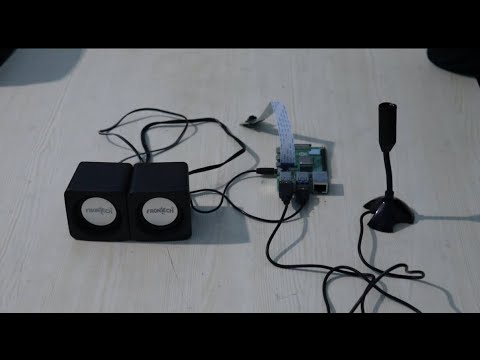
The proposed system is implemented on a Raspberry Pi 4 Model B using Python programming language. It is designed to operate primarily in offline mode, which ensures data privacy, low latency, and reliable performance even in environments with limited or no internet connectivity. Offline speech recognition is achieved using the Vosk speech recognition toolkit, which converts spoken voice input into text with good accuracy. The recognized text is processed by the chatbot logic to analyze user intent and generate an appropriate response. The generated response is then converted into natural-sounding speech using a text-to-speech engine, enabling smooth voice-based communication.
This voice-based approach eliminates the dependency on traditional input devices such as keyboards and mice, making the system highly accessible for elderly users, visually impaired individuals, and users with limited technical knowledge. The system demonstrates efficient integration of speech recognition, artificial intelligence logic, and text-to-speech technologies on an embedded platform.
The Smart AI Chatbot with Voice Interface has wide applications in personal voice assistants, educational support systems, information kiosks, and assistive technologies. The proposed solution is lightweight, cost-effective, and easily scalable. Future enhancements may include integration of advanced AI language models, multilingual support, conversational memory, and improved natural language understanding, making the system more intelligent and versatile.
INTRODUCTION
In recent years, Artificial Intelligence (AI) has significantly transformed the way humans interact with machines. Traditional human–computer interaction methods mainly rely on keyboards, mice, and touch-based interfaces, which may not be convenient or accessible for all users. Voice-based interaction provides a more natural, efficient, and user-friendly approach, allowing users to communicate with systems using spoken language. As a result, voice-enabled intelligent systems such as virtual assistants and chatbots are gaining widespread popularity.
A chatbot is a software application designed to simulate human-like conversation by understanding user input and generating appropriate responses. When combined with voice technologies, chatbots can provide hands-free interaction, making them highly useful for elderly users, visually impaired individuals, and users with limited technical skills. Voice-based AI chatbots are increasingly being used in areas such as personal assistance, education, healthcare, customer support, and information systems.
This project, titled “Smart AI Chatbot with Voice Interface”, focuses on the design and development of an intelligent voice-based chatbot system implemented on a Raspberry Pi 4 Model B using Python. The system listens to the user’s speech, converts it into text using offline speech recognition techniques, processes the input through chatbot logic, and responds to the user through synthesized voice output. The chatbot is designed to operate primarily in offline mode, ensuring improved privacy, reduced dependency on internet connectivity, and reliable performance.
The proposed system demonstrates the practical integration of artificial intelligence, speech recognition, and text-to-speech technologies on an embedded platform. By eliminating the need for traditional input devices, the system enhances accessibility and usability while providing an efficient and interactive human–computer communication experience. This project serves as a foundation for developing advanced voice-controlled AI systems and smart assistant applications in the future.
OBJECTIVES
To develop a voice-enabled chatbot system
To create a chatbot that allows users to interact with the system using spoken language instead of traditional keyboard or mouse input.
To implement offline speech recognition
To convert user speech into text accurately using offline speech recognition techniques, ensuring reliable operation without internet dependency.
To generate intelligent responses using AI logic
To analyze the recognized text and generate meaningful and context-appropriate responses through chatbot logic or AI-based processing.
To implement text-to-speech conversion
To convert the chatbot’s text responses into natural-sounding voice output for effective user communication.
To ensure offline and privacy-focused operation
To design the system to function primarily in offline mode, improving data privacy and usability in low-connectivity environments.
To deploy the system on an embedded platform
To implement and test the chatbot on a Raspberry Pi 4 Model B, demonstrating the feasibility of AI-based voice systems on embedded hardware.
To create a user-friendly and accessible system
To make the system easy to use for elderly users, visually impaired individuals, and non-technical users through hands-free interaction.
Block Diagram