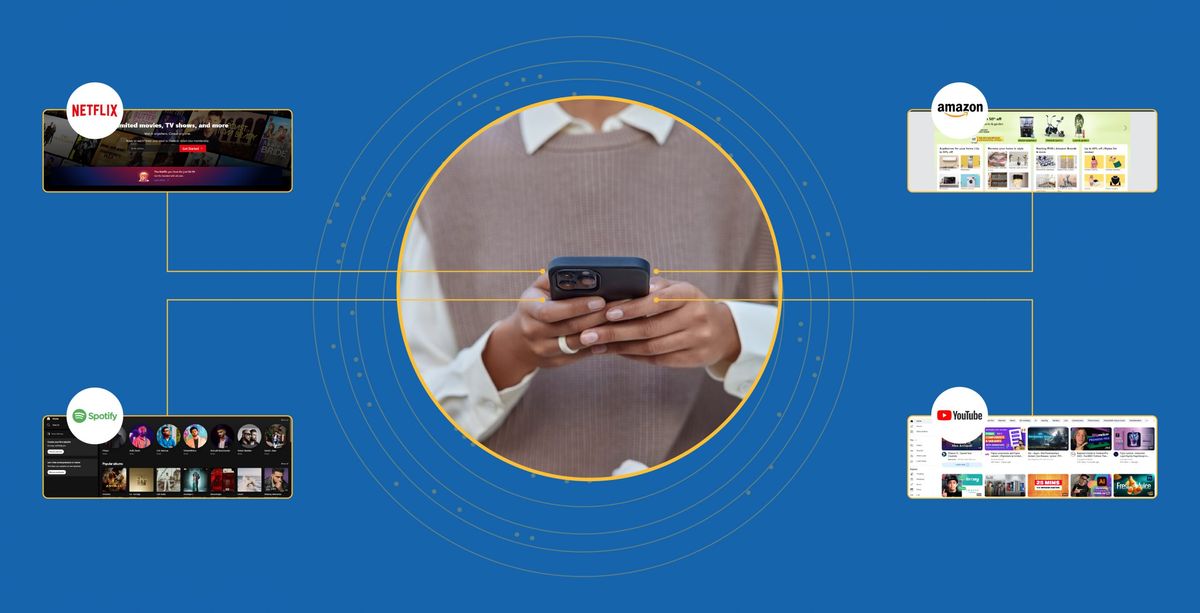
Online shopping platforms offer thousands of products across different categories. Finding relevant products among so many choices can be difficult for customers. Personalized product recommendations help solve this problem by suggesting items based on customer interests, browsing activity, and previous purchases.
The E-Commerce Recommendation Engine Using Machine Learning for Personalized Product Suggestions project focuses on developing an intelligent recommendation system for online shopping platforms. It analyzes customer interactions and product information to identify shopping patterns and generate relevant recommendations.
Machine learning algorithms can learn from user preferences and product relationships to improve recommendation quality. This project demonstrates how artificial intelligence can make e-commerce platforms more personalized, user-friendly, and engaging.
Key Features & Benefits
Working Methodology
The recommendation engine collects information from customer interactions, such as product views, searches, ratings, cart activity, and purchase history. Product information, including categories, descriptions, and prices, can also be used to understand similarities between products.
The collected information is processed and converted into useful features for the recommendation model. Depending on the implementation, collaborative filtering, content-based filtering, or a hybrid recommendation approach can be applied.
Collaborative filtering identifies similarities between users based on their shopping behaviour. Content-based filtering recommends products with characteristics similar to items a customer has previously viewed or purchased. A hybrid approach combines both techniques to generate recommendations using multiple sources of information.
Basic Workflow:
Register customers and collect shopping interaction data.
Store product information and customer activity.
Preprocess the collected data.
Identify customer preferences and product similarities.
Train or configure the recommendation algorithm.
Generate personalized product suggestions.
Display recommended products on the shopping platform.
Update recommendations as new customer interactions become available.
Implementation Guide
Features and Technologies
Key Features
Personalized product recommendations.
Product suggestions based on browsing history.
Recommendations using purchase and rating history.
Development Tools: Jupyter Notebook, VS Code and Git.
Applications: Online shopping websites, fashion stores, electronics marketplaces, grocery platforms, digital product stores, and personalized shopping applications.
Technical Specifications
Implementation and Future Scope
The implementation starts by creating a product dataset containing details such as product names, categories, descriptions, prices, and ratings. Customer interaction data is then collected to understand individual shopping preferences.
The data is cleaned and transformed before being supplied to the recommendation model. Algorithms such as K-Nearest Neighbors and collaborative filtering techniques can identify similar products or customers. Content-based filtering can also use product descriptions and categories to suggest relevant items.
The backend processes recommendation requests and returns suitable products to the frontend. The website displays these suggestions through sections such as Recommended for You, Similar Products, and Frequently Viewed Items.
Advantages
Improves personalized shopping experiences.
Helps customers discover relevant products.
Reduces the time required to find products.
Supports product discovery across categories.
Helps businesses understand customer preferences.
Provides opportunities for improving customer engagement.
Future Enhancements
Integrate deep learning-based recommendation models.
Add real-time recommendations based on browsing activity.
Use natural language processing to understand product descriptions.
Develop mobile application support.
Introduce voice-based product search and suggestions.
Add recommendation explanations to improve transparency.
Improve recommendations for new users and newly added products.
Conclusion & Next Steps
Conclusion and References
The E-Commerce Recommendation Engine Using Machine Learning demonstrates how intelligent algorithms can improve product discovery and personalization in online shopping platforms. By analyzing customer behaviour, product information, and shopping preferences, the system can generate relevant product suggestions.
This project is suitable for students interested in machine learning, Python development, data science, full-stack development, and artificial intelligence. It also provides practical experience in building intelligent features for modern e-commerce applications.