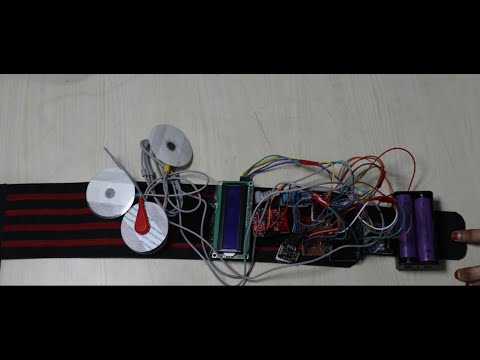
Abstract:
Advancements in wearable technology and artificial intelligence (AI) have opened new possibilities for real-time health monitoring, enabling early detection of critical health issues and improving patient outcomes. This project focuses on the design and implementation of an AI-enabled wearable system capable of continuously monitoring vital signs such as heart rate, body temperature, blood oxygen saturation (SpO₂), and respiration rate. The wearable device integrates biomedical sensors with a low-power microcontroller and wireless communication module to transmit data to a cloud-based AI platform for analysis. Using machine learning algorithms, the system detects anomalies, predicts potential health risks, and sends alerts to healthcare providers or caregivers through a mobile application. This approach ensures proactive health management, particularly for elderly patients, individuals with chronic diseases, and those in remote areas. The proposed solution emphasizes portability, low power consumption, accuracy, and user comfort, making it suitable for both clinical and home healthcare applications.
Introduction:
Healthcare systems worldwide face growing challenges in delivering timely and effective medical care due to increasing populations, rising rates of chronic diseases, and the need for continuous patient monitoring. Traditional health monitoring methods often rely on periodic check-ups or hospital-based measurements, which can delay the detection of early symptoms and hinder immediate intervention.
The emergence of wearable devices equipped with biomedical sensors offers a promising solution to these limitations. These devices can continuously collect physiological data, providing a comprehensive picture of a patient’s health in real-time. However, the sheer volume of data generated requires intelligent processing to extract meaningful insights and detect abnormalities promptly.
Artificial intelligence (AI), particularly machine learning (ML), enhances the capabilities of wearable devices by enabling automated data analysis, anomaly detection, and predictive health assessments. When combined with wireless communication technologies such as Bluetooth Low Energy (BLE) and Wi-Fi, AI-enabled wearables can securely transmit health data to cloud servers or edge devices for further processing and storage.
This project aims to develop a real-time vital sign monitoring system using AI-enabled wearable devices. The system integrates multiple sensors, a microcontroller (e.g., ESP32 or similar low-power platform), wireless connectivity, and a cloud-based AI engine to monitor parameters such as heart rate, body temperature, SpO₂, and respiratory rate. The device not only measures and displays the data but also analyzes it in real-time, providing instant alerts in case of abnormal readings.
The significance of this work lies in its potential to transform healthcare delivery by enabling continuous, remote, and intelligent monitoring, which can lead to early diagnosis, reduced hospitalization costs, and improved patient quality of life. The proposed system is particularly valuable for elderly individuals, patients in rural areas, and those requiring post-operative monitoring.
Objectives
1. Continuous Vital Sign Monitoring – Measure key physiological parameters such as heart rate, SpO₂, body temperature, and respiration rate in real time.
2. AI-Driven Anomaly Detection – Implement AI/ML algorithms for early detection of abnormal patterns and health risks.
3. Hybrid Edge-Cloud Processing – Enable preliminary AI processing on the device (Edge AI) for offline operation, while leveraging cloud analytics for advanced predictions.
4. Low-Power Operation – Optimize hardware and firmware to extend battery life for prolonged use without frequent recharging.
5. Secure Data Handling – Implement encryption and privacy-preserving techniques to comply with healthcare data protection standards.
6. User-Friendly Interface – Provide seamless integration with mobile and web applications for visualization, alerts, and reporting.
Block Diagram
Immediate Download:
1. Synopsis
2. Rough Report
3. Software code
4. Technical support
Hardware Kit Delivery:
1. Hardware kit will deliver 4-10 working days (based on state and city)
2. Packing and shipping changes applicable (based on kit size, state ,city)