Introduction to Advanced Traffic Sign Detection Using AI
Road traffic signs provide essential information to drivers about speed limits, road conditions, warnings, restrictions, and directions. Recognising these signs correctly is important for road safety and intelligent transportation systems. With the advancement of Artificial Intelligence and Computer Vision, automated traffic sign detection has become an important research area in autonomous driving and smart mobility applications.
The Advanced Traffic Sign Detection System with Artificial Intelligence is a computer vision project designed to identify and classify traffic signs from images or live camera feeds. The system uses trained machine learning or deep learning models to analyse visual information and recognise different traffic sign categories.
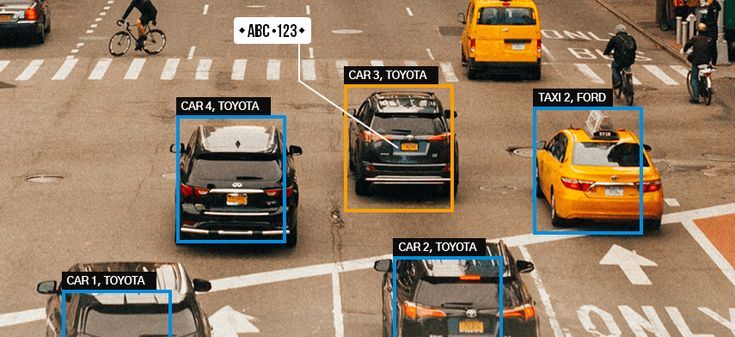
Modern object detection algorithms such as YOLO (You Only Look Once) can identify traffic signs and locate their positions within an image using bounding boxes. The detected signs can then be classified into categories such as speed limits, stop signs, warning signs, no-entry signs, and other supported road symbols.
This project is suitable for students interested in Artificial Intelligence, Machine Learning, Deep Learning, Python Programming, Computer Vision, and autonomous vehicle technologies.
Key Features & Benefits
Working Principle of the Traffic Sign Detection System
The proposed traffic sign detection system follows an image acquisition, preprocessing, object detection, and classification workflow.
The implementation involves the following stages:
1. Image Acquisition: Capture road images or video frames using a webcam, dash camera, or recorded traffic video.
2. Dataset Collection: Collect labelled traffic sign images from publicly available datasets such as GTSRB and suitable object detection datasets.
3. Image Preprocessing: Resize images, normalize pixel values, and prepare the dataset for model training.
4. Data Annotation: Label traffic signs using bounding boxes and assign the appropriate class identifiers.
5. Model Training: Train a deep learning object detection model such as YOLO using the prepared dataset.
6. Real-Time Detection: Process incoming video frames and identify traffic signs present in the camera view.
7. Classification: Determine the detected traffic sign category based on the model's predictions.
8. Result Visualization: Draw bounding boxes, class labels, and confidence scores around detected traffic signs.
9. Alert Generation: Optionally generate visual or audio notifications when specific traffic signs are detected.
This workflow allows the application to recognise multiple traffic signs within images and video frames, depending on the trained model and dataset.
Implementation Guide
Technologies and Tools Used
The project combines Python programming, deep learning, and computer vision technologies.
Programming Language: Python is used for dataset preparation, model training, image processing, and real-time detection.
Deep Learning Frameworks: PyTorch or TensorFlow can be used to develop and train neural network models.
YOLO Object Detection: YOLOv8 or another suitable YOLO architecture can identify traffic signs and predict their locations in images.
Computer Vision: OpenCV is used for webcam integration, video processing, image resizing, and detection visualization.
Machine Learning: Scikit-learn can support additional classification experiments and performance analysis.
Dataset Management: Roboflow or annotation tools such as LabelImg can help prepare and annotate traffic sign datasets.
Data Processing: NumPy and Pandas support numerical operations and dataset management.
Visualization: Matplotlib can display training metrics, detection results, and model performance.
Frontend Development: HTML, CSS, JavaScript, React.js, or Streamlit can provide an interactive application interface.
Backend Development: Flask or FastAPI can connect the trained detection model with a web application.
Deployment: Suitable cloud platforms or local GPU-enabled systems can be used to deploy and demonstrate the application.
Students can select model architectures according to dataset size, hardware availability, detection speed, and accuracy requirements.
Technical Specifications
Key Features and Real-World Applications
An AI-powered traffic sign detection application can provide several important features for intelligent transportation research.
Automatic Traffic Sign Detection: Identify traffic signs from uploaded images and live camera feeds.
Multiple Sign Classification: Recognise supported traffic sign categories, including speed limits, stop signs, warning signs, and directional signs.
Real-Time Video Processing: Analyse successive video frames to detect traffic signs while a camera is running.
Bounding Box Visualization: Highlight detected signs with bounding boxes and corresponding class labels.
Confidence Score Display: Display model confidence scores for detected objects.
Multiple Object Detection: Detect more than one traffic sign within the same image or video frame.
Detection History: Store previous detection results for analysis and demonstration.
Performance Evaluation: Display precision, recall, mAP, and inference speed to evaluate the trained model.
Possible Applications
Autonomous driving research.
Advanced driver assistance systems (ADAS).
Intelligent transportation systems.
Smart city traffic management.
Road safety monitoring.
Driver assistance applications.
Traffic sign inventory and mapping.
Automotive computer vision research.
For real-world use, the detection model must be evaluated under different weather conditions, lighting environments, camera angles, and road scenarios. An academic prototype should not be treated as a certified vehicle safety system.
Conclusion & Next Steps
Advantages, Future Enhancements and Conclusion
The Advanced Traffic Sign Detection System with Artificial Intelligence is a practical mini project that demonstrates how deep learning and computer vision can be applied to intelligent transportation systems.
One major advantage is the ability to automate traffic sign identification using image and video data. Object detection models such as YOLO can locate multiple signs within a single frame, making them useful for real-time computer vision experiments.
The project provides students with practical knowledge of Python programming, dataset annotation, object detection, neural network training, image processing, and model evaluation.
Future Enhancements
The application can be extended through several advanced features:
Integration of newer YOLO architectures for improved detection performance.
Deployment on NVIDIA Jetson or other edge AI devices.
Integration with vehicle-mounted cameras.
GPS-based location tagging of detected traffic signs.
Text-to-speech alerts for detected road instructions.
Recognition of damaged, faded, or partially obstructed traffic signs.
Night-time traffic sign detection using suitable image enhancement techniques.
Integration with autonomous vehicle simulation environments.
Development of a mobile-based traffic sign recognition application.
For improved accuracy, the training dataset should contain diverse traffic signs captured under different lighting, weather, distance, and orientation conditions. Model evaluation should include precision, recall, mAP, and inference speed rather than relying only on training accuracy.
Conclusion
The Advanced Traffic Sign Detection System with Artificial Intelligence is an interesting mini project for students exploring AI, deep learning, and computer vision. By combining traffic sign datasets, YOLO-based object detection, OpenCV, and Python, developers can build an intelligent application that identifies and classifies road signs from images and live video.
This project provides a practical foundation for further research in autonomous driving, advanced driver assistance systems, and intelligent transportation technologies.
Build Your AI and Computer Vision Project with Aislyn Technologies
Aislyn Technologies, Bangalore, provides project development guidance and technical support for students interested in Artificial Intelligence, Machine Learning, Deep Learning, Python, YOLO Object Detection, and Computer Vision projects.
Contact Details
Aislyn Technologies, Bangalore
Phone: +91 97395 94609
Email: info@aislyntech.com
Website: https://aislyn.in
Contact us today to start building your AI and Computer Vision project in Bangalore with our expert support!