ABSTRACT
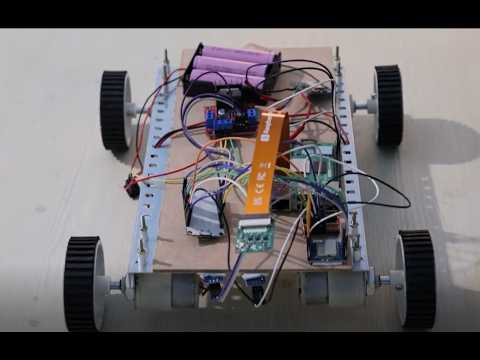
In modern military operations, surveillance and monitoring of battlefield environments are crucial for ensuring the safety of soldiers and maintaining operational efficiency. However, continuous monitoring by human personnel in hazardous and hostile areas can expose them to significant risks. To address this challenge, the use of robotic systems equipped with intelligent detection capabilities has become increasingly important. This project presents the design and development of a Military Robot for Object Detection using a Raspberry Pi platform and computer vision techniques.
The proposed system utilizes a Raspberry Pi microcomputer integrated with a camera module to capture real-time images and video from the surrounding environment. These images are processed using computer vision and machine learning algorithms to detect objects and identify human presence within the monitored area. The system is capable of recognizing specific conditions such as a fallen person, visible wounds, or potential signs of injury. By analyzing visual patterns, the robot can identify abnormal situations and generate alerts to inform authorized personnel.
To ensure timely communication, the system incorporates the Twilio communication API to send alert notifications directly to mobile devices. Whenever an unusual event or object is detected, the system automatically transmits notification messages along with relevant information. In addition, a web-based monitoring platform is developed to provide remote access to the surveillance system. The web application includes user registration and login functionality to ensure secure access, and it allows authorized users to view live camera feeds and monitoring data through a browser interface.
The integration of robotics, computer vision, and web technologies enables the system to function as an intelligent surveillance solution for military environments. By automating object detection and alert mechanisms, the proposed robot reduces the need for direct human involvement in dangerous areas while improving situational awareness and response time. This system can assist military personnel in monitoring remote locations, detecting injured individuals, and responding quickly to emergency situations.
INTRODUCTION
In recent years, the use of robotic systems has increased significantly in various fields such as healthcare, agriculture, security, and military operations. Among these applications, military robotics plays an important role in improving safety, efficiency, and operational capability in hostile and dangerous environments. Military personnel often face life-threatening situations while performing surveillance, reconnaissance, and rescue operations in conflict zones. Continuous monitoring of such areas is difficult for human soldiers due to the presence of threats such as enemy attacks, landmines, and harsh environmental conditions. Therefore, the development of intelligent robotic systems capable of performing surveillance and object detection tasks has become essential.
A military robot equipped with advanced sensing and vision capabilities can assist soldiers by monitoring remote locations and detecting potential threats or emergency situations. These robots can capture real-time images or videos from the surrounding environment and analyze them using computer vision techniques. By integrating artificial intelligence and embedded systems, robots can identify objects, detect human presence, and recognize unusual situations without requiring constant human intervention. This significantly reduces the risk faced by military personnel and improves the effectiveness of surveillance operations.
Object detection is an important area of computer vision that focuses on identifying and locating objects within images or video streams. In the context of military applications, object detection can be used to recognize humans, suspicious objects, weapons, or injured personnel in a monitored area. Modern machine learning and deep learning algorithms such as convolutional neural networks (CNN) and object detection frameworks like YOLO (You Only Look Once) and SSD (Single Shot Detector) have shown remarkable performance in detecting objects with high accuracy and speed. These techniques enable real-time detection, making them suitable for robotic surveillance systems.
In addition to object detection, the proposed system also focuses on identifying emergency situations such as fall detection and injury detection. By analyzing the posture and body orientation of a detected person, the system can determine whether an individual has fallen or is in a potentially injured condition. This feature is particularly important in military environments where soldiers may become injured during combat or rescue operations. When such abnormal conditions are detected, the system automatically triggers an alert mechanism and sends notifications through the monitoring platform and mobile messaging services. This enables quick response and immediate assistance, thereby improving the safety of military personnel.
The Raspberry Pi is a compact and powerful single-board computer widely used in embedded system applications. It provides sufficient computational power, connectivity options, and compatibility with various sensors and modules. Due to its affordability, small size, and flexibility, the Raspberry Pi is an ideal platform for developing intelligent robotic systems. By integrating a Raspberry Pi camera module with the Raspberry Pi board, the system can capture high-quality images and video streams for processing. The captured images are analyzed using image processing techniques to detect objects, identify human presence, and recognize abnormal situations such as falls or injuries.
Furthermore, the system can also integrate a GPS module to provide real-time location information of the robot. This allows military personnel to track the exact position of the robot during surveillance operations. If any abnormal situation such as a fallen or injured person is detected, the system can send alerts along with the location details through web monitoring platforms and mobile messaging services. This improves the effectiveness of monitoring and helps authorities respond quickly to emergency situations in the field.
OBJECTIVES
The main objective of this project is to design and develop a military surveillance robot capable of detecting objects and monitoring critical situations using computer vision techniques. The system aims to improve safety, surveillance efficiency, and response time in dangerous environments where human monitoring is difficult or risky.
The specific objectives of this project are as follows
1. To design and develop a military robot using the Raspberry Pi platform for surveillance and monitoring purposes.
2. To integrate a Raspberry Pi camera module to capture real-time images and video from the surrounding environment.
3. To implement object detection techniques using computer vision algorithms in order to identify objects and detect human presence within the monitored area.
4. To analyze captured images using machine learning methods to detect abnormal situations such as a fallen person or possible injuries.
5. To develop an automated alert system using Twilio API that sends notification messages to authorized users when suspicious or emergency conditions are detected.
6. To design and develop a web-based monitoring system that allows users to register, log in, and view live camera feeds from the robot.
7. To improve real-time surveillance capability and provide quick response to emergency situations in military environments.
8. To demonstrate the integration of robotics, embedded systems, and artificial intelligence for intelligent monitoring and security applications.
9. To detect abnormal human conditions such as fall detection and injury detection using computer vision techniques.
10. To track the location of the robot using GPS and send alerts to the monitoring system.
Block Diagram