ABSTRACT:
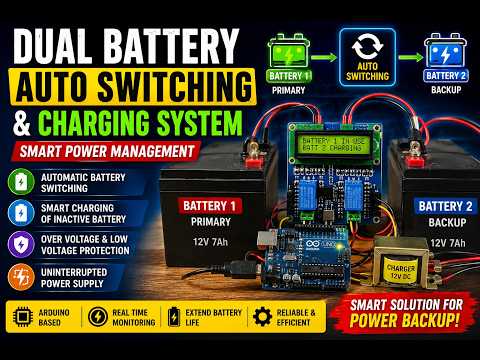
The increasing demand for reliable and uninterrupted power in battery-operated electric vehicles, robotic systems, and portable embedded applications has highlighted the need for intelligent battery management techniques. Conventional battery-powered systems generally rely on a single battery source or manual battery switching, which often results in unexpected power interruptions, uneven battery utilization, reduced battery lifespan, and inefficient charging. To overcome these limitations, this project presents an Intelligent Hybrid Battery Management System (HBMS) that provides automatic battery switching, intelligent charging control, real-time monitoring, and data logging using a Raspberry Pi-based embedded platform.
The proposed system employs two rechargeable batteries operating in an alternating manner to ensure continuous power supply to a DC motor. A Raspberry Pi acts as the central controller, continuously monitoring battery voltage, battery current, and motor current through ADS1115 Analog-to-Digital Converters (ADCs) interfaced with ACS712 current sensors and voltage sensing circuits. The measured electrical parameters are processed in real time to determine the operational status of each battery.
An MPU6050 accelerometer is integrated into the system to detect movement. The motor is activated only when movement is detected and continues operating until no movement is observed for a predefined duration of ten seconds. This intelligent motion-based control significantly reduces unnecessary power consumption by automatically disconnecting the motor during idle conditions.
The system continuously evaluates the voltage level of both batteries. When the active battery voltage falls below a predefined threshold, the Raspberry Pi automatically disconnects the depleted battery and switches the load to the secondary battery using relay modules, ensuring uninterrupted motor operation. Simultaneously, the discharged battery is connected to an XL4015 DC-DC charging module through dedicated charging relays, enabling automatic recharging while the other battery powers the load. Charging is automatically terminated once the battery reaches the predefined charging voltage, preventing overcharging and extending battery life.
To improve system reliability, motor current measurements are enabled only when the motor is in operation, eliminating false current readings during idle periods. Battery voltage, motor voltage, battery currents, motor current, movement status, and active battery information are periodically recorded into a CSV file at fixed time intervals. This data logging capability enables detailed performance analysis, battery health evaluation, energy consumption studies, and future predictive maintenance.
The developed Hybrid Battery Management System provides an efficient and autonomous solution for battery utilization by integrating intelligent battery switching, automatic charging control, movement-based motor management, real-time electrical parameter monitoring, and continuous data acquisition into a single embedded platform. The proposed system improves battery utilization efficiency, minimizes downtime, enhances battery lifespan, reduces manual intervention, and ensures uninterrupted operation of battery-powered systems. Owing to its low-cost implementation, scalability, and intelligent control features, the system is suitable for applications such as electric vehicles, mobile robots, autonomous platforms, industrial automation, portable electronic equipment, and other embedded energy management systems.
INTRODUCTIONS:
The rapid growth of battery-powered systems such as electric vehicles, autonomous robots, portable electronic devices, and industrial automation has increased the demand for efficient and reliable battery management solutions. Batteries serve as the primary energy source for these systems, making their proper utilization essential for ensuring continuous operation, improved performance, and longer service life. Conventional battery-powered systems typically rely on a single battery or require manual switching between multiple batteries, which can lead to unexpected power interruptions, uneven battery discharge, reduced battery lifespan, and inefficient energy utilization. Therefore, the development of intelligent battery management systems has become increasingly important to optimize battery performance and ensure uninterrupted power delivery.
A Battery Management System (BMS) is responsible for monitoring battery parameters such as voltage, current, charging status, and operating conditions while protecting batteries from overcharging, deep discharge, and excessive current. Although commercial BMS solutions provide basic protection functions, many of them do not offer intelligent battery switching, automatic charging of inactive batteries, movement-based load control, or continuous performance logging. These limitations reduce the overall efficiency and reliability of battery-powered systems, especially in applications that require uninterrupted operation.
This project presents an Intelligent Hybrid Battery Management System (HBMS) developed using a Raspberry Pi as the main controller. The proposed system manages two rechargeable batteries by automatically selecting the appropriate battery based on its voltage level and seamlessly switching the load whenever the active battery becomes weak. This automatic switching mechanism ensures continuous power supply to the connected DC motor without requiring any manual intervention.
To improve energy efficiency, an MPU6050 accelerometer is integrated into the system to detect movement. The motor is activated only when movement is detected and remains operational until no movement is observed for a predefined time interval. This intelligent motion-based control minimizes unnecessary power consumption during idle periods and extends battery operating time.
The system continuously monitors battery voltages, motor voltage, battery currents, and motor current using ADS1115 Analog-to-Digital Converters (ADC) and ACS712 current sensors. Based on the measured voltage values, the Raspberry Pi determines whether the inactive battery requires charging. An XL4015 DC-DC charging module is automatically connected through relay modules to recharge the discharged battery while the other battery continues supplying power to the load. Charging is automatically stopped once the battery reaches the specified charging voltage, thereby preventing overcharging and improving battery lifespan.
In addition to battery management and charging control, the system records important operational parameters such as battery voltages, motor voltage, battery currents, motor current, movement status, active battery information, and timestamps into a CSV file at regular intervals. These logged data enable performance analysis, battery health monitoring, energy consumption evaluation, and future optimization of the system.
The proposed Hybrid Battery Management System integrates intelligent battery switching, automatic charging, movement-based motor control, real-time monitoring, and data logging into a single embedded platform. The system enhances battery utilization, reduces manual intervention, improves operational reliability, extends battery life, and ensures uninterrupted power supply. Due to its low-cost implementation and scalable design, the proposed system is suitable for electric vehicles, robotic platforms, industrial automation, portable power systems, unmanned vehicles, and other battery-operated embedded applications requiring efficient energy management.
OBJECTIVES:
The primary objective of this project is to develop an Intelligent Hybrid Battery Management System (HBMS) that automatically manages two rechargeable batteries to ensure continuous power supply, efficient energy utilization, and improved battery lifespan. The system is designed using a Raspberry Pi to monitor battery conditions, control battery switching, manage charging operations, and record system performance in real time.
1. To design and develop an intelligent hybrid battery management system using a Raspberry Pi for automatic battery monitoring and control.
2. To continuously monitor Battery 1 voltage, Battery 2 voltage, motor voltage, battery currents, and motor current using voltage sensing circuits, ACS712 current sensors, and ADS1115 Analog-to-Digital Converters.
3. To automatically switch between two batteries whenever the active battery voltage falls below a predefined threshold, ensuring uninterrupted power supply to the connected DC motor.
4. To implement automatic battery charging by charging the inactive battery through an XL4015 DC-DC charging module while the other battery powers the load.
5. To prevent battery overcharging by automatically stopping the charging process when the battery reaches the predefined charging voltage.
6. To integrate an MPU6050 accelerometer for movement detection and operate the DC motor only when movement is detected, thereby reducing unnecessary power consumption.
7. To automatically turn OFF the motor after a predefined period of no movement, improving energy efficiency and extending battery operating time.
8. To control battery switching and charging operations using relay modules for safe and reliable electrical isolation.
9. To record system parameters such as battery voltages, motor voltage, battery currents, motor current, movement status, active battery information, and timestamps into a CSV file for future analysis and performance evaluation.
10. To improve battery utilization, extend battery lifespan, reduce manual intervention, and ensure continuous operation of battery-powered systems through intelligent energy management.
11. To develop a low-cost and scalable embedded solution suitable for applications such as electric vehicles, robotic systems, industrial automation, portable electronic devices, and other battery-operated embedded systems.
Block Diagram