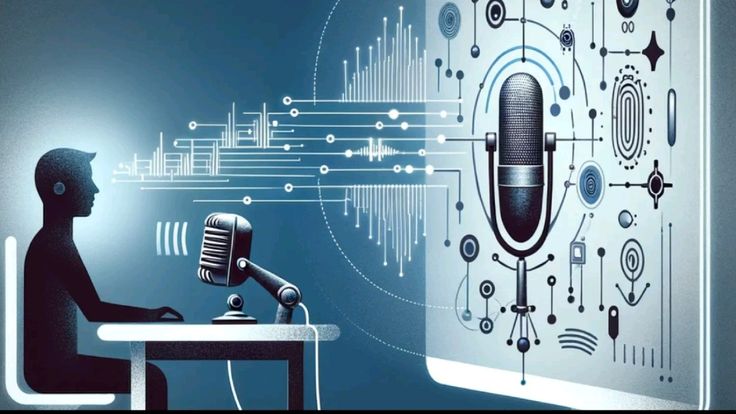
Voice recognition technology plays an important role in modern artificial intelligence applications. It is widely used in biometric authentication, security systems, speaker identification and audio analysis. However, identifying repeated or duplicate voice recordings can be challenging when audio samples contain background noise, different recording conditions or variations in speech.
The Robust Voice Recognition System for Identifying Original and Duplicate Voice Samples project uses Python, audio processing and machine learning techniques to analyze voice recordings. The system extracts important audio characteristics and compares voice samples to identify identical or highly similar recordings.
The main objective is to develop an automated system that reduces manual audio comparison and provides reliable voice similarity analysis.
Key Features & Benefits
Working Methodology
The proposed system processes audio recordings through several stages.
1. Audio Input: Collect voice samples through microphone recording or audio file uploads.
2. Audio Preprocessing: Remove unnecessary noise, normalize audio signals and prepare recordings for analysis.
3. Feature Extraction: Extract important voice characteristics such as Mel-Frequency Cepstral Coefficients (MFCC), pitch and spectral features.
4. Voice Analysis: Apply machine learning or deep learning techniques to analyze the extracted audio features.
5. Similarity Comparison: Compare the feature representations of two voice samples to identify identical or similar recordings.
6. Result Generation: Classify the samples based on the selected similarity threshold and display the comparison results.
The system can use MFCC features, cosine similarity and CNN-based audio classification techniques for voice analysis.
Implementation Guide
Key Features
Voice Sample Upload: Supports uploading audio recordings for analysis.
Audio Preprocessing: Reduces noise and prepares voice samples.
Feature Extraction: Extracts important speech characteristics using MFCC.
Voice Similarity Analysis: Compares audio features to identify similar recordings.
Duplicate Detection: Identifies repeated or highly similar voice samples.
User-Friendly Interface: Provides a simple interface for audio analysis.
Technologies Used
The project can be developed using Python as the primary programming language. Librosa and SoundFile can be used for audio processing, while NumPy and Pandas support numerical operations and dataset management.
Scikit-learn can implement similarity comparison and machine learning algorithms. TensorFlow or Keras can be used for advanced deep learning models, and Flask can provide a web interface for uploading and analyzing audio recordings.
Applications
This system can be useful in audio duplicate detection, voice biometric research, digital audio management, speaker identification research and automated audio verification systems.
Technical Specifications
Implementation Steps
The implementation begins with collecting original and duplicate audio samples for model development and testing. The recordings are preprocessed to reduce noise and maintain consistent audio formats.
Next, MFCC and other relevant audio features are extracted from the recordings. These features are converted into numerical representations and compared using suitable similarity measurement techniques.
A machine learning or deep learning model can then be developed to classify the audio samples. Finally, a Flask-based application can be created to upload voice recordings and display the similarity analysis results.
Advantages
Automates voice sample comparison.
Reduces manual audio verification.
Identifies repeated and similar recordings.
Supports audio dataset management.
Provides faster audio analysis.
Can be extended with advanced AI techniques.
Future Scope
The system can be enhanced using Siamese Neural Networks and advanced speaker embedding models for improved voice similarity comparison. Real-time microphone integration, multilingual voice analysis, noise-resistant processing and cloud-based audio storage can also be introduced.
Advanced versions can explore speaker verification and AI-generated voice detection as separate functionalities.
Conclusion & Next Steps
Conclusion
The Robust Voice Recognition System for Identifying Original and Duplicate Voice Samples project demonstrates the use of artificial intelligence and audio processing for automated voice comparison.
By combining audio preprocessing, MFCC feature extraction, machine learning and similarity analysis, the proposed system can identify identical or highly similar voice recordings.
This project provides students with practical knowledge of Python programming, digital signal processing, machine learning and deep learning. It can be further improved using advanced speaker recognition models and real-time audio analysis.
Contact Details
Phone: +91 97395 94609
Email: info@aislyntech.com
Website: https://aislyn.in
Contact us today to get expert guidance and support for your MCA, Python, Artificial Intelligence and Machine Learning projects.