ABSTRACT:
Ensuring the safety and security of passengers inside vehicles has become increasingly important due to the rising incidents of overloading, illegal transportation of weapons, presence of harmful gases, and unauthorized metal objects. Conventional vehicle monitoring methods rely heavily on manual checks, which are time-consuming, inconsistent, and not capable of providing continuous supervision during vehicle operation. To overcome these limitations, this project introduces an advanced Smart Car Surveillance and Safety Monitoring System, designed to automatically detect dangerous situations inside a car using a combination of IoT sensors and computer vision technologies.
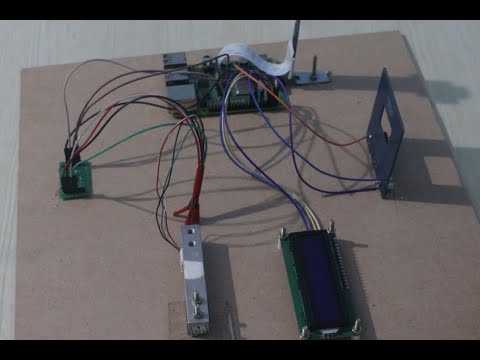
The proposed system integrates four major modules: weight detection, weapon and passenger monitoring through AI-based video processing, metal detection, and gas leakage detection. A highly sensitive load cell sensor interfaced with the HX711 module is used to measure the total weight exerted by passengers. By comparing this value with a predefined threshold, the system accurately identifies overload conditions, preventing vehicle strain and ensuring adherence to safety regulations. In parallel, a Raspberry Pi camera captures continuous video frames that are processed using a YOLO deep-learning model, trained to recognize dangerous objects such as guns, knives, and hammers. The same model is also capable of performing person detection and counting, allowing the system to verify whether the number of passengers exceeds the vehicle’s seating capacity, which is another critical safety factor.
To enhance the security layer further, a metal detection sensor is integrated to identify the presence of metallic objects that may not be clearly visible to the camera, providing redundancy and improving reliability. Additionally, the MQ-2 gas sensor continuously monitors the air quality inside the vehicle, detecting the presence of smoke, methane, LPG, or any flammable gases that could pose a threat to passengers. All the collected data—from sensors and camera output—are processed in real time using a Raspberry Pi. Whenever a dangerous condition is detected, such as overload, weapon presence, metal detection, or gas leakage, the system immediately activates alert mechanisms through buzzer or LED indicators, ensuring quick awareness and response.
By combining multiple safety features into a single platform, this system provides a comprehensive in-vehicle monitoring solution that enhances passenger protection and vehicle security. It is highly suitable for applications in public transport vehicles, school buses, police patrol units, tourist vehicles, emergency services, and private cars. The integration of AI with embedded sensors results in a cost-effective, reliable, and intelligent surveillance solution that significantly reduces human intervention, minimizes safety risks, and contributes to safer transportation systems. This project demonstrates how modern IoT and deep-learning technologies can be effectively applied to create a smart, automated, and adaptable vehicle surveillance framework.
INTRODUCTION:
In recent years, the importance of intelligent safety systems in vehicles has significantly increased due to the rapid growth in road usage, expanding transportation networks, and rising security concerns. Modern automobiles are equipped with several features that ensure external safety, such as collision avoidance, braking assistance, and lane monitoring. However, internal vehicle safety, which includes factors like overloading, presence of harmful objects, illegal weapons, dangerous gases, and hidden metallic items, is often neglected or handled through inefficient manual inspection methods. With increasing incidents of smuggling, unauthorized weapon carrying, overloading of passengers, and accidental gas leakages, there is a strong need for an automated system capable of continuously monitoring the inside conditions of a vehicle.
The Smart Car Surveillance and Safety Monitoring System developed in this project addresses these challenges by integrating advanced IoT-based sensors with AI-powered computer vision. Instead of relying on human observation, the system uses a series of intelligent modules to detect critical safety violations in real time. The focus of this project is not limited to a single feature but combines multiple safety components to create a unified and highly reliable solution suitable for a wide range of vehicles.
One of the major modules of this system is overload detection, which is achieved using a load cell interfaced with an HX711 amplifier. The load cell continuously measures the total weight applied inside the vehicle. When the measured value exceeds a preset threshold, the system identifies the condition as overloading. This feature is especially useful for public transport vehicles, taxis, and shared car services where unmonitored overloading often leads to mechanical strain, reduced vehicle performance, and violates safety regulations.
Another essential component is the AI-based weapon and passenger monitoring system. A Raspberry Pi camera captures continuous video feed, which is processed using the powerful YOLO deep learning model. The model is trained to identify dangerous objects such as guns, knives, hammers, and other weapons that may pose a threat to passengers. Additionally, the same model detects and counts the number of people present inside the car. This allows the system to determine if the number of passengers exceeds the permissible capacity of the vehicle, thereby ensuring both comfort and safety. The integration of computer vision ensures a high level of accuracy and reliability compared to manual inspection.
To further enhance the security capabilities, the system incorporates a metal detection sensor, which identifies the presence of metallic objects that may not be easily visible to the camera or may be hidden under seats or bags. This adds an extra layer of safety by alerting the system to suspicious metal items, even if the camera’s view is obstructed or lighting conditions are poor.
Another critical safety measure included in the system is the gas detection module using an MQ-2 sensor. Gas leakages inside vehicles—whether from fuel vapors, smoke, or accidental emission of toxic gases—can create life-threatening situations. The MQ-2 sensor continuously monitors the air quality within the car and detects harmful gases such as LPG, methane, carbon monoxide, and smoke. When gas levels exceed the safe limit, the system immediately issues an alert to warn the driver and passengers.
All these sensors and modules are controlled and coordinated using a Raspberry Pi, which acts as the central processing unit of the system. It collects data from the sensors, runs the detection algorithms, processes the camera input, and generates alerts when abnormal conditions are detected. By combining multiple safety functions into one integrated platform, the system offers an advanced solution suitable for police patrol vehicles, public transport buses, family cars, and emergency vehicles.
In summary, this project aims to improve the internal safety and security of vehicles through continuous monitoring, real-time detection, and automated alerting. The integration of computer vision, machine learning, and embedded sensors makes the Smart Car Surveillance and Safety Monitoring System a highly efficient, scalable, and cost-effective solution. It demonstrates how modern IoT technologies can be utilized to create smarter, safer, and more secure transportation environments.
OBJECTIVES:
1. Develop a Multi-Sensor Vehicle Monitoring System
The primary objective of this project is to design a unified in-vehicle monitoring system that integrates multiple sensors—HX711 load cell, metal detection sensor, and MQ-2 gas sensor—along with a computer-vision module. This ensures continuous surveillance of weight, metal presence, and air quality inside the vehicle, enabling comprehensive safety coverage that traditional systems cannot provide.
2. Implement Weight Detection Using HX711 Load Cell
This objective focuses on accurately measuring the total passenger weight inside the car using a load cell amplified by the HX711 module. By applying threshold-based detection, the system identifies overload conditions that may compromise vehicle performance or passenger safety. This forms a crucial part of the system’s capability to prevent mechanical strain and ensure compliance with safe seating limits.
3. Deploy Real-Time Weapon Detection Using YOLO
An important objective is to use a Raspberry Pi camera along with a YOLO deep-learning model to detect weapons such as guns, knives, and hammers in real time. The system must identify dangerous objects with high accuracy even in varying lighting and movement conditions, helping to enhance in-vehicle security and alert the driver to potential threats.
4. Perform AI-Based Person Detection and Passenger Counting
The objective here is to detect and count the number of passengers inside the car using advanced computer vision. The system compares the detected count with the vehicle’s seating capacity and identifies overcrowding. This helps prevent unsafe travel conditions and ensures adherence to regulations regarding the maximum number of occupants.
5. Detect Hidden or Suspicious Metallic Objects
Another objective is to integrate a metal sensor capable of identifying metallic objects that may not be visible to the camera. This provides an additional layer of safety by detecting hidden or concealed items that could pose a threat, especially in security-sensitive environments like police vehicles or public transportation.
6. Monitor Air Quality Using MQ-2 Gas Sensor
The project aims to continuously monitor the presence of hazardous gases such as LPG, methane, smoke, or other flammable vapors using the MQ-2 sensor. By detecting abnormal gas levels early, the system can prevent accidents related to gas leaks or poor air quality inside the car.
7. Provide Instant Alerts for Unsafe Conditions
A key objective is to generate immediate alerts—via buzzer, LED indicators, or display messages—whenever a hazardous situation is detected. The alert system ensures that passengers and the driver are notified instantly, enabling quick action and minimizing risk.
8. Use Raspberry Pi as an Intelligent Central Processing Unit
This objective ensures that the Raspberry Pi handles all sensor inputs, runs real-time deep learning inference, processes camera data, and manages alert responses. The aim is to create a compact, efficient, and cost-effective embedded system capable of performing multiple safety functions simultaneously.
9. Achieve High Accuracy, Reliability, and Real-Time Response
The final objective is to ensure that the system delivers fast and accurate detection results with minimal false positives. The project aims to create a reliable, scalable, and durable safety platform that works effectively in moving vehicles, making it suitable for personal cars, police patrols, emergency transport, and public vehicles.
Block Diagram