ABSTRACT:
In recent years, continuous health monitoring has become a critical requirement due to the increasing prevalence of lifestyle-related diseases, sleep disorders, and sudden medical emergencies, especially among elderly individuals and people living alone. Poor sleep quality, abnormal physiological variations during rest, and unattended fall incidents are among the major contributors to severe health complications and delayed medical response. Traditional health monitoring systems rely mainly on periodic manual checkups or simple threshold-based devices, which are insufficient for detecting gradual health deterioration, sleep quality issues, and emergency conditions in real time.
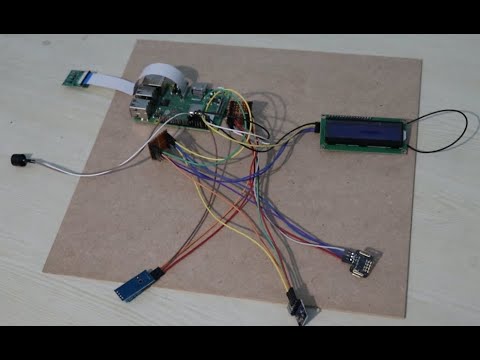
This project presents an AI-Based Smart Health Monitoring, Sleep Quality Analysis, and Fall Detection System using Raspberry Pi, designed to provide continuous, real-time monitoring of vital physiological parameters and human activity. The system integrates a MAX30102 pulse oximeter sensor to measure heart rate (BPM) and blood oxygen saturation (SpO₂), a DHT11 sensor for temperature monitoring, and an MPU6050 accelerometer and gyroscope for motion analysis, sleep pattern recognition, inactivity detection, and fall detection.
Sleep quality is analyzed using behavioral analysis techniques by monitoring motion intensity and duration over time. Based on acceleration values and inactivity duration, the system classifies sleep into different states such as Awake, Light Sleep, Deep Rest, and Restless Sleep. This enables the identification of poor sleep quality and prolonged abnormal inactivity, which may indicate serious health risks occurring during sleep. In addition, the system continuously evaluates physiological parameters during both active and rest periods, and an AI-based machine learning model classifies the overall health condition as normal or abnormal based on real-time sensor data.
For emergency situations such as confirmed falls or prolonged abnormal inactivity, the system activates a buzzer alert, captures three consecutive images using the Raspberry Pi camera module, and transmits them to a Telegram channel for visual verification. Simultaneously, instant SMS alerts are sent using the Twilio cloud messaging service to predefined emergency contacts, ensuring rapid notification even in critical conditions. To avoid alert flooding, intelligent cooldown and one-time alert mechanisms are implemented.
The proposed system offers a low-cost, intelligent, and autonomous healthcare monitoring solution suitable for elderly care, home-based patient monitoring, and remote health supervision. By combining real-time physiological monitoring, sleep quality assessment, AI-based health classification, visual verification, and automated alert mechanisms, the system significantly enhances patient safety, improves early emergency detection, and reduces dependency on continuous human supervision.
INTRODUCTION:
In recent years, continuous health monitoring has become a critical requirement due to rapid lifestyle changes, increased stress levels, irregular sleep patterns, and the growing elderly population. Many individuals today suffer from undiagnosed health conditions that develop silently over time, especially during sleep or periods of inactivity. Sudden health emergencies such as cardiac irregularities, low blood oxygen levels, accidental falls, and abnormal inactivity often occur without prior warning, particularly when individuals are alone or sleeping. In such situations, the absence of timely medical attention can lead to severe complications or even loss of life.
Sleep plays a vital role in maintaining overall physical and mental health. Poor sleep quality, insufficient sleep, or abnormal sleep patterns are directly linked to serious health issues such as heart disease, hypertension, diabetes, fatigue, and weakened immunity. In some cases, dangerous events such as sudden drops in oxygen saturation, abnormal heart rate fluctuations, or loss of consciousness may occur during sleep without the person being aware of it. Traditional healthcare systems rarely provide continuous sleep monitoring outside hospital environments, and manual supervision is neither practical nor affordable for long-term home care.
Conventional health monitoring methods primarily rely on periodic medical checkups or simple wearable devices that display basic parameters such as heart rate or steps count. These systems are often limited to threshold-based alerts and lack intelligent decision-making capabilities. They may generate false alarms during normal activities or fail to detect gradual deterioration in health conditions. Additionally, most low-cost systems do not provide emergency verification mechanisms such as visual confirmation, making it difficult for caregivers or family members to assess the severity of an alert remotely.
With advancements in embedded systems, low-cost biomedical sensors, and Artificial Intelligence (AI), it has become possible to design intelligent health monitoring systems capable of real-time data analysis and autonomous decision-making. AI enables the system to analyze multiple physiological and activity parameters simultaneously, recognize complex patterns, and classify health conditions more accurately than traditional rule-based systems. By combining sensor data with intelligent algorithms, such systems can distinguish between normal daily activities, sleep states, abnormal inactivity, and emergency situations such as falls.
This project presents an AI-Based Smart Health Monitoring, Sleep Analysis, and Fall Detection System using Raspberry Pi, designed to continuously monitor vital health parameters and human activity in real time. The system integrates a MAX30102 pulse oximeter sensor to measure heart rate (BPM) and blood oxygen saturation (SpO₂), a DHT11 sensor to monitor body temperature, and an MPU6050 accelerometer to track body movement and orientation. These sensors work together to analyze both physiological conditions and physical activity levels throughout active and resting periods.
Sleep monitoring is implemented using motion-based analysis, where prolonged low movement detected by the accelerometer is analyzed along with duration to classify sleep states such as awake, light sleep, deep rest, and restless sleep. This approach enables the system to assess sleep quality without using complex or expensive medical equipment. In addition to sleep analysis, the system detects abnormal inactivity that may indicate unconsciousness or medical distress, as well as sudden falls caused by slips or fainting.
To ensure effective emergency response, the system incorporates a Raspberry Pi camera module that provides live visual monitoring and captures images during critical events. When a fall or abnormal inactivity is detected, the camera is activated to display live video on the Raspberry Pi screen and capture multiple images as visual evidence. These images are automatically transmitted to caregivers or family members through Telegram, providing immediate situational awareness. Simultaneously, SMS alerts are sent using the Twilio cloud messaging service to ensure reliable notification even when internet-based messaging is unavailable.
By combining continuous health monitoring, sleep analysis, AI-based decision-making, visual verification, and multi-platform alert mechanisms, the proposed system offers a low-cost, intelligent, and autonomous healthcare solution. It is particularly suitable for elderly care, home-based patient monitoring, and individuals with chronic health conditions. The system enhances personal safety, improves sleep quality awareness, enables early detection of health risks, and significantly reduces dependence on constant human supervision.
OBJECTIVES:
The primary objective of this project is to design and implement an AI-Based Smart Health Monitoring, Sleep Analysis, and Fall Detection System using Raspberry Pi that continuously monitors vital health parameters, analyzes sleep quality, detects abnormal conditions, and provides timely alerts for ensuring personal safety and improved healthcare monitoring.
The specific objectives of the project are as follows:
1. To continuously monitor vital physiological parameters such as heart rate (BPM), blood oxygen saturation (SpO₂), and body temperature in real time using low-cost biomedical sensors.
2. To analyze human body movement and posture using an accelerometer (MPU6050) for detecting motion patterns, inactivity, and sudden abnormal movements.
3. To implement sleep monitoring and sleep quality analysis by classifying sleep states such as awake, light sleep, deep sleep, and restless sleep based on motion intensity and duration.
4. To detect abnormal inactivity during both sleep and active periods, which may indicate unconsciousness, health deterioration, or emergency conditions.
5. To accurately detect fall events by analyzing sudden acceleration changes and motion impact using predefined thresholds and motion patterns.
6. To integrate an AI-based health condition prediction model that evaluates sensor data and determines whether the user’s health condition is normal or abnormal.
7. To provide early warning and emergency alerts using SMS notifications through the Twilio cloud messaging service when critical conditions such as falls, abnormal inactivity, or health abnormalities are detected.
8. To capture visual evidence during emergency situations using a Raspberry Pi camera module by taking multiple images automatically for event verification.
9. To transmit captured images and alert messages to caregivers or family members through a Telegram bot for quick remote assessment of the situation.
10. To display real-time sensor readings and system status on an LCD screen for local monitoring and immediate feedback.
11. To develop a low-cost, autonomous, and user-friendly healthcare monitoring system suitable for elderly care, home-based patient monitoring, and remote health supervision.
12. To enhance patient safety and enable timely medical intervention by reducing dependence on continuous human supervision through intelligent monitoring and alert mechanisms.
Block Diagram