Quality inspection is an important process in manufacturing industries. Products must be checked for defects such as scratches, cracks, surface damage, incorrect dimensions and missing components before reaching customers. Traditional inspection methods often depend on manual checking, which can be time-consuming and may produce inconsistent results.
An Edge AI Product Defect Inspection System Using Raspberry Pi is an intelligent solution that uses computer vision and artificial intelligence to identify product defects automatically.
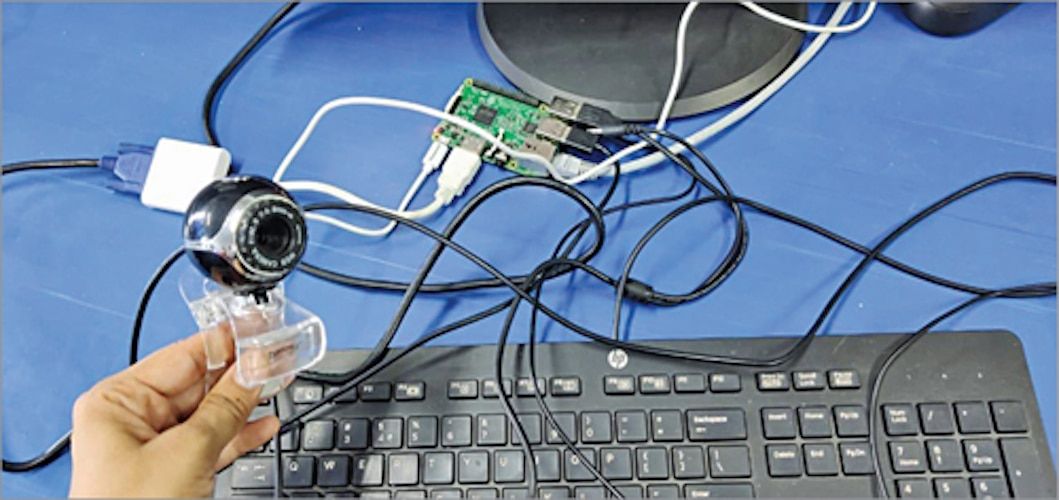
The system captures product images using a camera connected to a Raspberry Pi and processes them using a trained machine learning or deep learning model. It can classify products as defective or non-defective based on the patterns learned during training.
Unlike cloud-dependent inspection systems, Edge AI performs image processing directly on the device, reducing communication delays and supporting faster inspection.
This project combines Raspberry Pi, Python, OpenCV and deep learning to demonstrate an affordable automated quality inspection solution for manufacturing applications.
Key Features & Benefits
Objectives and Key Features
The main objective is to develop an intelligent inspection system that detects manufacturing defects using edge-based artificial intelligence.
Project Objectives
Capture product images using a Raspberry Pi camera.
Identify surface defects and product abnormalities.
Classify products as defective or non-defective.
Process images locally using Edge AI.
Display inspection results in real time.
Maintain inspection history for quality analysis.
Reduce manual inspection effort.
Key Features
Automated product image inspection.
Raspberry Pi-based edge processing.
AI-powered defect classification.
Real-time inspection results.
Defect image storage.
Product quality monitoring dashboard.
Inspection count and defect statistics.
Optional rejection mechanism using a motor or servo.
Local processing without continuous cloud connectivity.
The system can also be extended to detect multiple defect categories using a suitable trained deep learning model.
Implementation Guide
Technologies and Components Required
The project combines embedded hardware, computer vision and deep learning technologies for automated product inspection.
Hardware Components
Raspberry Pi 5: Main computing device for Edge AI processing.
Raspberry Pi Camera: Captures product images for inspection.
LED Lighting: Provides consistent illumination during image capture.
Conveyor Belt: Moves products through the inspection area.
Servo Motor: Controls an optional product rejection mechanism.
Power Supply: Provides stable power to the hardware.
Display: Shows inspection results and system status.
Software Requirements
Python: Main programming language.
OpenCV: Image processing and computer vision.
TensorFlow Lite: Runs optimised AI models on edge devices.
YOLO: Detects and localises product defects.
NumPy: Supports numerical image processing.
Flask: Develops backend APIs and monitoring interfaces.
SQLite or MySQL: Stores inspection results and history.
HTML, CSS and JavaScript: Develops the monitoring dashboard.
AI Model Requirements
A labelled dataset containing normal and defective product images is required. CNN classification or YOLO-based object detection can be used depending on whether the application needs defect classification or defect localisation.
The trained model should be optimised and tested on the Raspberry Pi to ensure acceptable processing speed and detection accuracy.
Technical Specifications
Working Principle and System Architecture
The Edge AI inspection system follows a sequence of image capture, preprocessing, AI inference and defect classification.
Step 1: Product Image Capture
The Raspberry Pi camera captures images of products moving through the inspection area.
Step 2: Image Preprocessing
OpenCV processes the captured images by resizing, adjusting brightness and preparing them for model inference.
Step 3: Edge AI Processing
The trained deep learning model analyses the product image directly on the Raspberry Pi.
Step 4: Defect Detection
The AI model identifies defects such as scratches, cracks, missing components or surface abnormalities.
Step 5: Product Classification
The system classifies each inspected product as defective or non-defective and generates a confidence score.
Step 6: Inspection Result
The results are displayed on a dashboard and saved for future quality analysis. An optional servo-controlled mechanism can separate defective products from accepted products.
System Architecture
Product → Camera → Raspberry Pi → Image Preprocessing → Edge AI Model → Defect Classification → Dashboard / Rejection Mechanism.
Implementation Steps
Set up the Raspberry Pi and camera module.
Collect normal and defective product images.
Label and prepare the inspection dataset.
Train a CNN or YOLO model.
Optimise the model for edge deployment.
Integrate the model with Python and OpenCV.
Develop the inspection dashboard.
Test the prototype with different product samples.
This architecture demonstrates how computer vision and Edge AI can automate manufacturing quality inspection.
Conclusion & Next Steps
Applications, Advantages and Future Scope
Applications
Manufacturing Industries: Inspect products for surface defects during production.
Electronics Industry: Identify missing components and PCB defects.
Automotive Industry: Detect scratches and manufacturing abnormalities.
Food Processing: Identify damaged or visually defective products.
Packaging Industry: Inspect labels, printing and packaging quality.
Pharmaceutical Industry: Support visual inspection of packaging and product appearance.
Advantages
Contact Details
Aislyn Technologies, Bangalore
Phone: +91 97395 94609
Email: info@aislyntech.com
Website: https://aislyn.in
Contact us today to start building your Embedded project in Bangalore with our expert support!

























.png)


