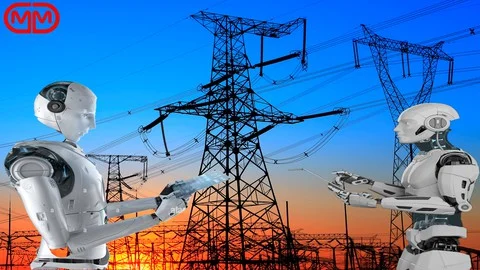
Explore these Electrical AI project ideas for final-year engineering students combining artificial intelligence, machine learning, electrical systems, renewable energy, power electronics, and smart monitoring. Projects can be developed using Python, MATLAB, Simulink, IoT sensors, and suitable machine learning models.
AI-Based Electrical Fault Detection and Classification System
Reinforcement Learning for Smart Grid Energy Optimization
AI-Based Remaining Useful Life Prediction for Electrical Equipment
Intelligent Voltage Stability Assessment Using Machine Learning
AI-Based Regenerative Braking Energy Optimization for Electric Vehicles
Hybrid IoT and AI-Based Real-Time Electrical Equipment Monitoring
These Electrical AI projects can be designed around simulation, historical datasets, live sensor readings, or hardware prototypes. Depending on the selected topic, students may use Python, scikit-learn, TensorFlow, MATLAB, Simulink, IoT platforms, or database-backed dashboards.
The choice of AI model should match the problem. Classification models can identify fault categories, regression models can predict numerical values, and time-series models can forecast electrical demand or renewable energy generation.
Key Features & Benefits
Applications of Electrical AI Projects
Electrical Fault Detection: AI models can analyse voltage, current, vibration, temperature, and other electrical measurements to identify patterns associated with possible faults.
Predictive Maintenance: Machine learning can examine historical equipment data to identify abnormal behaviour and estimate maintenance needs.
Smart Grid Optimization: AI can support load forecasting, demand management, voltage analysis, and energy scheduling in suitable grid applications.
Renewable Energy Forecasting: Solar and wind generation predictions can use historical output, weather information, and time-series models to support energy planning.
Electric Vehicle Technology: AI can help estimate battery health, predict charging demand, optimize charging schedules, and analyse energy usage.
Power Quality Analysis: Machine learning can classify disturbances such as voltage sags, swells, harmonics, and other abnormal electrical conditions when appropriate labelled data is available.
Smart Buildings: AI-based energy management can analyse consumption patterns and recommend ways to improve energy efficiency.
Power Theft and Anomaly Detection: Data-driven models can flag unusual electricity consumption patterns for further investigation. Such results require validation and should not be treated as definitive proof of theft.
Industrial Electrical Systems: AI can assist with equipment monitoring, anomaly detection, fault classification, and maintenance planning.
Research and Simulation: MATLAB, Simulink, and Python provide tools for testing models, evaluating performance, comparing algorithms, and visualizing results before potential real-world deployment.
Implementation Guide
Who Can Benefit and Project Domains
Who Can Benefit?
BE and B.Tech students in Electrical and Electronics Engineering (EEE).
Electronics and Communication Engineering (ECE) students interested in AI, embedded systems, and intelligent monitoring.
Computer Science and IT students working on electrical data analysis and machine learning.
ME and M.Tech students researching smart grids, power systems, and AI-based control.
Instrumentation and Control Engineering students developing intelligent monitoring systems.
Diploma students exploring sensor-based automation and electrical data analysis.
Final-year students preparing AI project demonstrations, reports, and technical presentations.
Major Electrical AI Project Domains
Power Systems: Fault classification, load forecasting, voltage stability analysis, and grid optimization.
Renewable Energy: Solar power forecasting, wind generation prediction, solar panel fault analysis, and energy optimization.
Electrical Machines: Motor fault diagnosis, vibration analysis, predictive maintenance, and intelligent motor monitoring.
Electric Vehicles: Battery health prediction, charging demand forecasting, charging optimization, and regenerative braking analysis.
Power Quality: Disturbance classification, harmonic analysis, voltage anomaly detection, and power quality monitoring.
Smart Energy Management: Consumption forecasting, demand response, building energy optimization, and load scheduling.
IoT and Embedded AI: Sensor-based electrical monitoring, connected equipment, edge inference, and remote alerts.
Deep Learning and Time-Series Analysis: Neural networks, LSTM models, classification, regression, and forecasting for electrical datasets.
Technical Specifications
Why Choose Aislyn Technologies?
Aislyn Technologies, Bangalore, provides technical guidance for students exploring Electrical AI projects in power systems, electrical machines, renewable energy, smart grids, and intelligent monitoring.
Project Topic Selection: Explore suitable AI project ideas according to your department, academic requirements, technical interests, and available resources.
AI Model Selection: Understand the differences between classification, regression, time-series forecasting, anomaly detection, and other suitable machine learning approaches.
Dataset and Sensor Guidance: Identify appropriate historical datasets or plan sensor-based data collection for electrical measurements such as voltage, current, temperature, and vibration.
Python and MATLAB Guidance: Explore suitable tools for data preprocessing, model development, simulation, visualization, and performance evaluation.
Electrical System Integration: Understand how AI models can work with electrical system simulations, IoT sensors, embedded controllers, and monitoring dashboards.
Testing and Troubleshooting: Learn how to investigate data quality problems, model errors, integration issues, and unexpected predictions.
Project Documentation Guidance: Organize objectives, methodology, dataset descriptions, model architecture, evaluation metrics, results, and conclusions for academic presentation.
Performance Evaluation: Compare suitable metrics, such as precision, recall, F1-score, mean absolute error, or root mean squared error, according to the project objective.
Whether you are interested in AI-based electrical fault detection, solar power forecasting, smart grid optimization, EV battery prediction, or predictive maintenance, Aislyn Technologies can help you explore a suitable project direction based on your academic requirements.
Conclusion & Next Steps
Contact Aislyn Technologies, Bangalore
Aislyn Technologies
Bangalore, Karnataka, India
Phone: +91 97395 94609
Email: info@aislyntech.com
Website: https://aislyn.in
Looking for the best Electrical AI projects for your final-year engineering course? Contact Aislyn Technologies, Bangalore, to discuss project ideas involving artificial intelligence, machine learning, electrical fault detection, renewable energy, smart grids, electric vehicles, and predictive maintenance.
Share your department, preferred project domain, programming language, and implementation requirements to explore a suitable Electrical AI project for your academic work.