Abstract
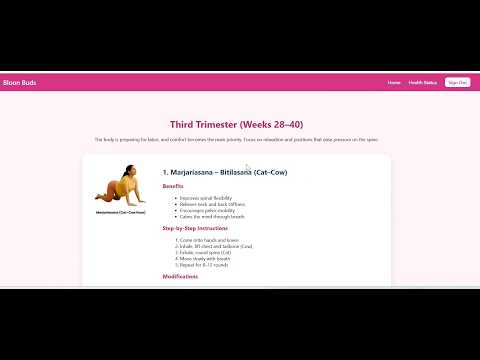
Maternal health monitoring plays a crucial role in ensuring the safety and well-being of both the mother and the developing fetus. Traditional maternal healthcare systems rely mainly on periodic clinical visits and manual evaluation of physiological parameters, which can lead to delayed identification of pregnancy-related risks. To address these limitations, this project proposes an intelligent, web-based maternal health risk prediction and recommendation system using machine learning techniques. The system analyzes key physiological parameters such as age, blood pressure, blood sugar level, body temperature, and heart rate to predict pregnancy risk levels categorized as Low, Medium, or High using a Random Forest classifier. In addition, the system supports automated extraction of vital parameters from medical reports using optical character recognition (OCR) techniques. Based on the predicted risk level, body mass index, and pregnancy trimester, personalized diet and yoga recommendations are provided to support maternal well-being. The proposed system also enables secure storage of health records and generation of downloadable health reports. This solution aims to enhance early risk detection, personalized care, and maternal health awareness while supporting informed healthcare decision-making.
Keywords
Maternal Health Monitoring, Pregnancy Risk Prediction, Machine Learning, Random Forest Classifier, Optical Character Recognition (OCR), Web-Based Healthcare System, Personalized Diet Recommendation, Prenatal Care
Introduction
Maternal health is a vital component of healthcare, as it directly influences the survival, well-being, and long-term development of both the mother and the unborn child. Pregnancy involves significant physiological changes, and continuous monitoring of maternal health parameters is essential to detect potential complications at an early stage. Conditions such as gestational hypertension, diabetes, abnormal heart rate, and temperature fluctuations can increase pregnancy risk if not identified and managed in a timely manner. Despite advancements in medical science, maternal health monitoring in many healthcare settings still depends on periodic clinical visits and manual evaluation of health parameters.
Traditional maternal healthcare systems face several limitations, including delayed risk identification, lack of continuous monitoring, and dependence on subjective clinical judgment. Medical records are often maintained in paper form or as unstructured digital documents, making automated analysis and long-term tracking difficult. Furthermore, expectant mothers are typically provided with generalized advice on nutrition and lifestyle, which may not adequately address individual health conditions or pregnancy stages. These challenges reduce the effectiveness of preventive maternal care and increase the risk of pregnancy-related complications.
With the rapid growth of machine learning and web-based technologies, there is an opportunity to enhance maternal healthcare through intelligent, data-driven systems. Machine learning models can analyze multiple physiological parameters simultaneously and identify hidden patterns that may indicate potential risks. Web-based platforms enable easy access, secure data storage, and real-time interaction, while optical character recognition techniques allow automated extraction of data from medical reports. By integrating these technologies, maternal healthcare can be made more proactive, personalized, and accessible.
This project aims to develop an intelligent maternal health risk prediction and recommendation system that combines machine learning, web technologies, and automated document analysis. The system is designed to support early risk detection, personalized diet and yoga recommendations, secure health record management, and improved maternal health awareness. The proposed solution acts as a supportive decision-making tool that complements clinical care and contributes to safer and more informed pregnancy management.
Objective of the project
• To design and develop an intelligent system for monitoring maternal health and predicting pregnancy-related risks using machine learning techniques.
• To analyze key physiological parameters and classify maternal health risk levels as Low, Medium, or High.
• To implement a secure web-based application for maternal health data collection and assessment.
• To automate the extraction of vital health parameters from prenatal medical reports using OCR techniques.
• To provide personalized trimester-wise diet recommendations based on maternal health condition and body mass index.
• To suggest safe and appropriate yoga practices according to the stage of pregnancy.
• To store and manage maternal health records securely for continuous monitoring and future reference.
• To generate downloadable health reports to support offline access and clinical consultation.
Block Diagram
Software and Hardware Requirements
SOFTWARE REQUIREMENTS
The proposed system requires a stable software environment to support web application development, machine learning processing, and document analysis. The system is developed using Python (version 3.8 or higher) as the primary programming language due to its extensive support for machine learning, data processing, and web frameworks. Flask is used as the backend web framework to handle routing, user authentication, and application logic, while HTML, CSS, and Jinja2 are used for frontend development. SQLite is employed as the database for storing user credentials, health records, and prediction history. Machine learning functionality is implemented using Scikit-learn and Joblib, while Pandas and NumPy are used for data processing. Tesseract OCR, PyMuPDF, and Pillow are required for medical report extraction, and pdfkit with wkhtmltopdf is used for PDF report generation. The system can be developed and tested using an IDE such as Visual Studio Code and accessed through a modern web browser like Google Chrome or Mozilla Firefox.
HARDWARE REQUIREMENTS
The proposed maternal health monitoring system requires standard computing hardware capable of supporting web application execution, machine learning inference, OCR processing, and database operations. A system with an Intel Core i5 processor or equivalent, minimum 8 GB RAM, and at least 256 GB of storage is recommended to ensure smooth performance during real-time risk prediction, document processing, and report generation. Adequate memory is required to load machine learning models and handle image processing tasks efficiently. A basic display unit, keyboard, and mouse are sufficient for system interaction, and a stable internet connection is required for accessing the web-based application. The specified hardware configuration is suitable for academic, clinical, and small-scale healthcare environments without requiring high-end infrastructure.