Introduction
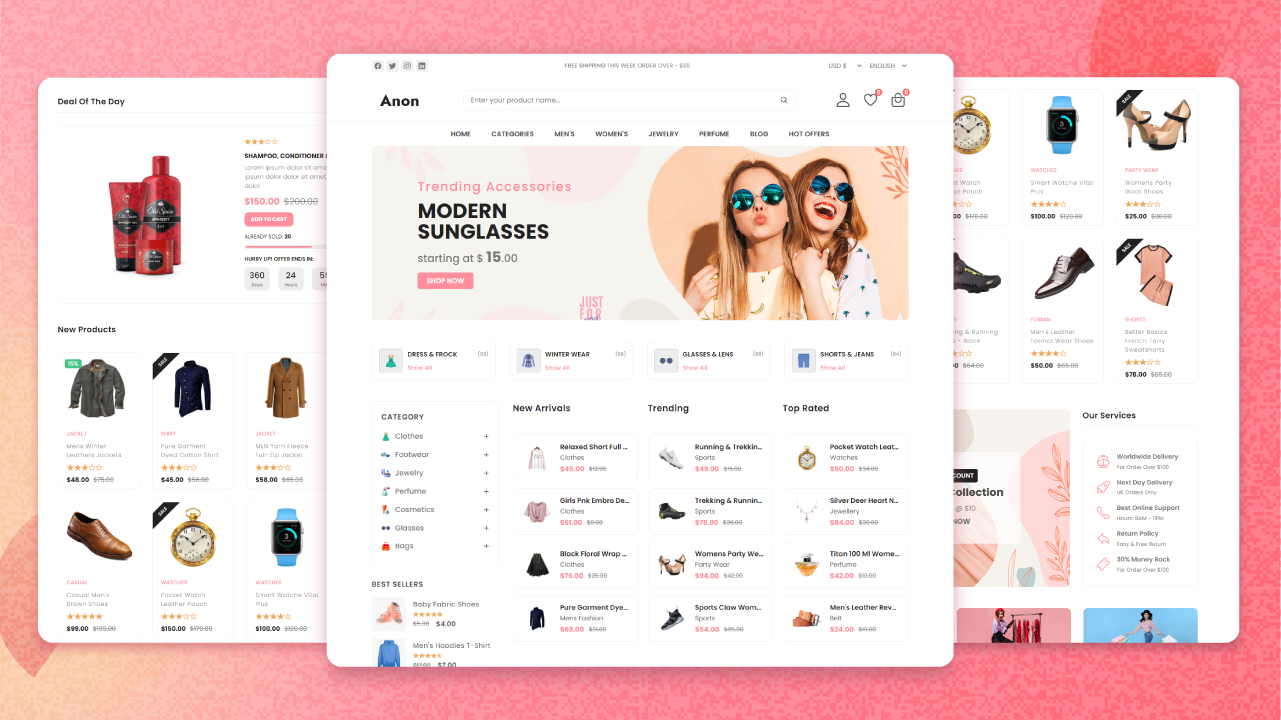
An Ecommerce Website is a digital platform that allows businesses to sell products and customers to purchase goods through the internet. It provides a convenient shopping environment where users can explore product categories, compare prices, add products to shopping carts, and complete purchases online.
Traditional shopping requires customers to visit physical stores to explore and purchase products. Ecommerce platforms simplify this process by making products accessible through websites and mobile applications.
The platform connects customers, sellers, administrators, and delivery services through a centralized digital shopping environment. It helps businesses expand their online presence and manage sales operations efficiently.
Key Features & Benefits
Key Features
An Ecommerce Website includes several functionalities to support online shopping and business management.
- User Registration and Login: Allow customers to create accounts and manage personal information.
- Product Management: Add, update, and organize products with images, descriptions, and prices.
- Product Categories: Organize products into categories and subcategories.
- Product Search: Find products using keywords, filters, and sorting options.
- Shopping Cart: Add, remove, and update selected products.
- Wishlist Management: Save favorite products for future purchases.
- Order Management: Process and manage customer orders.
- Online Payment: Integrate digital payment gateways for secure transactions.
- Inventory Management: Monitor product availability and stock quantities.
- Order Tracking: Display order processing and delivery status.
- Customer Reviews: Allow customers to provide product ratings and feedback.
- Admin Dashboard: Manage products, customers, orders, payments, and sales reports.
Implementation Guide
Technologies and Development
The Ecommerce Website can be developed using different programming languages, frameworks, databases, and development platforms according to business requirements.
Frontend Technologies: React.js, Angular, Vue.js, HTML, CSS, Bootstrap, and Flutter.
Backend Technologies: Django, Flask, FastAPI, Spring Boot, Node.js, Express.js, Laravel, and ASP.NET.
Database Technologies: MySQL, PostgreSQL, MongoDB, Firebase, Oracle Database, and Microsoft SQL Server.
Additional Technologies: Artificial Intelligence, Machine Learning, Cloud Computing, REST APIs, Payment Gateway Integration, Recommendation Systems, and Mobile Application Development.
The technology stack can be customized to develop responsive ecommerce websites, multi-vendor marketplaces, mobile shopping applications, and enterprise-level digital commerce platforms
Technical Specifications
Working Process
The Ecommerce Website follows a structured workflow to complete online shopping transactions.
1. Customers register or log in to the ecommerce platform.
2. The homepage displays available products and shopping categories.
3. Customers browse products and view detailed descriptions, images, and prices.
4. Selected products are added to the shopping cart.
5. Customers review their cart and proceed to checkout.
6. The system calculates the order total, including applicable taxes and delivery charges.
7. Customers enter their shipping details and select a payment method.
8. The payment gateway processes the transaction.
9. After payment verification, the system confirms the order.
10. Administrators manage order processing, inventory updates, and delivery information.
11. Customers track their orders until delivery.
The application maintains centralized product and transaction records while providing customers with an organized shopping experience.
Conclusion & Next Steps
Applications and Benefits
An Ecommerce Website is suitable for retail businesses, clothing brands, electronics stores, grocery businesses, wholesalers, manufacturers, startups, and multi-vendor marketplace operators.
Major Benefits:
- Enables businesses to sell products online.
- Provides convenient shopping from any location.
- Supports multiple product categories.
- Simplifies order and inventory management.
- Enables digital payment processing.
- Improves customer account management.
- Supports product reviews and ratings.
- Provides organized sales and transaction records.
- Helps businesses reach wider customer audiences.
- Provides business analytics and sales reporting.
Future Enhancements
The platform can be enhanced with AI-powered product recommendations, personalized shopping experiences, chatbot-based customer support, visual product search, automated inventory forecasting, voice-based shopping, augmented reality product previews, and advanced sales analytics.
An Ecommerce Website is an excellent software development project for demonstrating full-stack development, database management, payment gateway integration, API development, cloud deployment, and digital business automation.
Contact Details
Aislyn Technologies, Bangalore
📞 Phone: +91 97395 94609
📧 Email: info@aislyntech.com
🌐 Website: https://aislyn.in
Contact us today to start building your Embedded project in Bangalore with our expert support!