Abstract:
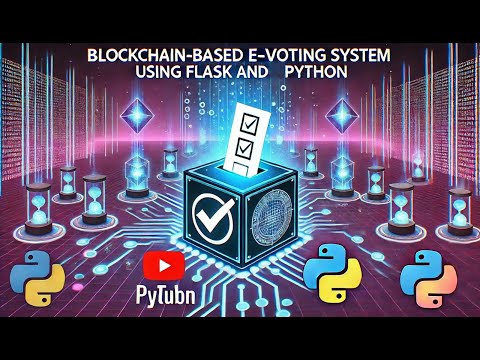
The traditional voting system faces several challenges, including security threats, transparency issues, and risks of manipulation. A blockchain-based e-voting system provides a decentralized, secure, and transparent approach to conducting elections. This project utilizes Blockchain, Flask, and Python to develop a tamper-proof and verifiable voting platform.
Blockchain technology ensures that votes are immutable and transparent, reducing the risk of fraud and unauthorized modifications. Flask, a lightweight Python web framework, is used to develop the user-friendly interface and backend functionalities. The system allows voters to cast their votes securely while ensuring anonymity and preventing double voting through smart contract implementation or cryptographic techniques.
This e-voting system enhances trust, security, and efficiency, making elections more accessible and verifiable. By leveraging blockchain’s decentralized nature, it eliminates the need for intermediaries, thereby reducing operational costs and increasing election integrity.
Key Features:
1. Decentralized & Tamper-Proof Voting
o Uses blockchain technology to ensure votes are securely recorded and immutable, preventing fraud or manipulation.
2. Secure Voter Authentication
o Implements cryptographic techniques or blockchain identity verification to prevent unauthorized access and multiple voting.
3. Transparent & Verifiable Elections
o All transactions (votes) are recorded on the blockchain, ensuring transparency while maintaining voter anonymity.
4. Smart Contract Integration (Optional)
o Automates vote validation and result computation using smart contracts, eliminating the need for third-party verification.
5. Anonymity & Privacy Protection
o Uses cryptographic hashing and encryption methods to protect voter identities while ensuring vote integrity.
6. User-Friendly Web Interface
o Developed with Flask and Python to provide a responsive and easy-to-use voting platform for voters and administrators.
7. Real-Time Vote Counting & Results
o Votes are recorded instantly and can be counted in real-time without delays or human intervention.
8. Resistant to DDoS & Hacking Attacks
o Decentralized nature of blockchain prevents centralized attacks and unauthorized modifications.
9. Role-Based Access Control
o Different user roles (voter, admin, election commission) with secure login and permission-based functionalities.
10. Auditability & Traceability
• Every vote transaction is time-stamped and can be audited for verification without compromising voter identity.
Similar projects you might like