Mental health and emotional well-being are important aspects of everyday life. Stress, anxiety, loneliness, academic pressure and work-related challenges can affect people's daily activities and quality of life. Although professional mental health services are essential, some individuals may find it difficult to access timely support because of limited availability, cost, social stigma or a lack of awareness.
Recent developments in Artificial Intelligence (AI), Machine Learning (ML) and Natural Language Processing (NLP) are creating new opportunities to develop digital tools that support emotional wellness. AI-powered conversational systems can understand written user input, identify language patterns and provide relevant information through interactive interfaces.
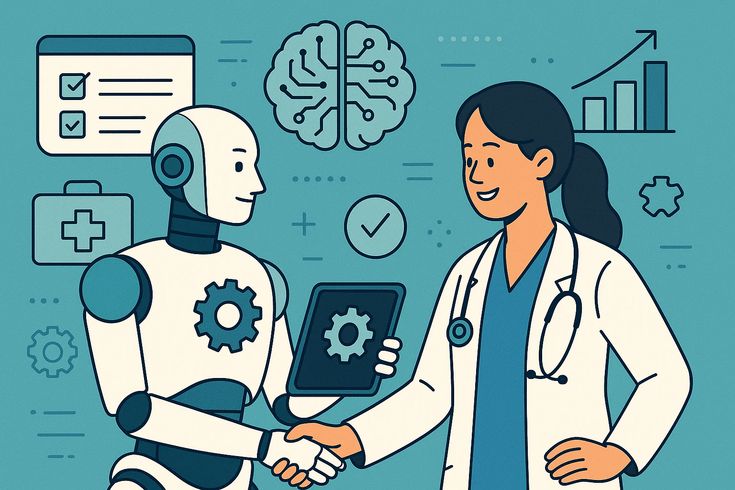
The AI-Powered Mental Health Support System is a machine learning project designed to provide an accessible platform where users can express their feelings, interact with an AI-based assistant and receive general emotional wellness guidance. The system can analyse text using Natural Language Processing and sentiment analysis techniques to identify emotional patterns and generate suitable responses.
The main objective is to demonstrate how AI technology can support mental wellness awareness and encourage users to seek appropriate help when necessary. The application is intended as a supportive educational tool, not a replacement for qualified mental health professionals, diagnosis or treatment.
Key Features & Benefits
Existing System and Its Challenges
Traditional mental health support commonly involves consultations with psychologists, counsellors and other qualified healthcare professionals. These services provide essential human understanding and professional guidance. However, access may be limited by geographical location, appointment availability, cost and other practical barriers.
Some challenges that digital support tools aim to address include:
1. Limited Accessibility: People may not always have immediate access to mental wellness information or support resources.
2. Delayed Assistance: Finding an available professional appointment can sometimes take time.
3. Difficulty Expressing Emotions: Some individuals may find it uncomfortable to communicate their feelings or discuss personal challenges.
4. Lack of Continuous Digital Interaction: Traditional appointment-based services do not necessarily provide an interactive digital platform between sessions.
5. Limited Personalization in Basic Applications: Simple wellness applications may provide generic content without considering the language or context of a user's message.
An AI-powered system can offer an additional digital interaction channel. However, automated tools also have limitations, including incorrect interpretation of language, cultural differences, privacy concerns and the possibility of generating unsuitable responses. Human professional support remains essential.
Implementation Guide
Proposed System and Methodology
The proposed system uses machine learning and NLP techniques to analyse user messages and provide general mental wellness support through a conversational interface.
The development methodology can include the following stages:
1. User Registration and Login
Users can create an account and securely access the application. Authentication helps manage individual sessions and provides a structured environment for using the system.
2. User Message Collection
The user enters a message describing their feelings, concerns or general emotional state through a chat interface. The application receives the text for further processing.
3. Text Preprocessing
The collected text is cleaned and prepared for analysis. This stage may include removing unnecessary characters, tokenization, lowercasing and other NLP preprocessing operations.
4. Sentiment and Emotion Analysis
A machine learning or NLP model analyses the text to identify patterns associated with emotional expressions. Depending on the training data and model design, the system may classify messages into categories such as positive, negative or neutral sentiment, or selected emotion labels.
5. AI-Based Response Generation
Based on the message context and model output, the application generates a supportive response. Responses may include general wellness information, relaxation suggestions, self-care resources and encouragement to contact a qualified professional when appropriate.
6. Safety and Escalation Mechanism
The application should include carefully designed safety handling for messages that suggest immediate danger or self-harm. It should avoid relying solely on sentiment classification and provide clear directions to appropriate emergency or professional support resources.
7. Result Display and History
The generated response is displayed through the chat interface. If conversation history is stored, it should be protected with appropriate security measures and clear user consent.
Technical Specifications
Technologies, Features and Applications
The project can be developed using Python, machine learning libraries, NLP tools and web development technologies.
Technologies Used
Python – Core programming language.
Machine Learning – Text classification and pattern analysis.
Natural Language Processing (NLP) – Processing and understanding user messages.
TensorFlow or PyTorch – Developing and training deep learning models.
Scikit-learn – Traditional machine learning algorithms and evaluation.
NLTK or spaCy – Text preprocessing and NLP operations.
Transformer models – Context-aware language understanding, where appropriate.
Flask or Streamlit – Developing the application interface and backend.
MySQL or MongoDB – Storing user accounts and application data securely.
Key Features
User registration and login.
Interactive AI-powered chat interface.
Text preprocessing and sentiment analysis.
Emotion-related text classification.
Context-aware supportive response generation.
General wellness tips and educational resources.
Conversation history with privacy controls.
Safety messaging and professional support recommendations.
Responsive web interface for different devices.
Potential Applications
Digital mental wellness education.
Emotional wellness awareness platforms.
Student wellness support applications.
General self-care information systems.
Research projects involving NLP and conversational AI.
Human-supervised digital wellness support services.
The system should clearly communicate that it does not diagnose mental health conditions, prescribe medication or replace professional counselling. User messages may contain sensitive information, so data minimization, encryption, access control and secure storage should be considered throughout development.
Conclusion & Next Steps
Conclusion
The AI-Powered Mental Health Support System is a machine learning project that explores the use of conversational AI, Natural Language Processing and sentiment analysis for digital emotional wellness support. By combining text processing, emotion-related classification and supportive response generation, the application demonstrates a practical use of artificial intelligence in a healthcare-related domain.
This project is suitable for students interested in machine learning, Python development, NLP, deep learning and AI-based web applications. It also provides opportunities to explore responsible AI design, data privacy and human-supervised digital support systems.
Contact Details
Aislyn Technologies, Bangalore
Phone: +91 97395 94609
Email: info@aislyntech.com
Website: https://aislyn.in
Contact Aislyn Technologies for project development, implementation guidance and technical support. Our team can help you develop your machine learning final-year project with expert support.