Your cart

Your Wishlist

Categories

YouTube Video
Product Image
Product Preview

Single Phase Single-Switch Vienna Rectifier for PFC Battery Charging Applications Electrical projects

Category: Electrical Projects

Price: ₹ 5600 ₹ 8000 0% OFF

ABSTRACT:

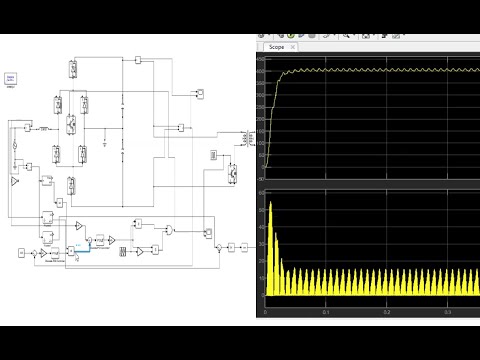
This paper proposes a single-phase single-switchbridgeless power factor corrector (PFC) boost Vienna rectifier asbattery charger. The presentedtopology generates 3-level voltage waveform at the input whicheliminates harmonic contents significantly while using smallfilters. The reduced number of parts used in this topology makesto develop this PFC rectifier as acompact battery charger. Modelling of the single-phase Viennarectifier is performed and a cascaded PI controller is designed toregulate the DC bus voltage at 400V to charge batteries aswell as drawing low harmonic grid current and ensuring unitypower factor operation of the converter.A flyback DC-DCconverter is utilized forbattery charging. The charging of lithium-ion battery is executedby constant current- constant voltage (CC-CV) charge PI controlprocess. The proposed chargingtechnique isapplicable in energy storage applications toward the sustainableelectric vehicle development.The proposed systemis simulated in MATLAB/Simulink software.

INTRODUCTION:

Electric Vehicles are manufactured and developed by manycompanies and researchers all around the world to reducefossil fuel consumption and decrease environment pollutionseffectively. Power electronics converters play an importantrole in EVs from the chargers stations to the motive force byelectric motor drives. Different types of converters are used inEVs including AC-DC, DC-DC and DC-AC categories.One of the main parts of each EV is the battery that providesenergy for whole system. EV batteries should be charged up toa certain level to have enough energy for the car user duringany travel. Various battery chargers have been introduced forEVs aiming at fast or slow charging dependent on the powerrating and place of charge. For instance, three-phase highpower rectifiers can charge the EV battery in less than 30minutes but they cannot be onboard. On the other hand, L1chargers can be placed in the car due to smaller size and lowerpower ratings, however the charging time is couple of hourswhich is useful at nights or parking times.EV battery charger can be a simple diode bridge rectifierwith PFC circuit however due to increasingly development ofpower semiconductors, bridgeless topologies as active PFCrectifiers are usually proposed by researchers. Those activeboost rectifiers generate a DC voltage at the output higher thanthe input AC peak voltage to ensure unity power factoroperation of the converter by synchronized voltage and currentwaveforms at the AC side. Different rectifier topologieshave been reported in the literature that uses numerous activeswitches and passive components with single ormultiple outputs as two-level or multilevel converter. Moreover, different controllers have been adopted onsuch rectifiers to have a good performance in different harshconditions such as no-load or AC source fluctuation.As an interesting topology with least switch counts, Viennarectifier has been invented as a three-phase boost rectifierfeaturing high efficiency and low voltage stress oncomponents. In continue single-phase structure based onVienna rectifier configuration has been reported but the mainissue was using two loads with middle point connected to theDC capacitors neutral point that makes is impractical.Moreover, hysteresis switching technique has been used togenerate switching pulses which has its own disadvantagessuch as variable switching frequency. On the other hand, thederived model has some major mistakes that could notdescribe the dynamic behaviour correctly.

PROBLEM STATEMENT:

In this paper, a single-phase Vienna rectifier is developedand modelled to work as an EV battery charger. Due to usingonly one active switch and six diodes, it could bemanufactured in a small size with low weight suitable foronboard EV charger applications. The flyback converter is introduced for step down operation of dc voltage for charging the batteries as well as for isolation of battery load. The quality charging is avital issue while lithium-ion battery is charged.The constant current-constant voltage (CC-CV) chargetechnique is highly effective for long discharge duration.Hence, the optimal charging might contribute to the efficientcharging in CC-CV charge technique

block-diagram

• Demo Video
• Complete project
• Full project report
• Source code
• Complete project support by online
• Life time access
• Execution Guidelines
• Immediate (Download)

1. Matlab 2014A to Matlab 2018B
2. Sim power systems toolbox

Hardware Requirements:

1. PC or Laptop
2. 500GB HDD with 1 GB above RAM
3. Keyboard and mouse

1. Immediate Download Online
2. Installation (Monday- Saturday 10 am to 6 pm)

Leave a Review

Only logged-in users can leave a review.

Customer Reviews