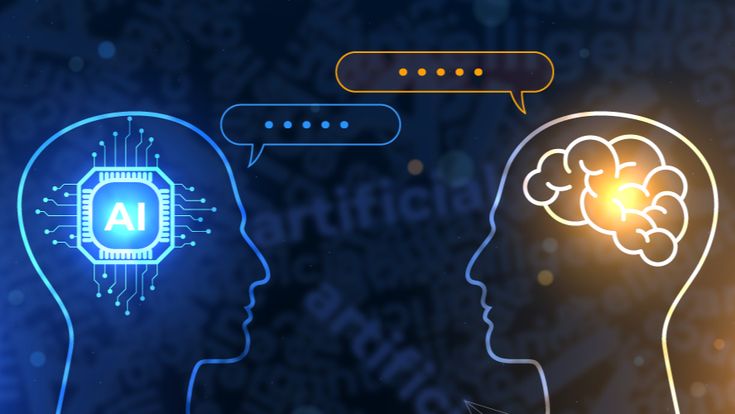
Mental health and emotional well-being are important aspects of everyday life. However, language barriers, limited access to support resources, and hesitation to discuss personal concerns can make it difficult for some people to seek help. Artificial intelligence and natural language processing offer new ways to build accessible digital tools for emotional support and mental health awareness.
The Multilingual AI-Powered Mental Health Chatbot Using NLP and Deep Learning project focuses on developing an intelligent chatbot that can understand user messages in multiple languages and generate relevant supportive responses.
The system uses natural language processing to analyze text and deep learning techniques to identify language patterns and emotional context. Its multilingual functionality aims to make the chatbot accessible to users who prefer communicating in different languages.
The application is designed as an educational and supportive tool, not as a replacement for professional mental health care.
Key Features & Benefits
Working Methodology
The chatbot accepts text messages from users in supported languages. The input is processed using language detection and text preprocessing techniques. Depending on the selected implementation, multilingual text can be translated into a common processing language or analyzed using a multilingual NLP model.
The processed message is converted into numerical representations using tokenization and embedding techniques. A trained deep learning model analyzes the text to identify relevant intent, emotional patterns, or predefined categories.
Based on the model output, the chatbot selects or generates an appropriate response. The response is displayed in the user's selected language, where multilingual response generation or translation is supported.
Basic workflow:
User enters a message.
Detect the input language.
Preprocess and tokenize the text.
Extract language features using NLP.
Analyze the message using a deep learning model.
Identify the relevant intent or emotional category.
Generate a supportive response.
Display the response in the selected language.
Implementation Guide
Features and Technologies
Key Features
Multilingual text-based chatbot.
Natural language understanding.
Language detection and preprocessing.
Emotion or sentiment analysis.
Deep learning-based text classification.
Context-aware conversational responses.
User-friendly chat interface.
Supportive mental health information.
Technologies Used
Programming Language: Python.
Natural Language Processing: NLTK or spaCy.
Deep Learning: TensorFlow or PyTorch.
NLP Models: Multilingual BERT or other suitable transformer models.
Data Processing: Pandas and NumPy.
Interface: Flask or Streamlit.
Database: MySQL or MongoDB, if conversation storage is required.
Language Translation: A suitable multilingual translation model or API.
Applications: Mental health awareness platforms, multilingual support applications, educational NLP projects, digital wellness tools, and conversational AI research.
Technical Specifications
Implementation and Future Scope
The implementation begins by preparing a multilingual text dataset containing user messages, intents, or emotional categories relevant to the chatbot's objective. The text is cleaned, tokenized, and converted into suitable model inputs.
A deep learning model is trained or fine-tuned to understand the selected text categories. Multilingual processing can be implemented using language detection, translation, or multilingual transformer models. The chatbot backend handles user messages, model predictions, and response generation.
A web interface developed using Flask or Streamlit allows users to communicate with the chatbot. The system should be evaluated across supported languages to check classification quality, response relevance, and language consistency.
Advantages
Supports communication in multiple languages.
Demonstrates practical NLP and deep learning applications.
Provides an accessible conversational interface.
Helps users explore general mental health information.
Improve response quality through expert-reviewed content.
Add secure data handling and privacy controls.
Conclusion & Next Steps
Conclusion and References
The Multilingual AI-Powered Mental Health Chatbot demonstrates how natural language processing and deep learning can be combined to build multilingual conversational applications. By analyzing user messages and generating supportive responses, the system explores the potential of AI for accessible mental health awareness.
This project is suitable for students interested in machine learning, NLP, deep learning, and conversational AI. Future development can focus on improving multilingual understanding, response quality, privacy, and responsible AI practices.
Important Safety Consideration: This chatbot should not diagnose mental health conditions, prescribe treatment, or replace a qualified professional. It should clearly communicate its limitations and provide appropriate professional or emergency support information when necessary.
References
Hugging Face Documentation – https://huggingface.co/docs