Introduction to Skin Tone Detection and Custom Foundation Mixing System
The beauty and cosmetics industry is increasingly adopting artificial intelligence, image processing and smart automation to deliver more personalized products. Foundation is one of the most widely used cosmetic products, but selecting a suitable shade can be challenging because skin tones vary across individuals and traditional foundation products are available in a limited range of shades.
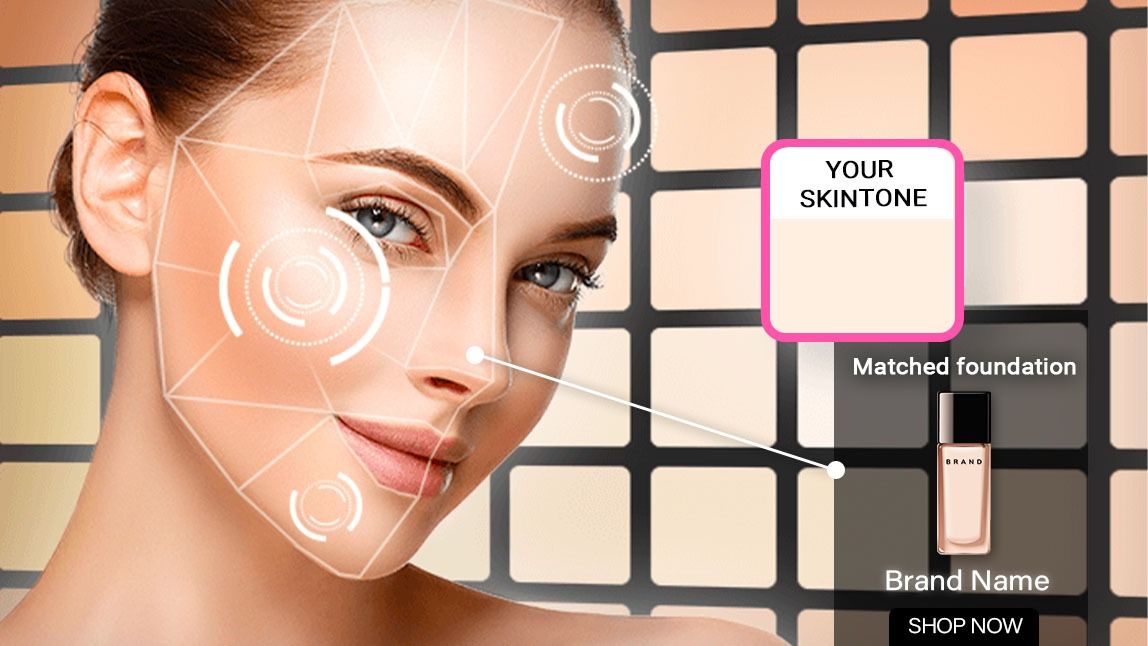
The Skin Tone Detection and Custom Foundation Mixing System is an intelligent project designed to analyse a person's skin tone and prepare a customized foundation mixture based on the detected colour information. The system combines computer vision, colour analysis, IoT technology and automated liquid dispensing to create a personalized cosmetic solution.
The main concept is to capture a skin image using a camera, process the image to identify representative skin colour values, and calculate a suitable foundation mixture using predefined colour combinations. The calculated quantities are then sent to a mixing or dispensing unit, which combines the selected foundation components in the required proportions.
For example, instead of selecting a ready-made foundation shade from a fixed product range, the proposed system aims to generate a customized blend by adjusting the quantities of available base shades.
This project demonstrates how AI and IoT technologies can be applied to smart cosmetic manufacturing and personalized beauty solutions. It can be developed as an academic prototype using Python, OpenCV, a microcontroller and a controlled dispensing mechanism.
Key Features & Benefits
Working Principle and System Architecture
The proposed system follows a sequence of image acquisition, skin tone analysis, colour matching, mixture calculation and automated dispensing.
1. Image Acquisition
A camera captures the user's facial or skin image. Consistent lighting and a suitable camera position are important because shadows, brightness and camera settings can affect the captured colour.
2. Skin Region Detection
The captured image is processed using image processing techniques to identify the relevant skin region. Unwanted areas such as hair, background and clothing are excluded from the analysis.
OpenCV can be used for image preprocessing, colour conversion and region selection. The system may use face detection or a manually selected region of interest to obtain representative skin pixels.
3. Skin Tone Analysis
The selected skin pixels are analysed to calculate representative colour values. RGB, HSV or CIELAB colour spaces can be used depending on the colour matching approach.
Using CIELAB can be useful for comparing colour differences because it separates lightness from colour information. The extracted values are then compared with predefined foundation base shades.
4. Custom Foundation Calculation
A colour-matching algorithm estimates the required proportions of the available foundation shades. The calculation can use a reference colour database, colour distance measurements or a trained machine learning model.
For example, the algorithm may determine the quantities of light, medium and dark foundation bases needed to create a target shade. The actual mixture must be calibrated using physical samples because digital colour values do not directly represent real cosmetic formulations.
5. IoT-Based Communication
The calculated mixing instructions are transmitted to a microcontroller such as ESP32 or Arduino. The controller receives the quantity information and operates the connected dispensing mechanism.
6. Automated Foundation Mixing
The dispensing unit uses pumps, motors or other controlled mechanisms to release the required quantities of foundation components into a mixing container. The ingredients are then mixed to produce the customized foundation sample.
7. Output and Monitoring
The final mixture can be checked against the target colour using a camera or colour sensor. The system can display the detected tone, selected mixture proportions and dispensing status through a web dashboard.
Implementation Guide
Technologies, Features and Applications
The project combines AI-based image processing with IoT-controlled automation to demonstrate personalized foundation preparation.
Technologies Used
Python: Main programming language for image processing and colour analysis.
OpenCV: Image acquisition, preprocessing and skin region detection.
NumPy: Numerical operations and colour calculations.
Machine Learning: Optional model for skin tone classification and shade prediction.
ESP32 or Arduino: Hardware control and communication.
IoT Communication: Transfers mixture instructions to the dispensing unit.
Motor Drivers: Control pumps or dispensing motors.
Liquid Pumps: Dispense foundation components in measured quantities.
HTML, CSS and JavaScript: Optional dashboard for monitoring and user interaction.
MySQL: Optional storage for user selections, shade records and mixing history.
Key Features
Camera-based skin image acquisition.
Automated skin region identification.
Digital skin colour analysis.
Foundation shade recommendation.
Customized mixture proportion calculation.
IoT-based communication with the dispensing unit.
Automated foundation component dispensing.
Mixing status monitoring.
Optional dashboard for displaying results.
Storage of previous shade and mixing information.
Applications
Personalized cosmetic foundation preparation.
Smart beauty and cosmetic retail stores.
Beauty technology research laboratories.
Cosmetic product development demonstrations.
Automated cosmetic dispensing systems.
AI-based personalized beauty applications.
Educational projects involving computer vision and IoT.
The proposed system provides a practical example of how computer vision and connected hardware can be combined to develop personalized cosmetic technology.
Technical Specifications
Advantages, Challenges and Future Enhancements
Advantages
Provides a personalized foundation shade recommendation.
Reduces dependence on manually selecting from a limited shade range.
Demonstrates automation in cosmetic preparation.
Combines AI, image processing and IoT technologies.
Supports repeatable dispensing through calibrated mechanisms.
Can store previous shade configurations for future reference.
Provides opportunities for further development in smart beauty applications.
Challenges
Skin colour detection can be affected by lighting conditions, camera quality, shadows, makeup and image processing settings. Therefore, consistent illumination and colour calibration are important for reliable analysis.
Another challenge is converting digital colour values into accurate physical foundation mixtures. Foundation products may differ in pigmentation, texture, viscosity and formulation. The dispensing mechanism must be calibrated to deliver consistent quantities, and the final mixture must be tested for colour accuracy and physical compatibility.
The project should use cosmetic-grade materials and appropriate hygiene practices. Any prototype intended for skin application requires suitable ingredient safety assessment and testing. A digital colour match alone does not establish that a cosmetic formulation is safe for use.
Future Enhancements
Develop a deep learning model for improved skin region detection.
Integrate a calibrated colour reference card during image capture.
Use CIELAB colour difference calculations for shade matching.
Build a larger database of foundation base shades.
Implement precision dispensing using calibrated peristaltic pumps.
Add automatic mixing and output verification.
Develop a mobile application for personalized shade profiles.
Integrate cloud storage for product and mixing records.
Add recommendations based on user-selected cosmetic preferences.
These improvements can help transform the academic prototype into a more advanced personalized cosmetic technology platform.
Conclusion & Next Steps
Conclusion
The Skin Tone Detection and Custom Foundation Mixing System demonstrates how artificial intelligence, image processing and IoT automation can be combined to develop personalized cosmetic solutions. The system analyses captured skin images, estimates representative colour values, calculates suitable foundation proportions and sends dispensing instructions to a connected hardware unit.
Python and OpenCV support image processing and colour analysis, while ESP32 or Arduino can control the automated dispensing mechanism. A dashboard can also be integrated to display skin tone results, mixture quantities and system status.
This project is suitable for students interested in IoT, artificial intelligence, computer vision, embedded systems and smart automation. It also provides opportunities to explore personalized product development through technology.
Aislyn Technologies provides academic project guidance, IoT development support, AI integration and prototype implementation assistance. Contact our team to explore this project and develop additional features.
Aislyn Technologies – Bangalore