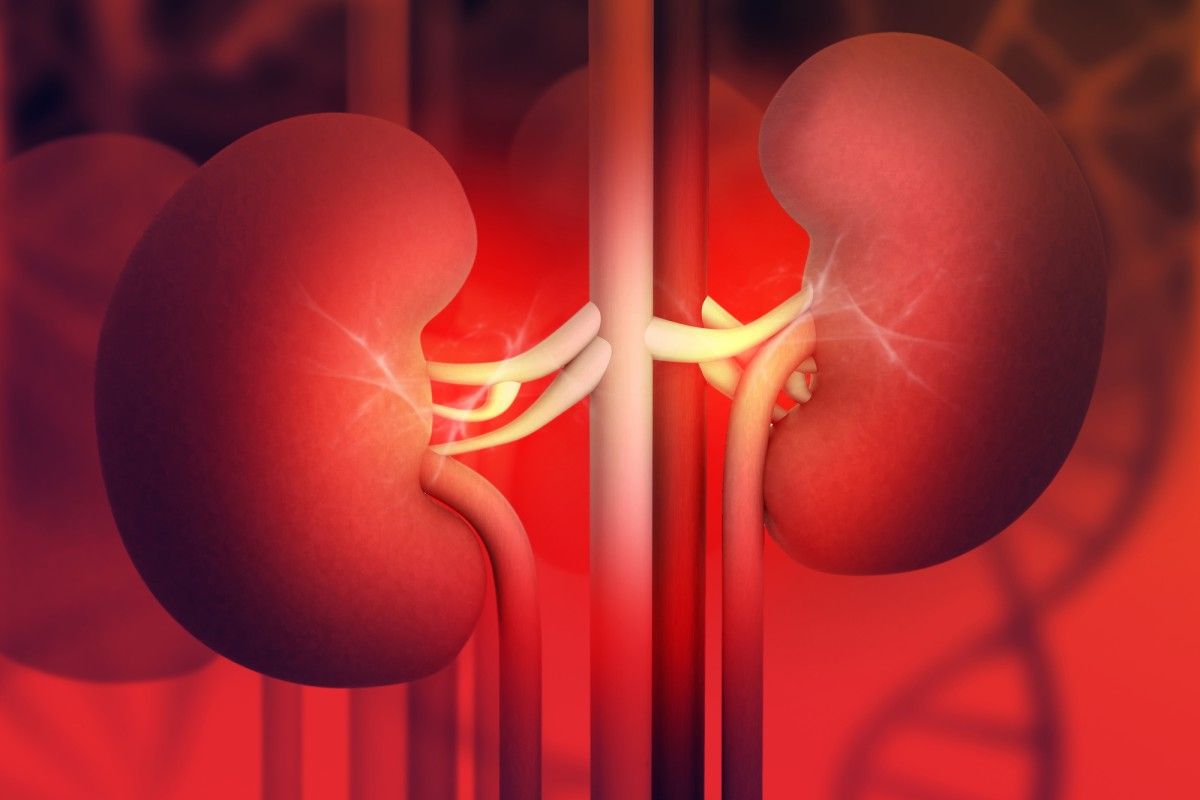
Kidney stones are hard mineral deposits that develop inside the kidneys and urinary tract. Detecting and understanding these stones is important for medical assessment and treatment planning. Medical imaging techniques such as CT scans and ultrasound help healthcare professionals examine the kidneys and identify abnormalities.
With the advancement of Artificial Intelligence (AI), deep learning and image processing are increasingly being explored for medical image analysis. The Kidney Stone Detection and Stone Analysis Using Image Processing and Deep Learning project focuses on developing an intelligent application that processes medical images and predicts the presence of potential kidney stones.
The project uses Python-based image processing and deep learning techniques to demonstrate how AI can support medical image analysis.
Key Features & Benefits
Working Principle of the Project
The proposed system follows a sequence of image-processing and deep learning operations:
Medical Image Input: Upload a kidney-related medical image for analysis.
Image Preprocessing: Resize, normalize and prepare the image for further processing.
Image Enhancement: Apply suitable image-processing techniques to improve image quality.
Feature Extraction: Learn relevant visual patterns from the processed images.
Stone Detection: Use a trained deep learning model to identify potential kidney stone regions or classify the image.
Result Visualization: Display the prediction and analysis results through the application interface.
Depending on the dataset and model design, the system can be extended to classify images or estimate stone-related characteristics.
Implementation Guide
Technologies and Algorithms Used
The project can be implemented using the following technologies:
Software Requirements:
Python
TensorFlow or Keras
OpenCV
NumPy
Pandas
Scikit-learn
Flask or Streamlit
Possible Deep Learning Algorithms:
Convolutional Neural Network (CNN)
VGG16
ResNet
EfficientNet
U-Net for image segmentation
Image-processing operations such as resizing, filtering, normalization and contrast enhancement can help prepare medical images for model training and prediction.
Technical Specifications
Key Features and Applications
The kidney stone detection application can include several useful features:
Medical image upload and preprocessing.
AI-based kidney stone classification.
Potential stone-region visualization using image segmentation.
Prediction result display.
Image analysis history and reporting.
Model performance evaluation using accuracy, precision, recall and F1-score.
Potential Applications:
Medical image analysis research.
AI and deep learning education.
Computer-aided medical imaging experiments.
Healthcare technology development.
Academic projects involving image classification and segmentation.
The system can be further developed to compare different deep learning architectures and evaluate their performance on properly labeled medical imaging datasets.
Conclusion & Next Steps
Conclusion
The Kidney Stone Detection and Analysis Using Image Processing and Deep Learning project demonstrates the potential of artificial intelligence in medical image analysis. By combining image preprocessing, feature learning and deep learning models, the application provides a practical way to explore automated kidney stone image classification and analysis.
This project is suitable for students interested in Python, Artificial Intelligence, Deep Learning and Medical Image Processing. It can also be extended with image segmentation, prediction visualization and model evaluation features.
Medical Disclaimer: This project is intended for academic and research purposes. AI-generated predictions are not a medical diagnosis and must not replace professional medical examination or advice.