Your cart

Your Wishlist

Categories

📞 Working Hours: 9:30 AM to 6:30 PM (Mon-Sat) | +91 9739594609 | 🟢 WhatsApp

⏰ 9:30 AM - 6:30 PM |

Calorie Burn Prediction Analysis Using Machine Learning Project
YouTube Video
Product Image
Product Preview

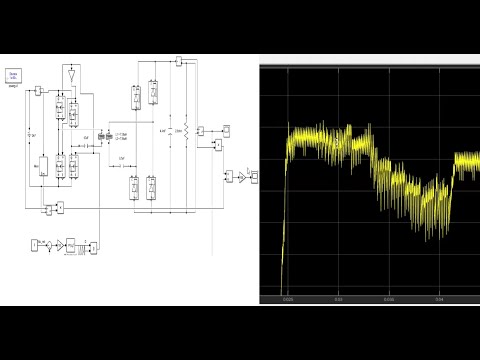
Design of LC-CL compensation method for wireless power transfer

Category: Electrical Projects

Price: ₹ 5600 ₹ 8000 30% OFF

ABSTRACT :

This paper proposes a resonant bridge converter, which uses a tuned capacitor–inductor–capacitor network. In comparison to the conventional DABs, the proposed topology significantly reduces the bridge currents, lowering both conduction and switching losses and improving the bridge power factors. A voltage control loop is designed in order to regulate the load voltage irrespective of the distance between the primary and secondary coils. Efficiency is measured for different coupling coefficients of the coupled inductance and the viability of the proposed concept is verified through simulation.

INTRODUCTION

In past, the conventional energy sources such as coal, gas, oil, etc, are utilized for power generation until the renewable sources are introduced for electrical power generation. Also, the regulations regarding emission of pollutants and impact on environmental pollution reduction caused the quick growth on these renewable sources. The Photovoltaic (PV) energy was utilized for charging the batteries in isolated areas and wind turbines also used in few occasions. These two energy sources are extended over other applications also and they both get combined to design hybrid system after the idea of grid connected system is introduced. Several new ideas regarding control circuits, design of converters, MPPT (Maximum Power Point Tracking), real and reactive power control and injection, etc, are proposed regarding the hybrid energy resources. The key issue in this is the availability of irradiation in solar and wind speed cannot be predetermined as it relied on the environmental conditions. The wind and solar energies are complement to each other and provides power almost all over the year is the main reason for choosing them for hybrid power generation. Hence these two can be used as main power sources and also it is possible to include an auxiliary power source such as battery, diesel plant, biogas, fuel cell, etc, as backup. As the power generation unit consists of multiple sources, it is more reliable than individual sources irrespective of the location of the power generation unit. It can be utilized in remote villages as the distribution of electrical energy from grid is near to impossible in those locations. A control strategy is important for the hybrid system in order to regulate the variables such as voltage, power, etc. As these renewable sources are volatile in nature voltage control is essential for the reliable power generation and distribution.

PROBLEM STATEMENT:

The aim of the project is to design an CLC resonant dc-dc converter system in a closed loop system. The controlling of resonant CLC converter is realized using PI controller and the performance of the proposed system has to be observed for these different coefficient of coupling based on the simulation results.

block-diagram

• Demo Video
• Complete project
• Full project report
• Source code
• Complete project support by online
• Life time access
• Execution Guidelines
• Immediate (Download)

Software Requirements:
1. Matlab 2014A and Above
2. simpowersystems toolbox

Hardware Requirements:
1. PC or Laptop
2. 500GB HDD with 1 GB above RAM
3. Keyboard and mouse

1. Immediate Download Online

Leave a Review

Only logged-in users can leave a review.

Customer Reviews

No reviews yet. Be the first to review this product!