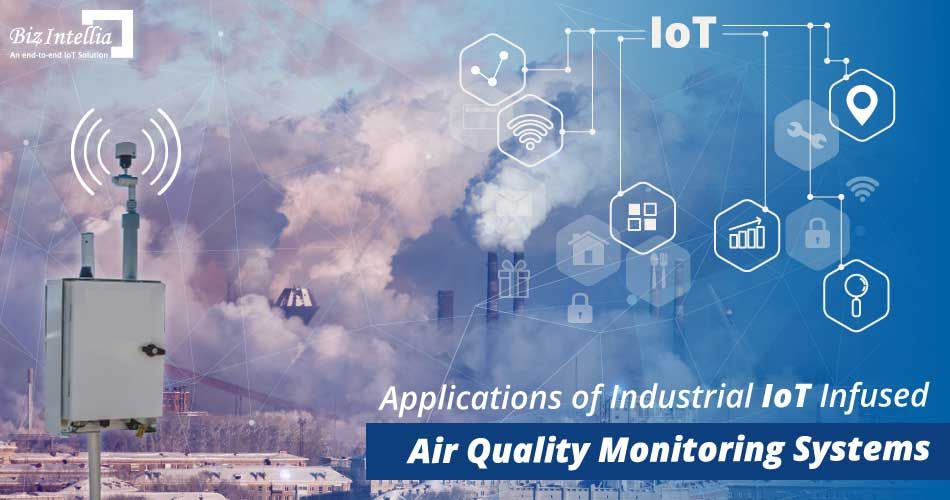
IoT air quality monitoring systems have applications in smart cities, homes, offices, schools, hospitals, industries, transportation, agriculture, environmental research, public spaces, and industrial safety.
Smart cities can deploy connected air quality monitoring stations across different areas to collect real-time pollution information.
Homes can use indoor air quality monitoring systems to track environmental conditions and provide alerts when air quality parameters change.
Offices can implement IoT air quality sensors to monitor indoor environmental conditions and support better building management.
Schools and colleges can use air quality monitoring systems in classrooms, laboratories, and campus areas.
Hospitals and healthcare facilities can use environmental monitoring systems to observe indoor air quality parameters in selected areas.
Industries can use IoT air quality monitoring to observe environmental conditions around production and operational areas.
Traffic and transportation departments can use air quality monitoring stations near roads and high-traffic areas to study pollution patterns.
Environmental organizations can use IoT sensors to collect continuous air pollution data for environmental analysis.
Construction sites can use air quality monitoring systems to track dust and particulate matter around project areas.
Agricultural environments can use air quality and weather monitoring to study environmental conditions affecting crops.
Research organizations can collect long-term air quality datasets for pollution studies, environmental research, and data analytics.
IoT air quality systems can also be integrated with cloud dashboards, mobile applications, databases, GPS mapping, automated notifications, AI models, machine learning, smart city platforms, and environmental management systems.
Implementation Guide
Who Can Benefit from IoT Air Quality Projects and Suitable Domains
IoT Air Quality projects are suitable for engineering students, researchers, environmental organizations, industries, smart city developers, IoT professionals, embedded systems developers, startups, and organizations working on environmental monitoring.
Engineering Students
B.Tech, BE, ME, M.Tech, diploma, and final-year engineering students can use IoT air quality projects for mini projects, major projects, final-year projects, academic demonstrations, and research.
CSE Students
Computer Science students can work on IoT software, cloud computing, databases, APIs, web dashboards, mobile applications, artificial intelligence, machine learning, and air quality analytics.
IT Students
Information Technology students can develop complete air quality monitoring platforms using IoT devices, REST APIs, databases, cloud services, web applications, and mobile applications.
ECE Students
Electronics and Communication Engineering students can focus on gas sensors, particulate matter sensors, microcontrollers, wireless communication, embedded systems, LoRa, GSM, and IoT connectivity.
EEE Students
Electrical and Electronics Engineering students can develop air quality systems integrated with electrical monitoring, automation, solar power, smart buildings, and industrial infrastructure.
Environmental Engineering Students
Environmental Engineering students can develop projects related to air pollution monitoring, particulate matter monitoring, industrial pollution analysis, environmental data collection, and smart environmental management.
AI and Machine Learning Students
AI and ML students can develop air quality prediction, pollution classification, anomaly detection, pollution trend analysis, and intelligent environmental monitoring models.
Embedded Systems Students
Embedded systems students can develop sensor-based air quality monitoring devices using Arduino, ESP32, ESP8266, Raspberry Pi, and environmental sensors.
Smart City Researchers
Smart city researchers can develop distributed air quality monitoring networks that combine IoT sensors, cloud computing, GIS, dashboards, analytics, and intelligent decision-making.
Suitable Domains
IoT Air Quality projects are suitable for Internet of Things, Embedded Systems, Environmental Monitoring, Air Pollution Monitoring, Smart Cities, Artificial Intelligence, Machine Learning, Cloud Computing, Sensor Networks, Industrial Automation, Smart Buildings, Data Analytics, Environmental Engineering, Mobile Application Development, Web Development, and Smart Infrastructure.
Technical Specifications
Why Choose Aislyn Technologies for IoT Air Quality Projects
Aislyn Technologies, Bangalore provides practical support for developing IoT, Embedded Systems, Artificial Intelligence, Machine Learning, Environmental Monitoring, and Smart City projects.
IoT air quality projects can be customized according to academic requirements, project complexity, environmental application, available hardware, and preferred technology stack.
Projects can be developed using Arduino, ESP32, ESP8266, Raspberry Pi, MQ-series gas sensors, PM2.5 sensors, PM10 sensors, CO2 sensors, particulate matter sensors, temperature sensors, humidity sensors, GPS modules, Wi-Fi, LoRa, GSM, MQTT, cloud platforms, REST APIs, Python, Java, PHP, MySQL, MongoDB, React.js, and mobile applications.
Aislyn Technologies focuses on practical air quality monitoring solutions that combine hardware and software development. Projects can include sensor integration, embedded programming, wireless communication, database management, API development, cloud connectivity, mobile applications, web dashboards, data visualization, alerts, AI, and machine learning.
Students can select basic gas sensor monitoring projects or advanced multi-parameter IoT air pollution monitoring platforms depending on their academic requirements.
IoT Air Quality is a strong final-year project topic because it combines sensors, embedded systems, IoT communication, environmental monitoring, cloud computing, software development, data analytics, and real-world pollution monitoring applications.
Aislyn Technologies can support project planning, hardware integration, programming, IoT connectivity, database development, API development, dashboard creation, testing, documentation, and project guidance for IoT air quality projects in Bangalore.
For students looking for IoT Air Quality Projects, Air Quality Monitoring System Using IoT, IoT Air Pollution Projects, IoT Projects for Final Year Students, Embedded Air Quality Projects, or Smart Environmental Monitoring Projects, Aislyn Technologies provides customized project development and technical support.
Conclusion & Next Steps
Contact Details
Aislyn Technologies, Bangalore
Phone: +91 97395 94609
Email: info@aislyntech.com
Website: https://aislyn.in
If you are looking for IoT Air Quality Projects, Air Quality Monitoring System Using IoT, IoT Air Pollution Monitoring Projects, Smart Air Quality Projects, IoT Projects for Final Year Students, or Embedded Air Quality Monitoring Projects, contact Aislyn Technologies for practical project development and expert technical support.
Contact us today to start building your Embedded project in Bangalore with our expert support!

























.jpeg)