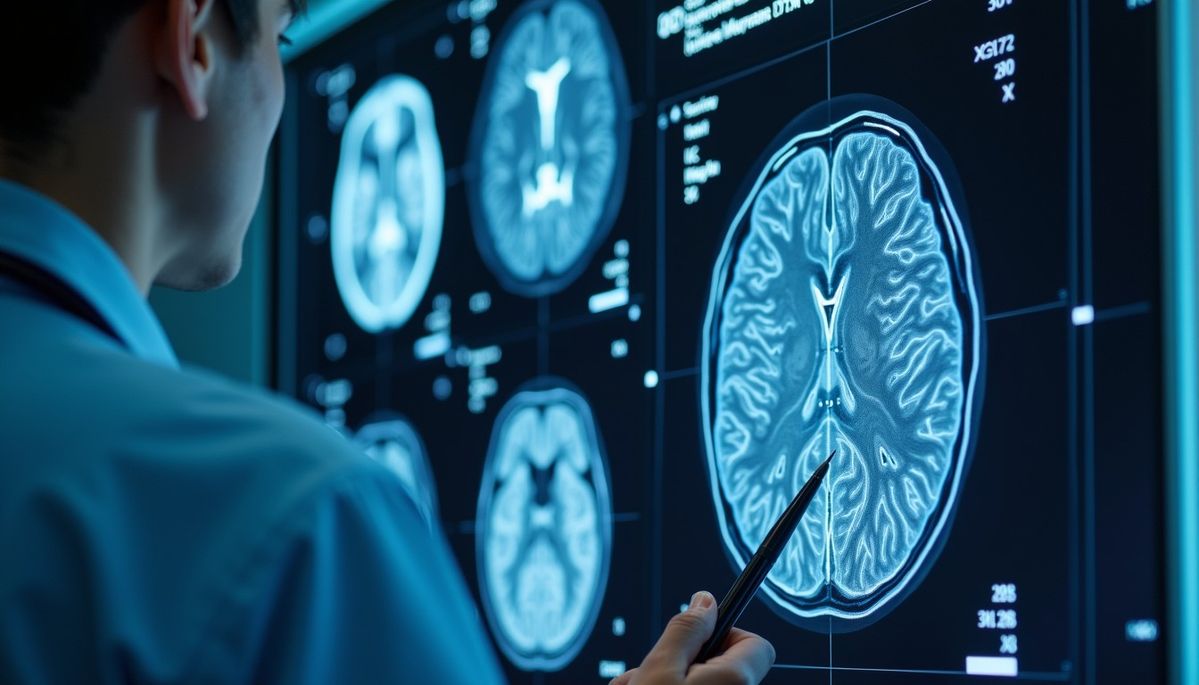
Brain tumors are complex medical conditions that require careful examination, treatment planning, and continuous monitoring. Understanding the factors associated with patient outcomes is an important area of medical research. With the development of artificial intelligence and machine learning, researchers are exploring predictive models that can analyze medical datasets and identify patterns associated with patient survival.
The Ensemble Technique for Brain Tumor Patient Survival Prediction project focuses on applying multiple machine learning algorithms to develop a predictive model using relevant patient and clinical data. Instead of depending on a single algorithm, ensemble learning combines predictions from multiple models to generate an overall prediction.
The system can analyze selected features from a brain tumor dataset, preprocess the information, train individual machine learning models, and combine their outputs using an ensemble strategy. Depending on the dataset and target variable, the system may classify patients into predefined survival categories or estimate a survival-related outcome.
This project provides an opportunity to understand how ensemble machine learning can be applied to healthcare-related datasets. It is suitable for MCA students interested in artificial intelligence, predictive analytics, data science, and medical research applications.
Key Features & Benefits
Project Concept and Working Methodology
The main concept of this project is to combine multiple machine learning models to analyze brain tumor patient data and predict predefined survival-related outcomes.
The workflow begins with collecting a suitable, anonymized dataset containing relevant patient information and outcome labels. Data preprocessing is then performed to handle missing values, convert categorical variables, and prepare numerical features for model training.
After preprocessing, the dataset is divided into training and testing subsets. Individual machine learning algorithms are trained using the training data. Their predictions are then combined using an ensemble technique.
Typical Project Workflow
Dataset Collection – Obtain a suitable brain tumor dataset containing patient features and survival-related target labels.
Data Preprocessing – Handle missing values, duplicate records, inconsistent entries, and categorical variables.
Feature Selection – Identify relevant variables that may contribute to the prediction task.
Dataset Splitting – Divide the data into training and testing sets while avoiding data leakage.
Individual Model Training – Train multiple machine learning algorithms independently.
Ensemble Integration – Combine model predictions using methods such as voting, bagging, boosting, or stacking, depending on the implementation.
Model Evaluation – Evaluate predictions using suitable performance metrics.
Prediction Interface – Allow users to enter supported input features and view the model output.
Result Visualization – Present prediction categories, model performance, and relevant analytical information.
Possible algorithms include Random Forest, Decision Tree, Logistic Regression, Support Vector Machine, and Gradient Boosting. The final selection should depend on dataset characteristics and experimental results.
If the dataset contains time-to-event information and censoring, survival analysis methods such as Cox proportional hazards models or suitable survival forests may be more appropriate than ordinary classification. The chosen method must match the actual target variable.
Implementation Guide
Key Features and Applications
The project demonstrates how ensemble learning can be used to build predictive models for medical research datasets.
Data Cleaning: Handles missing values and inconsistent dataset entries.
Feature Selection: Identifies relevant input variables for model training.
Multiple ML Algorithms: Supports the training of different machine learning models.
Ensemble Prediction: Combines outputs from multiple models using a selected ensemble strategy.
Survival Category Prediction: Predicts predefined survival categories when supported by the dataset.
Performance Evaluation: Measures model performance using suitable evaluation metrics.
Result Visualization: Displays prediction results and model evaluation information.
User Interface: Provides an interface for submitting supported input features and viewing predictions.
Potential Applications
Academic research in healthcare data analytics.
Machine learning experiments using brain tumor datasets.
Comparative evaluation of predictive algorithms.
Research into clinical outcome prediction.
Educational demonstrations of ensemble learning.
Development of experimental decision-support prototypes.
The model's predictions depend on the quality, size, representativeness, and labelling of the dataset. A model trained on one dataset may not perform reliably on patients from different hospitals or populations.
Technical Specifications
Technologies, Software and Hardware Requirements
The project can be developed using Python-based data science and machine learning technologies. The actual technology stack depends on the implementation.
Software Requirements
Programming Language: Python
Machine Learning: Scikit-learn
Data Processing: Pandas and NumPy
Data Visualization: Matplotlib and Seaborn
Machine Learning Algorithms: Random Forest, Decision Tree, Logistic Regression, SVM, and Gradient Boosting
Survival Analysis: Lifelines or Scikit-survival, if time-to-event analysis is implemented
Web Framework: Flask or Streamlit
Development Environment: Jupyter Notebook or Visual Studio Code
Database: SQLite or MySQL, if prediction records need to be stored
Operating System: Windows or Linux
Hardware Requirements
Processor: Intel Core i3 or above
RAM: Minimum 8 GB recommended
Storage: 10 GB free space or more
Display: Standard HD monitor
Input Devices: Keyboard and mouse
GPU: Optional for traditional machine learning algorithms
Model Evaluation Techniques
Ensemble models should be evaluated using an independent test dataset. For classification tasks, useful metrics include accuracy, precision, recall, F1-score, ROC-AUC, and confusion matrix.
For survival prediction, evaluation may require metrics such as the concordance index, time-dependent AUC, and Brier score. Calibration analysis is also important to understand whether predicted risks correspond to observed outcomes.
Cross-validation and independent external validation can help assess whether a model generalizes beyond its training data. Patient-level separation is essential when multiple records or images belong to the same individual.
Conclusion & Next Steps
Advantages, Future Scope and Conclusion
Advantages
Demonstrates the practical application of ensemble machine learning.
Combines multiple algorithms for predictive analysis.
Supports comparative evaluation of individual and combined models.
Helps students understand medical dataset preprocessing.
Provides opportunities to study feature selection and model optimization.
Can be extended with additional data analysis and visualization features.
Future Scope
The project can be enhanced by evaluating more advanced ensemble strategies, including stacking and gradient boosting. Larger and more diverse datasets may help improve model generalization when they are properly collected and validated.
Future research could integrate medical imaging features from MRI scans with structured clinical variables, provided that the datasets are appropriately labelled and linked. Explainable AI techniques could also help researchers understand which input features influence model predictions.
Other improvements may include external validation across different healthcare institutions, model calibration, bias assessment, and privacy-preserving data processing. If the project is extended to estimate survival over time, suitable survival analysis methods should be incorporated.
Conclusion
Brain Tumor Patient Survival Prediction Using Ensemble Learning is a research-oriented machine learning project that demonstrates how multiple predictive algorithms can be combined to analyze healthcare datasets. Through data preprocessing, feature selection, model training, ensemble integration, and performance evaluation, the project provides a structured approach to studying survival-related prediction tasks.
The project is suitable for MCA students interested in machine learning, data science, predictive analytics, and healthcare technology. Its predictions are experimental and must not be used to determine an individual patient's prognosis or treatment. Clinical use would require rigorous validation, appropriate regulatory review, and assessment by qualified medical professionals.