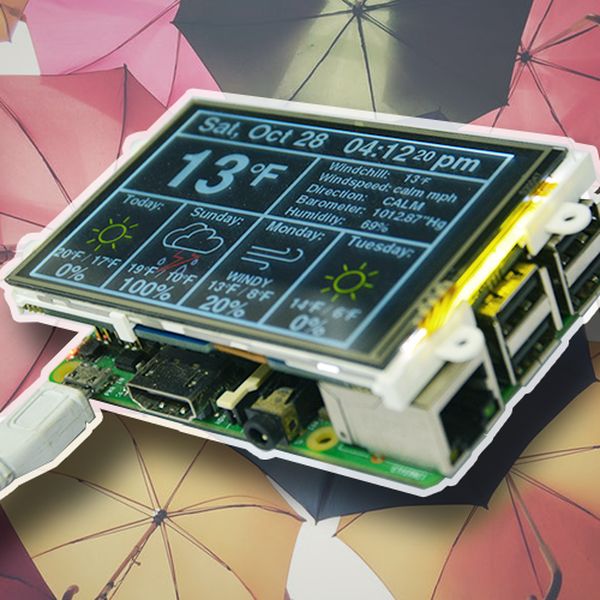
Introduction to AI-Based Weather Forecasting Using Raspberry Pi
Weather conditions such as temperature, humidity, rainfall and atmospheric pressure influence agriculture, transportation and everyday activities. Monitoring these environmental parameters helps people understand changing weather conditions and plan their activities.
Traditional weather monitoring systems often depend on manual observations or external weather information. Internet of Things (IoT) devices and artificial intelligence provide new possibilities for collecting local environmental data and analysing weather patterns automatically.
AI-Based Weather Forecasting System Using Raspberry Pi and Machine Learning is an intelligent IoT project that combines environmental sensors, Raspberry Pi and machine learning algorithms to monitor weather conditions and generate predictions.
The system collects real-time sensor readings, processes historical observations and applies trained machine learning models to estimate future weather conditions. An interactive dashboard can display sensor values, weather trends and prediction results.
Key Features & Benefits
Objectives of the Proposed System
Monitor environmental conditions using IoT sensors.
Collect temperature, humidity and atmospheric pressure readings.
Use Raspberry Pi for sensor data acquisition and processing.
Apply machine learning to analyse historical weather patterns.
Predict selected weather parameters based on available data.
Display real-time readings and predictions through a dashboard.
Store weather observations for historical analysis.
Support local environmental monitoring and weather research.
Implementation Guide
Technologies and Machine Learning Algorithms
Hardware Requirements
Raspberry Pi 4 or Raspberry Pi 5.
DHT22 or BME280 temperature and humidity sensor.
BMP280 or BME280 pressure sensor.
Rain sensor.
Wind speed sensor, if required.
Wi-Fi connectivity.
Power supply and connecting components.
Software Requirements
Python.
Raspberry Pi OS.
Pandas and NumPy.
Scikit-learn.
TensorFlow or Keras.
Flask or Streamlit.
MySQL or SQLite.
Matplotlib or Plotly.
Machine Learning Algorithms
Random Forest: Analyses weather parameters and predicts selected environmental values using multiple decision trees.
Linear Regression: Estimates continuous weather parameters such as temperature based on historical observations.
XGBoost: Supports efficient prediction using structured weather datasets.
LSTM: Analyses sequential weather observations to learn temporal patterns and forecast future conditions.
The final algorithm can be selected based on dataset size, prediction requirements and model evaluation results.
Technical Specifications
Working Process of the Raspberry Pi Weather Forecasting System
Step 1: Sensor Data Collection
Environmental sensors collect local readings such as temperature, humidity and atmospheric pressure.
Step 2: Raspberry Pi Processing
Raspberry Pi receives sensor values through connected interfaces and processes the readings using Python.
Step 3: Data Storage
The collected observations are stored in a database with timestamps for historical analysis.
Step 4: Data Preprocessing
The system handles missing values, normalizes measurements and prepares the dataset for machine learning.
Step 5: Machine Learning Prediction
The trained model analyses historical weather patterns and available sensor readings to estimate future environmental conditions.
Step 6: Dashboard Visualization
A web dashboard displays current sensor readings, historical graphs and predicted weather values.
Step 7: Weather Alerts
The application can generate notifications when selected environmental measurements cross predefined thresholds.
Conclusion & Next Steps
Applications and Advantages
Applications
Smart agriculture and farming.
Local weather monitoring stations.
Greenhouse environmental management.
IoT-based environmental monitoring.
Educational weather forecasting projects.
Smart city environmental applications.
Advantages
Real-time environmental data collection.
Compact Raspberry Pi-based implementation.
Automated weather parameter monitoring.
Machine learning-based weather analysis.
Historical data visualization.
Remote access through a web dashboard.
Expandable sensor integration.
Future Enhancements
The project can be enhanced with satellite weather data, cloud-based IoT monitoring, solar-powered sensor stations, mobile notifications and advanced deep learning models. Integration with external meteorological datasets can also help improve forecasting and compare local sensor measurements with regional weather information.
Conclusion
The AI-Based Weather Forecasting System using Raspberry Pi demonstrates how IoT and machine learning can work together for intelligent environmental monitoring. By combining sensor-based data collection, Raspberry Pi processing and predictive algorithms, the project provides a practical platform for analysing local weather conditions.
The system can be further developed into a smart weather station with cloud connectivity, advanced forecasting models and automated environmental alerts. Prediction quality should be evaluated using actual weather observations before relying on forecasts for important decisions.
Contact Details
Aislyn Technologies, Bangalore
Phone: +91 97395 94609
Email: info@aislyntech.com
Website: https://aislyn.in
Contact us today to start building your Embedded project in Bangalore with our expert support!