Abstract:
Smart cities have seen a growing interest among governments, researchers, and industries. Smart cities use digital technologies to enhance the quality of life for residents while promoting sustainability and efficient resource management. By integrating various technologies such as Information and Communication Technologies (ICT), Artificial Intelligence (AI), and Internet of Things (IoT), smart cities can improve the delivery of public services, optimize transportation systems, reduce energy consumption, and enhance public safety, among other benefits. Smart cities focus on automating different disciplines, including smart environment, smart home, smart economy, smart mobility, and smart governance. As a result, multi-agent driven smart cities have received tremendous attention from the research community for obtaining intelligent solutions to complex problems in different disciplines by subdividing responsibilities into multiple agents and empowering agents through AI. In this regard, it is vital to explore the usage of multi-agent systems in different critical application areas of smart cities. In this paper, a detailed description of the multi-agent process for smart city application areas is provided, along with resources and future research directions. Four different application areas: smart home, smart governance, smart environment, and smart mobility are discussed in detail.
INDEX TERMS Smart city, multi-agent system, smart home, smart governance, smart environment, smart mobility, artificial intelligence, IoT, big data.
Introduction :
The concept of smart cities revolves around the use of IoT, AI, and advanced communication networks to improve efficiency, sustainability, and quality of life. With the rise of collective intelligence and next-generation communication, cities can harness vast amounts of data to drive decision-making processes.
Smart cities utilize advanced technologies to improve infrastructure, reduce operational costs, and enhance public services. However, existing systems often operate in silos, lacking real-time coordination.
This project introduces a unified intelligence-driven framework that integrates:
• IoT-based sensors for real-time data collection
• Predictive analytics for traffic and environmental monitoring
• Cloud-based data logging for centralized decision-making
• Next-gen communication (5G/6G) for low-latency data transmission
• User-friendly dashboards for administrators and citizens By combining these technologies, the system ensures efficient resource management, reduced congestion, and improved urban living conditions.
• Demo Video
• Complete project
• Full project report
• Source code
• Complete project support by online
• Life-time access
• Execution Guidelines
• Immediate (Download)
SOFTWARE REQUIREMENTS:
1. ARDUINO IDE
2. EMBEDDED C
3. PYTHON IDE
4. PYTHON
5. WEBSITE
6. PHP LANGUAGE
HARDWARE REQUIREMENTS:
1. ESP32
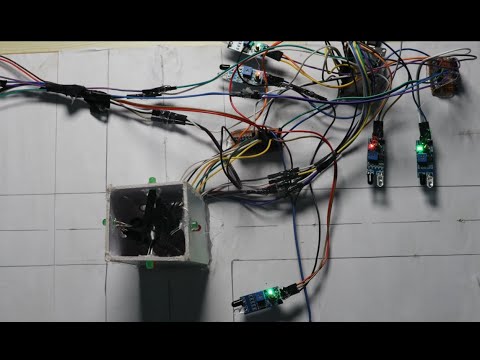
2. IR sensors – 7
3. LDR SENSOR
4. Ultrasonic sensor
5. Temperature sensor
6. Gas Sensor
7. Sound Sensor
8. Power supply
9. RED LED
10. GREEN LED
11. WHITE LED
12. LCD Display
Immediate Download:
1. Synopsis
2. Rough Report
3. Software code
4. Technical support
Hardware Kit Delivery:
1. Hardware kit will deliver 4-10 working days (based on state and city)
2. Packing and shipping changes applicable (based on kit size, state ,city)
Only logged-in users can leave a review.
No reviews yet. Be the first to review this product!