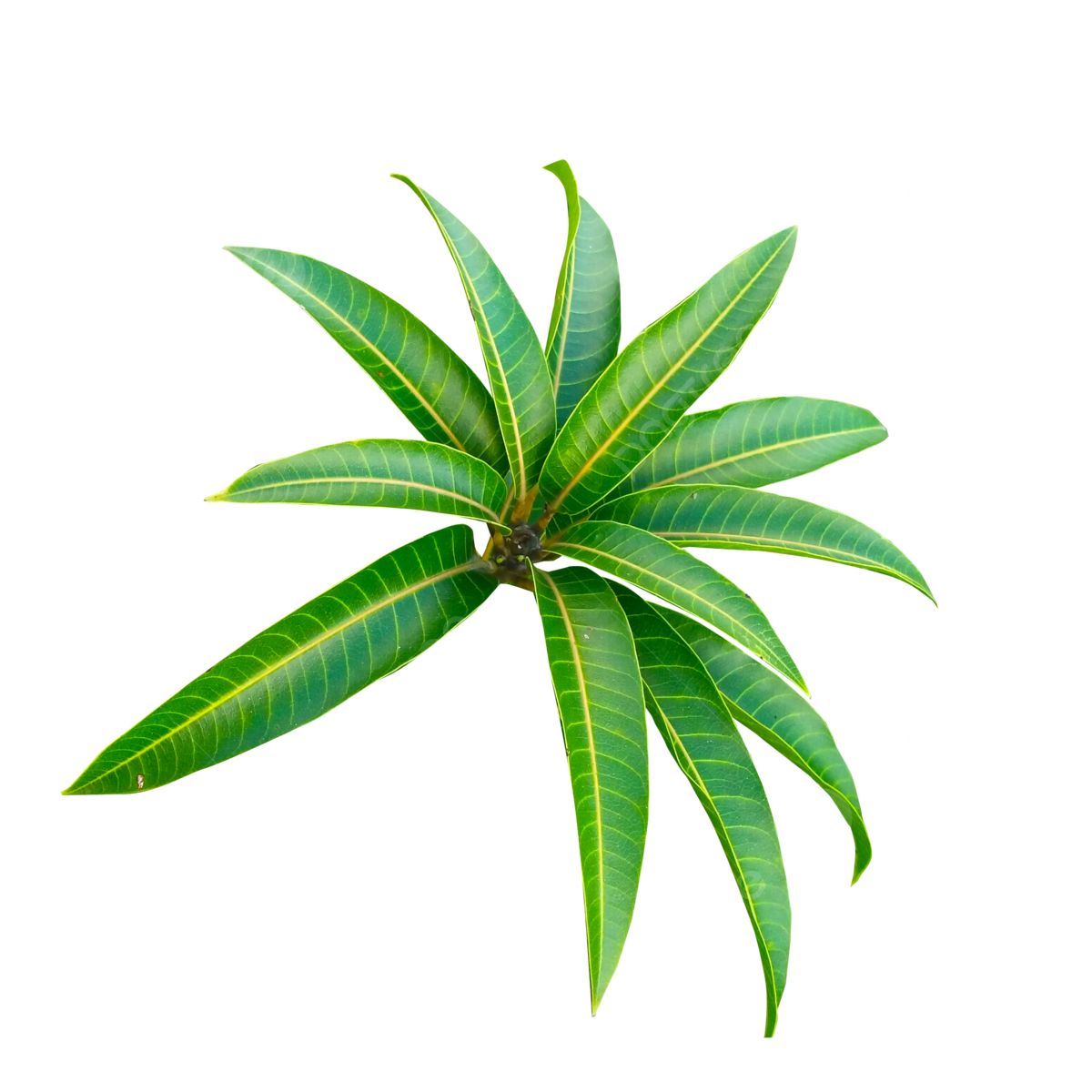
Mango is one of the most widely cultivated fruit crops, valued for its nutritional importance and commercial demand. Maintaining healthy mango plants is essential for improving fruit quality and agricultural productivity. However, mango trees can be affected by different leaf diseases that influence plant growth and reduce crop health.
Traditional disease identification generally depends on visual inspection by farmers and agricultural specialists. Although manual observation is useful, identifying diseases at an early stage can be difficult when symptoms look similar or when environmental conditions affect the appearance of leaves.
Artificial Intelligence (AI), Machine Learning (ML) and Computer Vision are creating new opportunities for automated agricultural image analysis. Deep learning models, particularly Convolutional Neural Networks (CNNs), can learn visual patterns from leaf images and classify them into different categories.
The Mango Leaf Disease Identification and Classification Using AI project proposes an intelligent web application that analyses uploaded mango leaf photographs and predicts the corresponding disease category using a trained deep learning model.
The application combines image preprocessing, feature extraction and automated classification to support digital plant disease recognition. Its objective is to demonstrate how AI technology can contribute to smart agriculture and assist users in understanding visible mango leaf symptoms.
Key Features & Benefits
Existing System and Its Challenges
Conventional mango leaf disease identification relies on visual examination and agricultural expertise. Farmers generally observe leaf colour, spots, damaged areas, texture changes and other visible symptoms to identify possible diseases.
However, traditional approaches can involve several challenges:
1. Dependence on Expert Knowledge: Accurate identification may require experience with different mango leaf diseases and their symptoms.
2. Similar Disease Symptoms: Different infections may produce similar spots, discoloration or damaged leaf regions, making identification difficult.
3. Early Disease Recognition: Initial symptoms may be small or unclear and can be overlooked during manual inspection.
4. Environmental Variations: Lighting, shadows, camera quality and background objects can affect the appearance of leaf photographs.
5. Time-Consuming Inspection: Examining large numbers of leaves manually may require considerable effort.
6. Limited Digital Classification: Traditional inspection does not automatically generate consistent digital predictions or maintain image-based records.
AI-based image classification can help address some of these limitations by analysing photographs using trained models. However, prediction accuracy depends on dataset quality, correct labelling, model validation and performance under real agricultural conditions.
Implementation Guide
Proposed System and Methodology
The proposed system uses a deep learning model to identify and classify mango leaf diseases from uploaded images through a web application.
The implementation can include the following stages:
1. Dataset Collection
A mango leaf image dataset is collected from suitable sources. It should contain healthy leaf images and the disease categories included in the project. Each image must be correctly labelled before training.
2. Image Preprocessing
The collected images are prepared for model training. This stage may include resizing, normalization, noise reduction and image format conversion.
Data augmentation techniques such as rotation, flipping, zooming and brightness adjustment can help improve dataset diversity.
3. Deep Learning Model Training
A CNN learns important visual features from the mango leaf images. Convolutional layers identify patterns such as spots, lesions, colour changes and texture differences.
Transfer learning using architectures such as MobileNetV2, ResNet50 or EfficientNet can also be explored when suitable pretrained weights and licensing conditions are available.
4. Feature Extraction and Classification
The trained network extracts relevant image features and passes them to classification layers. The final layer predicts the most likely disease category based on the classes included in the training dataset.
5. Web Application Development
A web interface allows users to upload mango leaf photographs. The backend receives the image, applies the required preprocessing and passes it to the trained model.
6. Disease Prediction
The model analyses the uploaded image and returns a predicted class with a confidence score. The interface displays the prediction and relevant information about the selected category.
7. Result Visualization
The application presents the uploaded image, predicted disease label and confidence information. Prediction history may also be stored if the application includes a database and appropriate privacy controls.
Technical Specifications
Technologies, Features and Applications
The project can be developed using Python, deep learning frameworks, computer vision libraries and web development technologies.
Technologies Used
Python – Main programming language.
TensorFlow or PyTorch – Deep learning model development.
CNN – Mango leaf image classification.
MobileNetV2 or EfficientNet – Optional transfer learning architectures.
OpenCV – Image preprocessing and image handling.
NumPy – Numerical computation and image array processing.
Pandas – Dataset organization and analysis.
Matplotlib – Training graphs and performance visualization.
Flask or Streamlit – Web application development.
HTML, CSS and JavaScript – Frontend interface.
MySQL or MongoDB – Optional user and prediction history storage.
Key Features
User-friendly web interface.
Mango leaf image upload.
Automatic image preprocessing.
AI-based disease identification.
CNN-based image classification.
Display of predicted disease category.
Prediction confidence visualization.
Support for healthy and diseased leaf categories included in the dataset.
Optional prediction history management.
Responsive interface for desktop and mobile devices.
Potential Applications
Mango plantation health monitoring.
Agricultural image classification research.
Digital plant disease identification.
Smart farming applications.
Agricultural education and awareness.
AI-based crop monitoring research.
Web-based plant disease recognition tools.
The model should be evaluated using independent test images captured under different lighting conditions, backgrounds and camera settings. Its output should be treated as an initial image-based prediction rather than a confirmed agricultural diagnosis. Farmers should consult agricultural experts before making treatment decisions.
Conclusion & Next Steps
Conclusion
Mango Leaf Disease Identification and Classification Using AI demonstrates the application of deep learning and computer vision in smart agriculture. By combining image preprocessing, CNN-based feature extraction and automated classification through a web application, the project provides an accessible approach to studying mango leaf disease recognition.
This project is suitable for students interested in artificial intelligence, Python programming, deep learning, image processing and web application development. It also provides a foundation for future research into automated crop monitoring and precision agriculture.
Contact Details
Aislyn Technologies, Bangalore
Phone: +91 97395 94609
Email: info@aislyntech.com
Website: https://aislyn.in
Contact Aislyn Technologies for project development, implementation guidance and technical support. Our team can help you develop your Web Application final-year project with expert support.