Abstract
This project presents an integrated Real-Time Image Prediction and Health Monitoring System that combines deep learning, machine learning, biometric authentication, and web technologies into a unified intelligent platform. The system is designed to perform automated image classification, secure fingerprint verification, and real-time health parameter analysis using AI-based models and API-driven data processing techniques. For the image classification module, a Convolutional Neural Network (CNN) based on the ResNet50 architecture is employed to extract 128-dimensional feature embeddings from input images. These extracted features are then processed using a Random Forest classifier to enhance classification accuracy, stability, and robustness. The trained models are deployed within a graphical interface that allows users to upload images and obtain instant prediction results in real time.
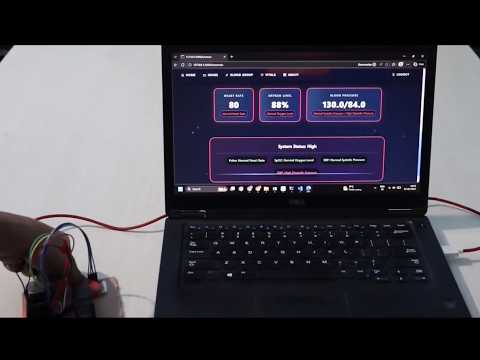
For health monitoring, critical physiological parameters such as blood pressure and oxygen saturation (SpO₂) are continuously analyzed. Both Systolic Blood Pressure (SBP) and Diastolic Blood Pressure (DBP) values are evaluated to assess cardiovascular health conditions. Abnormal variations in blood pressure, including hypertension and hypotension, are identified using intelligent classification techniques. A Deep Neural Network (DNN) model is trained to classify overall health status as normal or abnormal based on SBP, DBP, and SpO₂ values. Furthermore, real-time health data is retrieved from an external API and processed using rule-based logic to detect abnormal oxygen levels and irregular blood pressure conditions, enabling early risk identification. The system is implemented using a secure web application framework that supports user authentication, session management, fingerprint verification, and interactive health monitoring dashboards. In addition, a desktop-based graphical interface facilitates real-time image prediction and displays live health analysis results. Processed data is stored systematically for reporting, monitoring, and future analytical purposes. By integrating computer vision, machine learning, biometric security, and real-time health analytics into a single platform, the proposed system provides a scalable, efficient, and intelligent solution. It is suitable for applications in remote healthcare monitoring, secure biometric systems, smart hospitals, and intelligent surveillance environments, contributing to improved decision-making, enhanced security, and proactive health management.
Introduction
The rapid growth of Artificial Intelligence (AI), Machine Learning (ML), and Deep Learning technologies has revolutionized modern healthcare and intelligent monitoring systems. These technologies enable automated analysis, accurate predictions, and real-time decision-making without continuous human supervision. As digital transformation continues to expand across industries, integrating AI with healthcare monitoring and biometric authentication systems has become increasingly important.
Among various health parameters, blood pressure is one of the most critical indicators of cardiovascular health. Abnormal blood pressure levels, such as hypertension (high blood pressure) and hypotension (low blood pressure), can lead to severe medical complications including heart disease, stroke, and organ damage. Continuous monitoring of blood pressure allows early detection of irregularities and helps prevent life-threatening conditions. Similarly, oxygen saturation (SpO₂) indicates the percentage of oxygen present in the blood and plays a vital role in evaluating respiratory efficiency. A decrease in oxygen saturation levels may indicate respiratory distress or other underlying medical issues.
Traditional monitoring systems typically require manual measurement and lack intelligent interpretation of health data. They often do not provide real-time analytics or predictive insights. In contrast, AI-based systems can analyze health parameters dynamically, identify abnormal patterns, and classify health conditions as normal or abnormal using trained machine learning models. This improves accuracy, reduces human error, and enables faster response to potential health risks.
In addition to healthcare monitoring, image-based prediction systems have gained significant importance in various fields such as medical diagnosis, security, and surveillance. Deep learning models, particularly Convolutional Neural Networks (CNNs), are highly effective in extracting meaningful features from images and performing accurate classification. These models eliminate the need for manual feature extraction and provide robust performance even with complex datasets.
Biometric authentication systems, such as fingerprint verification, further enhance the security and reliability of intelligent platforms. By integrating secure login systems and biometric validation, unauthorized access to sensitive health and prediction data can be prevented. This ensures data privacy and strengthens system integrity.
The proposed system integrates image classification, blood pressure monitoring, SpO₂ analysis, biometric authentication, and real-time API-based data retrieval into a unified platform. The image classification module uses a deep learning model to extract feature embeddings, followed by a machine learning classifier for accurate prediction. Simultaneously, the system retrieves live health data, processes blood pressure and oxygen saturation values, and evaluates overall health status using intelligent algorithms.
By combining AI-driven image analysis, real-time health monitoring, and secure web deployment, the system provides a scalable and intelligent solution suitable for smart healthcare applications, remote patient monitoring, biometric verification systems, and intelligent surveillance environments. The integration of these multiple technologies into a single platform enhances efficiency, improves accuracy, ensures security, and supports data-driven decision-making in modern digital ecosystems.
Objectives
The main objective of this project is to develop a comprehensive and intelligent Real-Time Image Prediction and Health Monitoring System that integrates deep learning, machine learning, biometric authentication, and web technologies into a unified and scalable platform. The system aims to provide automated image classification, continuous health monitoring based on blood pressure and oxygen saturation levels, and secure access control using fingerprint verification.
A primary objective is to design and implement a deep learning-based image classification framework using a Convolutional Neural Network (CNN). The CNN automatically extracts high-level features from input images, reducing dependency on manual feature engineering. These extracted features are then processed using a Random Forest classifier to enhance classification accuracy, stability, and robustness. This hybrid architecture aims to improve prediction performance while minimizing overfitting and computational complexity.
Another important objective is to develop an intelligent health monitoring module that focuses on analyzing Systolic Blood Pressure (SBP), Diastolic Blood Pressure (DBP), and oxygen saturation (SpO₂) levels. Blood pressure is a critical indicator of cardiovascular health, and abnormal values can lead to severe complications such as hypertension, hypotension, stroke, or heart disease. By continuously monitoring SBP and DBP values, the system aims to provide early detection of abnormal conditions. Simultaneously, SpO₂ analysis helps in identifying respiratory issues or oxygen deficiency conditions.
The project also aims to implement a Deep Neural Network (DNN) model capable of classifying overall health status as normal or abnormal based on multiple physiological parameters. This objective emphasizes predictive analysis and intelligent decision-making, allowing the system to detect potential health risks automatically without requiring manual interpretation.
Another key objective is to integrate real-time API-based data retrieval mechanisms to fetch live health parameter data. This ensures that the system provides up-to-date analysis and supports continuous monitoring. The objective includes validating, preprocessing, and dynamically analyzing incoming data to maintain system reliability and accuracy.
Security and privacy are also core objectives of this project. The system aims to implement secure login mechanisms, session management, and fingerprint-based biometric authentication to restrict unauthorized access. Protecting sensitive health information and ensuring data confidentiality are critical aspects of the system design.
Additionally, the project aims to develop an interactive and user-friendly interface through both web-based and desktop applications. The interface allows users to upload images, view classification results, monitor real-time health parameters, and access historical data records. This objective ensures ease of use, accessibility, and practical deployment in real-world environments.
Finally, the system aims to provide scalability and adaptability, allowing future integration of additional health parameters, advanced predictive models, and cloud-based storage systems. By achieving these objectives, the proposed system contributes to intelligent healthcare monitoring, secure biometric systems, and smart surveillance solutions.
Block Diagram