Introduction: Mitigating Crop Destruction with Smart Agricultural Surveillance
Crop damage caused by wild and domestic animal intrusions remains one of the largest contributors to economic loss for farmers across agricultural regions. Traditional deterrents such as manual guarding, firecrackers, fencing, or scarecrows are inefficient, labor-intensive, and often dangerous. Moreover, static fencing fails to adapt to dynamic animal behaviors, while physical barriers can be bypassed or damaged by larger wildlife like wild boars, elephants, and stray cattle.
The AI Powered Animal Detection and Alert System for Smart Agriculture delivers an automated, non-invasive surveillance solution. By combining real-time computer vision object detection algorithms (such as YOLOv8) with IoT alert nodes, the system identifies animal species entering farm perimeters, evaluates intrusion threats, triggers targeted ultrasonic/light deterrents, and dispatches instant mobile alerts to farmers.
For MCA, Computer Science, and Electronics Engineering final year students in Bangalore, building an AI-driven agricultural defense system combines edge AI vision models, embedded IoT hardware integration, real-time alert APIs, and cloud reporting dashboards into an impactful portfolio deliverable.
Key Features & Benefits
System Pipeline & Operational Workflow
The platform processes camera feeds through a multi-stage computer vision and hardware response pipeline designed for immediate perimeter defense.
The process begins with Visual Ingestion & Perimeter Surveillance, where optical camera modules or thermal sensor cameras positioned along farm perimeters capture continuous video frames of surrounding boundary fields.
Next, during Frame Pre-Processing & Motion Verification, the edge controller normalizes lighting conditions, reduces background environmental noise (such as swaying foliage), and detects active motion vectors to trigger bounding frame extraction.
This advances to AI Animal Classification & Bounding Box Localization, where extracted frame samples pass through a lightweight deep learning object detection model (such as YOLOv8 Nano or MobileNet-SSD). The network isolates target species, generating bounding boxes around detected animals (e.g., wild boars, deer, elephants, stray dogs/cattle).
Following this, Threat Level Evaluation & Deterrent Activation evaluates the detected animal class and proximity zone. Based on the target species, the microcontroller activates specific non-lethal deterrents, such as high-frequency ultrasonic speakers, flashing stroboscopic LEDs, or acoustic repellant frequencies tuned to the specific animal type.
The system then enters Real-Time Alert Dispatch & Notification, where an integrated GSM/GPRS module or Wi-Fi microcontroller fires instant alert notifications (via SMS, WhatsApp API, or Push Notification) containing the detected species name and exact location zone to the farmer's mobile device.
Finally, the system outputs Cloud Logging & Analytical Dashboarding, sending intrusion timestamp records and frame snapshots to a web database where farmers and agricultural administrators view historical intrusion heatmaps and peak activity times.
Implementation Guide
Key Features & Essential Technologies
Developing an AI animal detection system requires pairing low-power computer vision backends with responsive alerting hardware. Key features include real-time multi-species animal detection, multi-stage automated repellant activation, instant SMS and app notifications, day and night vision support, and web dashboard telemetry tracking.
The recommended technology stack uses Python 3.10+ for model training and edge deployment. The computer vision pipeline relies on OpenCV, PyTorch, Ultralytics YOLOv8, and NumPy. Hardware edge execution can be deployed using microcontrollers and edge hardware platforms like Raspberry Pi 4/5, NVIDIA Jetson Nano, or ESP32-CAM modules. IoT communication and alerts are managed via GSM SIM800L modules, Twilio APIs, or MQTT brokers connected to an HTML5/CSS3 and Flask or Node.js web dashboard. Relational data tracking uses MySQL or PostgreSQL databases.
Technical Specifications
Step-by-Step Implementation Guide for Students
Follow this structured step-by-step roadmap to build, train, evaluate, and deploy your final-year project:
Dataset Collection & Object Annotation Setup
Action: Collect custom and benchmark datasets of local wildlife and domestic animals (wild boars, deer, cattle, monkeys). Annotate bounding box labels using tools like LabelImg or Roboflow, categorizing classes accurately for training.
Verification: Verify dataset annotations by inspecting output JSON/YOLO text label files to confirm bounding box coordinates align with target animal classes.
YOLO Model Fine-Tuning & Quantization
Action: Train a YOLOv8 object detection model on the prepared dataset using PyTorch. Export optimized model weights (such as ONNX or TensorRT format) for high-FPS execution on edge platforms like Raspberry Pi or Jetson Nano.
Verification: Run validation test videos to verify model detection accuracy (mIoU > 85%) and ensure real-time inference speeds (above 15-20 FPS).
Hardware & Sensor Interfacing Setup
Action: Interface edge devices with relays, ultrasonic buzzers, high-intensity flashers, and GSM/Wi-Fi modules. Write Python control scripts to trigger specific output pins upon model classification triggers.
Verification: Pass a sample test image to the model; verify that relay switches click open and output alert signals fire on cue.
Web UI & Telemetry Integration
Action: Build a lightweight Flask or Node.js dashboard displaying camera stream feeds, real-time alert logs, and system status metrics. Deploy alert scripts to send instant mobile notifications.
Verification: Simulate an intrusion event using a test video stream to confirm the system triggers local buzzers, updates the dashboard, and delivers an SMS alert to a mobile phone within 3 seconds.
Conclusion & Next Steps
Future Scope & Industry Applications
Combining artificial intelligence with automated farm defense offers substantial potential across modern smart farming:
Thermal & Infrared Night Surveillance: Integrating thermal imaging cameras for high-accuracy nocturnal animal detection during dark hours.
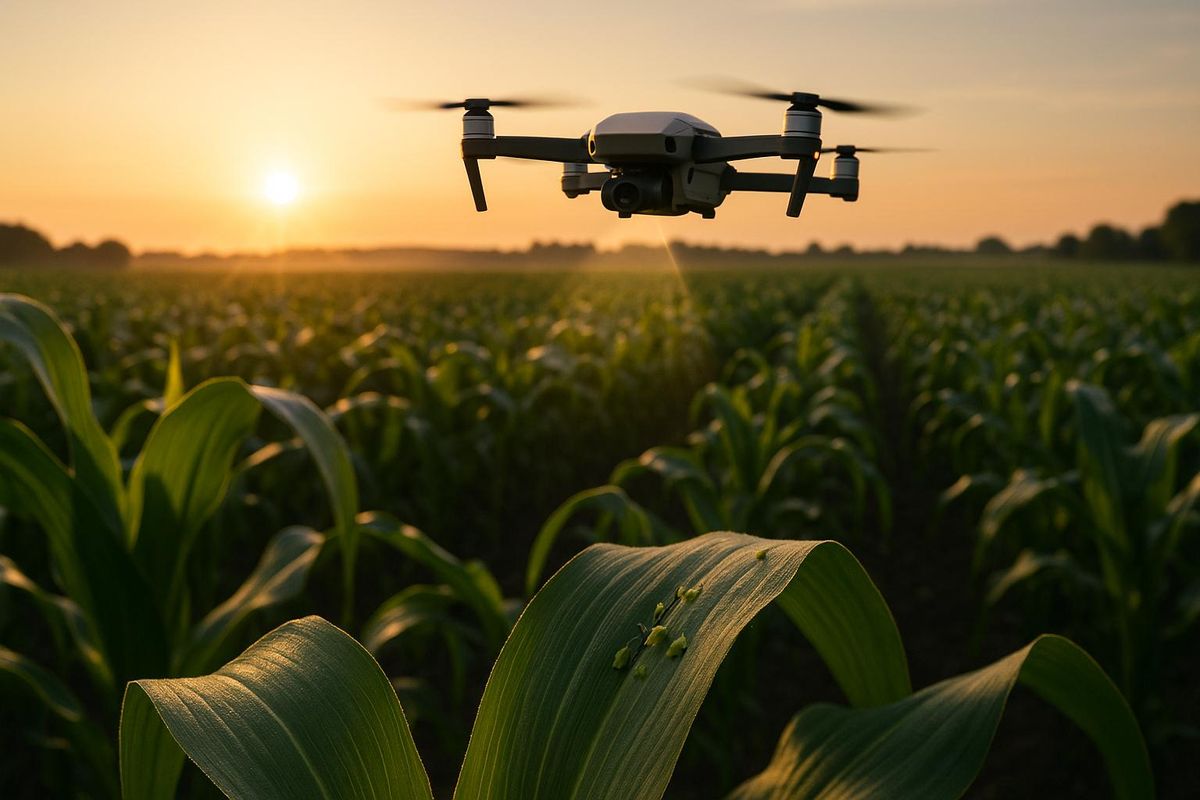
Drone Patrol Autonomy: Deploying autonomous AI-powered drones to patrol large agricultural estates and drive away intrusions automatically.
Forest Boundary Early Warning Systems: Implementing smart detection grids along forest borders to reduce human-wildlife conflicts near rural villages.
Building an AI Powered Animal Detection and Alert System for Smart Agriculture equips MCA and engineering students with practical experience in computer vision, edge AI deployment, IoT hardware integration, and full-stack software development.
Contact Details
Aislyn Technologies, Bangalore
📞 Phone: +91 97395 94609
📧 Email: info@aislyntech.com
🌐 Website: https://aislyn.in
Contact us today to start building your Embedded project in Bangalore