Your cart

Your Wishlist

Categories

YouTube Video
Product Image
Product Preview

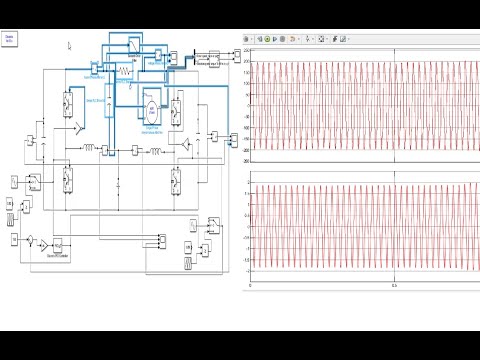
Single Phase Differential Boost Inverter for Induction Motor Drive Design and Simulation

Category: Electrical Projects

Price: ₹ 5600 ₹ 8000 0% OFF

Abstract:

A single-phase differential boost inverter is proposed in this paper for induction motor drive applications. Two Bidirectional boost converters are used with common voltage source and the load connected between the converters forms this proposed inverter topology. A PI controller based voltage mode control circuit is used for controlling the output voltage of the inverter. An induction motor serves as the load for the proposed inverter. The filters are eliminated as the converter inductance and capacitance serves the purpose of both boost operation and filtering. The proposed system is simulated in MATLAB/Simulink software.
Key words—Differential Inverter, voltage mode control, Induction motor drive, Boost converter Design.

INTRODUCTION:

The differential boost inverter (DBI) consists of two DC-DC boost converter. Each boost converter produces DC-biased sinusoidal AC voltage in its output due to the time-varying duty cycle as a consequence; the output voltage of DBI is a pure AC voltage and greater than DC input voltage. The idea of controlling the phase shift between two boost DC-DC converters to make a DC-AC inverter is also provided by the theory of phase-modulated inverters, which is presented and analyzed [1]. DBI has many advantages. The most important advantage is generating AC voltage which has a higher amplitude than the input voltage in just one power stage. The reduced number of switches and quality of output voltage in comparison with other boost inverters are other advantages that have been expressed. To control this inverter, the control of each two boost converter is required [2]. Although the boost converters are not easy to control, several methods based on linear small-signal model have been introduced. These methods are not suitable to control the individual boosts of the inverter due to time-varying operation points in the small-signal model. A conventional method to control boost converters is PI control. This technique can deal with variable operation point conditions and also provides a good steady-state result [3]. However, this control method has some drawbacks such as required tuning, slower transient response, and instability in dealing with some external disturbances. In distributive energy systems, a single stage power electronic topology such as the boost inverter is desired due to its compact design such that it accounts for inversion, voltage boost and regulation in a single stage. The conventional approach requires a two stage topology such that the output of a first dc-dc converter is cascaded to the input of a second dc-ac converter. A bidirectional converter such as the boost inverter is normally used for controlling the modes of operation of a battery when in standalone mode or as a hybrid energy system. In this topology, both individual Boosts are driven by two 180 phase-shifted dc-biased sinusoidal references whose differential output is an ac output voltage. As a consequence, the peak value of this ac voltage can be lower or greater than the dc input voltage. The idea of controlling the phase shift between two Boost dc-dc converters in order to achieve a dc-ac inverter is also provided by the theory of phase-modulated inverters, which is presented and analyzed [4, 5]. The Boost dc-ac inverter exhibits several advantages, the most important of which is that it can naturally generate an ac output voltage from a lower dc input voltage in a single power stage. The reduced number of switches that is required (only four) and the quality of the output voltage sine wave are additional advantage [6]. The control of the ac output voltage requires controlling both Boost converters. However, the Boost converter is a difficult system to be controlled. Several methods based on the small signal linear model have been designed to control the Boost around a particular operation point, for which the model is calculated. However, these methods are not appropriate to control the individual Boosts of the inverter because now the operation point experiments large variations and so do the small-signal model parameters.

PROBLEM STATEMENT:

In this paper, the boost differential inverter is designed to provide supply to the single phase induction motor. A voltage mode control circuit is designed based on PI controller in order to get the required output voltage. In this, the filters are eliminated as the passive components from converter such as inductor and capacitor also serves filtering purpose apart from the boosting operation.

block-diagram

• Demo Video
• Complete project
• Full project report
• Source code
• Complete project support by online
• Life time access
• Execution Guidelines
• Immediate (Download)

1. Matlab 2014A to Matlab 2018B
2. Sim power systems toolbox

Hardware Requirements:

1. PC or Laptop
2. 500GB HDD with 1 GB above RAM
3. Keyboard and mouse

1. Immediate Download Online
2. Installation (Monday- Saturday 10 am to 6 pm)

Leave a Review

Only logged-in users can leave a review.

Customer Reviews