Your cart

Your Wishlist

Categories

📞 Working Hours: 9:30 AM to 6:30 PM (Mon-Sat) | +91 9739594609 | 🟢 WhatsApp

⏰ 9:30 AM - 6:30 PM |

SUPPLY CHAIN MANAGEMENT SYSTEM Java Swing MySQL Java Project
YouTube Video
Product Image
Product Preview

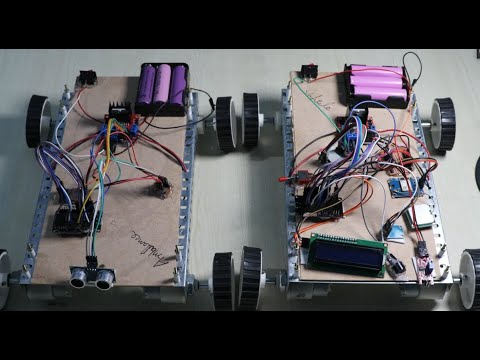
Ambulance path optimization system and emergency messenger using LORA

Category: Embedded Projects

Price: ₹ 14450 ₹ 17000 0% OFF

ABSTACT:
This project aims to develop an Ambulance Path Optimization System and Emergency Messenger using LoRa (Long Range) to enhance emergency response times and improve communication efficiency. The system utilizes LoRa technology for real-time messaging and GPS-based optimization to ensure ambulances take the fastest and least congested routes.

INTRODUCTION:
Emergency medical services (EMS) play a crucial role in saving lives by providing rapid responses to critical situations. Traffic congestion and communication delays can significantly impact the efficiency of ambulance services. This project integrates LoRa technology and GPS-based path optimization to facilitate seamless communication between ambulances, hospitals, and traffic management systems, ensuring minimal delays in emergency situations.

Problem Statements:
• The goal of the project is to detect accidents and alert the rescue team in time. •The gap between the existing systems in place and the ideal system is that automated system is used once the accident occurs which can give latitude and longitude of accident occurred area without delay. More Human life can be saved using this system.

Open Problems in Existing System :
There are several open problems in existing accident alert systems that can be improved upon:
1. The existing accident alert systems may not be entirely reliable in some situations. For instance, they may not always be able to send alerts to emergency responders due to weak signal strength or other communication issues.
2. The accuracy of the system in detecting accidents is another issue that needs improvement. False alarms can create panic and increase emergency response time, whereas failing to detect an actual accident could have serious consequences.
3. The existing accident alert systems may not be integrated with other emergency response systems. For example, they may not be able to communicate with 911 dispatch centre’s or other emergency response teams.
4. Accident alert systems rely on battery power, and their battery life may be limited. This could be problematic if an accident occurs in a remote location, and the battery runs out before an alert is sent.
5. As with any IoT device, the accident alert system is vulnerable to cyber threats, and ensuring data privacy and security is critical.
6. The existing accident alert systems may not be scalable, making it difficult to deploy them in large-scale operations.
7. Accident alert systems may be costly to implement, and the cost could be a barrier to adoption, especially in developing countries.

block-diagram

• Demo Video
• Complete project
• Full project report
• Source code
• Complete project support by online
• Lifetime access
• Execution Guidelines
• Immediate (Download)

Hardware and Software Requirements
• Hardware:
1. ESP32 module
2. LORA module
3. Ultrasonic Sensor
4. GPS Module
5. Power Supply
6. Accelerometer
7. Motor Driver
8. Buzzer
9. Vibration Sensor
10. LCD Display

• Software:
o Arduino IDE
o Embedded C
o Blynk Website

Immediate Download:
1. Synopsis
2. Rough Report
3. Software code
4. Technical support

Hardware Kit Delivery:
1. Hardware kit will deliver 4-10 working days (based on state and city)
2. Packing and shipping changes applicable (based on kit size, state ,city)

Leave a Review

Only logged-in users can leave a review.

Customer Reviews

No reviews yet. Be the first to review this product!