ABSTRACT
Voice assistants have become an essential part of modern human–computer interaction, enabling users to interact with devices using natural spoken language. Most popular voice assistants such as Google Assistant, Alexa, and Siri rely heavily on cloud-based services and continuous internet connectivity for speech recognition and command processing. While these systems offer high accuracy and advanced features, their dependency on the internet limits their usability in areas with poor network connectivity and raises serious concerns related to data privacy, security, and response latency. To address these challenges, the Offline Voice Assistant Using Raspberry Pi is designed to provide reliable voice-based interaction without requiring any internet connection.
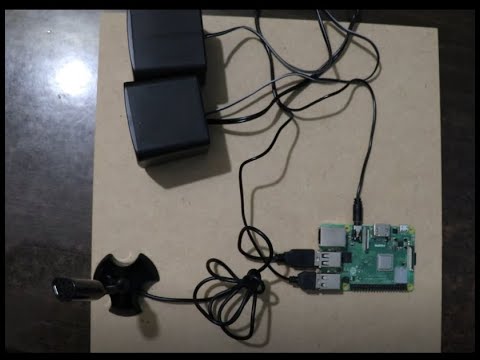
In this project, the Raspberry Pi acts as the central processing unit responsible for capturing, processing, and responding to voice commands locally. A microphone connected to the Raspberry Pi is used to capture the user’s voice input in real time. The captured audio signal is processed using offline speech recognition techniques, where spoken words are converted into text without relying on cloud services. This ensures that the system remains functional even in remote or network-restricted environments.
Once the voice input is converted into text, the system analyzes the command using predefined logic and decision-making rules programmed in Python. Based on the recognized command, the assistant performs specific actions such as answering basic queries, executing system commands, or controlling external hardware components like LEDs, relays, or home appliances. This modular approach allows the system to be easily extended with additional commands and functionalities as per user requirements.
To provide feedback to the user, the system uses an offline text-to-speech (TTS) engine that converts textual responses into audible speech. This enables natural two-way interaction between the user and the system without any internet dependency. Since all processing is performed locally on the Raspberry Pi, the system offers low-latency responses, resulting in faster and smoother user interaction compared to cloud-based solutions.
The Offline Voice Assistant Using Raspberry Pi is a cost-effective, secure, and privacy-preserving solution for voice-based control systems. By eliminating the need for cloud services, the system ensures that user data remains local, thereby reducing the risk of data leakage or unauthorized access. Additionally, the system provides uninterrupted operation, making it suitable for applications such as home automation, assistive technologies, smart offices, and educational environments.
This project demonstrates the practical implementation of offline speech recognition, embedded systems, and human–computer interaction technologies. It serves as a strong foundation for future enhancements, including integration with home automation systems, support for multiple languages, improved speech recognition accuracy, and the incorporation of advanced natural language processing techniques. Overall, the Offline Voice Assistant Using Raspberry Pi showcases an efficient and scalable approach to developing intelligent voice-controlled systems that operate independently of internet connectivity.
Introduction
Voice assistants have become an essential part of modern human–computer interaction, allowing users to communicate with devices using natural spoken language. Popular voice assistants such as Google Assistant, Amazon Alexa, and Apple Siri have transformed the way people access information and control smart devices. However, these systems rely heavily on continuous internet connectivity to process voice commands using cloud-based servers. In many real-world situations, such as rural areas, remote locations, or during network outages, reliable internet access is not always available. Additionally, the use of cloud services raises concerns related to data privacy, security, and response latency. These limitations create a strong need for an offline voice assistant that can operate independently without internet access.
The Offline Voice Assistant using Raspberry Pi is designed to recognize, process, and respond to voice commands locally without relying on cloud-based services. In this system, the Raspberry Pi acts as the main processing unit and serves as the core of the entire system. A microphone connected to the Raspberry Pi is used to capture the user’s voice input in real time. The captured audio is then processed using offline speech recognition techniques, which convert spoken commands into text directly on the device. This approach ensures that voice data is not transmitted over the internet, thereby enhancing user privacy and system security.
Once the voice input is converted into text, the system analyzes the command using predefined logic and programmed rules. Based on the recognized command, the assistant performs specific tasks such as responding to user queries, executing system-level operations, or controlling connected devices like lights, fans, or other electronic appliances. The modular design of the system allows additional commands and functionalities to be added easily, making it flexible and scalable for future use.
To provide feedback to the user, the system uses an offline text-to-speech engine that converts textual responses into audible speech. This enables natural and interactive communication between the user and the voice assistant without requiring any internet connectivity. Since all processing is performed locally on the Raspberry Pi, the system offers low-latency responses, resulting in faster execution and improved user experience compared to cloud-dependent voice assistants.

• Demo Video
• Complete project
• Full project report
• Source code
• Complete project support by online
• Lifetime access
• Execution Guidelines
• Immediate (Download)
Hardware Requirements
Raspberry Pi (any model with sufficient processing power)
USB Microphone
Speaker / Headphones
Power Supply
Connecting Cables
Software Requirements
Raspberry Pi OS
Python Programming Language
Offline Speech Recognition Library (e.g,Vosk / PocketSphinx)
Offline Text-to-Speech Engine (e.g., eSpeak / Festival)
Immediate Download:
1. Synopsis
2. Rough Report
3. Software code
4. Technical support
Hardware Kit Delivery:
1. Hardware kit will deliver 4-10 working days (based on state and city)
2. Packing and shipping changes applicable (based on kit size, state ,city)