Abstract
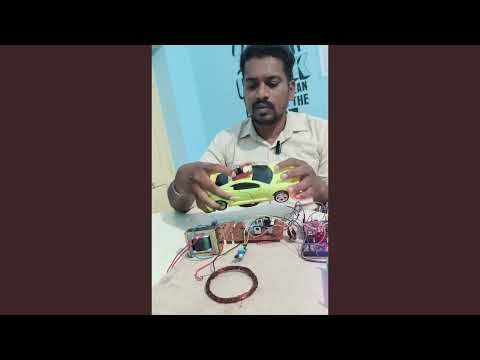
The proposed project is an intelligent EV wireless charging system using an Arduino microcontroller, wireless power transmission, IR sensor-based vehicle detection, LCD display, and a toy electric vehicle model. The system automatically starts charging when a vehicle is detected over the charging platform. Wireless power transfer is achieved using transmitter and receiver coils. When the receiver coil receives power, an LED connected to the vehicle glows, indicating charging status. The Arduino calculates charging start time, end time, total charging duration, and estimated charging cost. The LCD displays system status and charging information. This project demonstrates an automatic, contactless, and smart charging method for future electric vehicles.
Introduction
Electric Vehicles (EVs) are becoming increasingly popular because they reduce pollution and dependence on fossil fuels. However, traditional wired charging methods have disadvantages such as cable wear, electric shock risk, and inconvenience.
Wireless Power Transmission (WPT) is an advanced technology that transfers electrical energy without physical wires using electromagnetic induction. This technology can make EV charging safer, easier, and more automated.
In this project, an Arduino-based wireless EV charging system is designed. An IR sensor detects the arrival of a vehicle near the charging pad. Once detected, the transmitter coil starts transmitting power wirelessly to the receiver coil placed in the toy vehicle. The received power turns ON an LED, indicating charging. The system also calculates charging duration and charging cost automatically and displays them on an LCD screen.
This project represents a simplified prototype of future smart EV charging stations.
________________________________________
Objective
1. To design a wireless EV charging system using Arduino.
2. To detect vehicle presence automatically using an IR sensor.
3. To transfer electrical power wirelessly using inductive coupling.
4. To display charging status on an LCD.
5. To calculate charging time automatically.
6. To estimate charging cost based on charging duration.
7. To demonstrate automatic smart charging technology for EVs.
Similar projects you might like