ABSTRACT
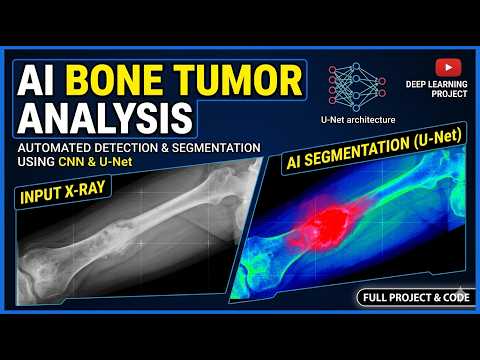
This project presents a deep learning-based system for bone tumor classification and segmentation using medical image analysis techniques. The main objective of the system is to assist in the early detection and localization of bone tumors from medical scan images. In this project, SPECT (Single Photon Emission Computed Tomography) whole-body bone scan images are used as the dataset for analysis and prediction. SPECT whole-body imaging provides detailed information about abnormal bone activity and helps identify tumor-affected regions effectively. Manual diagnosis of bone tumors from medical images is time-consuming and may lead to inaccurate interpretation due to human error and increasing workload on radiologists. To overcome these limitations, the proposed system uses artificial intelligence and deep learning techniques for automated analysis. The system combines image classification, image segmentation, and visualization methods to improve prediction accuracy and explainability. A Convolutional Neural Network (CNN) model is used to classify whether the uploaded bone image contains a tumor or is normal. Along with classification, a U-Net segmentation model is implemented to identify and highlight the affected tumor region in the image. The segmentation output helps doctors and users clearly understand the infected area from SPECT whole-body scan images. In addition, Grad-CAM visualization is integrated into the system to generate heatmaps showing important regions considered by the deep learning model during prediction. This improves transparency and interpretability of the system. The proposed application is developed using the Flask framework to provide a user-friendly web interface for image upload and prediction. The system also includes secure user authentication features such as registration and login. OpenCV and TensorFlow libraries are used for image preprocessing and deep learning implementation. The classification model predicts tumor presence with confidence scores, while the segmentation model generates binary masks and overlay images for precise localization. Noise removal and thresholding techniques are used to improve segmentation quality. The developed system reduces manual workload and supports faster diagnosis in hospitals and diagnostic centers. Experimental results show that deep learning techniques can effectively classify and localize bone tumors from SPECT whole-body scan datasets with good accuracy. Overall, the project demonstrates the importance of artificial intelligence in healthcare and provides an efficient, accurate, and explainable solution for bone tumor detection and segmentation.
INTRODUCTION
Bone tumors are one of the serious medical conditions that affect the human skeletal system and can cause severe health complications if not detected at an early stage. A bone tumor occurs when abnormal cells grow uncontrollably inside the bone tissues. These tumors may be benign or malignant depending on their severity and growth pattern. Early identification and treatment of bone tumors are very important because delayed diagnosis may lead to bone damage, pain, fractures, and in severe cases, cancer spread to other body parts. Traditionally, doctors analyze medical images such as X-rays, MRI scans, and CT scans manually to identify tumor regions. However, manual diagnosis requires expert knowledge, consumes significant time, and may sometimes produce inaccurate results due to human limitations and increasing medical workloads. Therefore, there is a growing need for intelligent automated systems that can support doctors in detecting bone tumors accurately and efficiently.
Artificial Intelligence (AI), Machine Learning (ML), and Deep Learning (DL) technologies have transformed the healthcare industry by providing advanced solutions for medical image analysis and disease prediction. Deep learning models, especially Convolutional Neural Networks (CNNs), have shown remarkable performance in image classification and object detection tasks. These models can automatically learn important features from medical images without requiring manual feature extraction. As a result, deep learning has become highly popular in medical diagnosis systems such as tumor detection, cancer classification, organ segmentation, and disease prediction. In this project, deep learning techniques are used to develop an intelligent system for bone tumor classification and segmentation.
The proposed system focuses on detecting bone tumors from medical images using a combination of classification, segmentation, and visualization techniques. The classification process determines whether the uploaded image contains a tumor or is normal. For this purpose, a CNN-based deep learning model is used to analyze image patterns and predict the output category. The model learns from large numbers of training images and improves its prediction capability through repeated training iterations. Classification helps in identifying the presence of tumors quickly and accurately.
The project is implemented using Python programming language and developed as a web application using the Flask framework. Flask is a lightweight web framework that supports easy integration of machine learning models into web interfaces. The developed application allows users to register, log in securely, upload medical images, and receive prediction results through a user-friendly interface. The application also displays segmentation masks, overlay images, and Grad-CAM heatmaps to provide detailed analysis results.
Image preprocessing plays a vital role in improving the performance of deep learning models. In this project, OpenCV is used for image preprocessing tasks such as image resizing, grayscale conversion, normalization, and noise removal. The uploaded images are resized into fixed dimensions before being passed into the deep learning models. Normalization is applied to scale pixel values between 0 and 1 for efficient model training. Noise removal techniques such as morphological operations are also used to improve segmentation quality.
In conclusion, the proposed deep learning-based bone tumor classification and segmentation system provides an intelligent, efficient, and explainable solution for medical image analysis. The integration of CNN classification, U-Net segmentation, and Grad-CAM visualization improves the overall diagnostic capability of the system. The web-based implementation using Flask makes the application easy to use and accessible. This project highlights the importance of artificial intelligence in modern healthcare and demonstrates how deep learning can assist medical professionals in disease diagnosis and treatment planning.
Block Diagram