Abstract
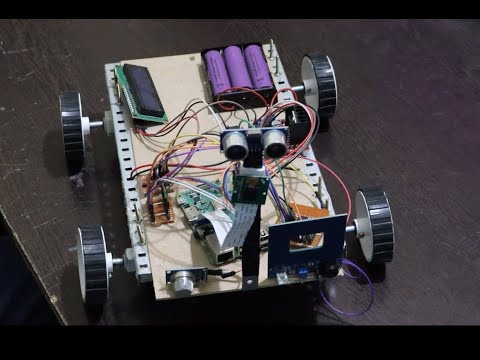
Security and surveillance have become essential components of modern infrastructure, especially in environments that require continuous monitoring such as offices, factories, schools, warehouses, and residential communities. Traditional security systems often rely on human guards, fixed CCTV cameras, and manual patrols, which may lead to delayed responses, human error, limited coverage, and higher operational costs. To address these limitations, this project introduces a fully autonomous Board Security Robot powered by the Raspberry Pi platform. The robot integrates multiple sensors and intelligent modules, enabling it to detect intrusions, hazardous environments, and suspicious objects while performing autonomous navigation. The primary goal of this project is to develop a smart robotic system capable of real-time surveillance, environmental monitoring, and automated threat detection for enhanced board or campus security applications. The robot is equipped with a Pi Camera that provides live video streaming for remote surveillance and visual detection. The camera enables continuous area monitoring and supports capturing evidence during intruder events. A set of four DC motors controlled via a motor driver allows the robot to move smoothly across different surfaces and patrol designated paths. For obstacle avoidance and autonomous navigation, an ultrasonic sensor is integrated to measure distance and prevent collisions, ensuring the robot can move safely in dynamic environments. To detect dangerous gases, smoke, or harmful chemical leaks, an MQ gas sensor is used, providing early alerts for potential hazards. A metal detector sensor is included to identify metallic objects or potential weapons, contributing to enhanced security in restricted areas. The Raspberry Pi acts as the central processing unit, collecting data from all sensors and executing decision-making algorithms. The robot can operate in both manual control mode (via Wi-Fi, web interface, or mobile app) and autonomous mode, where it follows preprogrammed paths and reacts to sensor inputs. The system supports real-time video feed, sensor alerts, and activity logs, which can be monitored remotely from a control room. This approach minimizes human effort while ensuring continuous monitoring even in low-visibility or high-risk zones. The integration of multiple sensors makes the robot versatile and suitable for detecting intruders, fire hazards, toxic gases, and unauthorized metallic objects. Overall, the Board Security Robot offers a low-cost, scalable, and efficient alternative to traditional surveillance systems. By combining robotics, IoT, and embedded systems, the project demonstrates how automated security solutions can improve safety, reduce manpower dependency, and enhance response time.
Introduction
Security has become a critical concern in modern society, especially in places requiring constant supervision such as schools, industrial areas, government offices, residential communities, and commercial organizations. Traditional security methods—such as manual patrolling, CCTV surveillance, and static guards—have limitations in terms of coverage, accuracy, and real-time responsiveness. Human guards can get tired, distracted, or may not be able to monitor large areas effectively for long periods. Fixed CCTV cameras also suffer from blind spots and cannot physically approach suspicious areas or objects. These challenges have created a growing demand for intelligent, mobile, and automated security solutions that can offer continuous monitoring and rapid response capabilities. Robotics and embedded systems now play a major role in meeting this demand by enabling smart, autonomous, and cost-effective surveillance mechanisms.
In this context, the Board Security Robot developed in this project is designed to act as a mobile guard capable of monitoring and securing board premises or closed campuses. Built using a Raspberry Pi, the robot integrates real-time data collection, decision-making, and wireless communication, making it far more flexible than conventional surveillance methods. Equipped with a Pi Camera, the robot provides live video streaming, enabling supervisors to visually inspect any area remotely. Its mobility is supported by four DC motors controlled through a motor driver module, allowing it to patrol various locations without human intervention. The integration of an ultrasonic sensor enables the robot to detect obstacles and navigate safely, reducing the risk of collisions during autonomous movement.
To enhance security capabilities, the robot also includes advanced detection sensors. An MQ gas sensor allows the system to identify the presence of dangerous gases, smoke, or chemical leaks, making it suitable for monitoring industrial environments or enclosed spaces. Additionally, a metal detector sensor is incorporated to recognize metallic objects, which may indicate the presence of weapons or unauthorized tools. These sensors collectively enable the robot to alert the system whenever abnormal environmental conditions or security threats are detected. The Raspberry Pi processes all these sensor inputs and transmits the information to a remote user interface, allowing round-the-clock monitoring using a mobile device, laptop, or control room computer.
The Board Security Robot represents a step toward intelligent, automated security systems that combine robotics, IoT, and embedded technologies. Its ability to move freely, capture live video, and respond to various threats makes it a powerful alternative to conventional security practices. As threats become more complex and environments demand more sophisticated monitoring systems, such robotic solutions offer improved accuracy, reduced human effort, and enhanced operational efficiency.
Block Diagram