Abstract
Road accidents are one of the leading causes of fatalities worldwide, emphasizing the urgent need for intelligent systems that can automatically detect and classify accident events in real time. This project presents an advanced Accident Detection System that integrates Convolutional Neural Networks (CNNs) and YOLOv5 object detection to identify and categorize different types of vehicular collisions from video footage. The proposed framework employs a ResNet50-based CNN model, trained from scratch using annotated accident frames, to classify the nature of accidents such as rear-end, side, or frontal collisions. Simultaneously, a customized YOLOv5 model is used to detect moving vehicles, pedestrians, and crash patterns with high precision. The system operates in real time with video input, analyzing frames and generating an immediate visual and audio alert upon detecting an accident event. A Flask -based graphical interface is developed for user interaction, allowing seamless video selection and monitoring. Experimental results demonstrate that the hybrid model achieves high accuracy and robustness even in low-light and dynamic environments. The proposed system can be deployed for smart surveillance, traffic monitoring, and emergency response automation, effectively enhancing road safety and reducing accident response time.
Keywords
Accident Detection, YOLOv5, Convolutional Neural Network (CNN), ResNet50, Computer Vision, Deep Learning, Real-Time Detection, Tkinter GUI, Smart Surveillance.
Introduction
Road safety has become a critical global issue, with road accidents ranking among the top causes of injury and death worldwide. According to the World Health Organization (WHO), nearly 1.3 million people lose their lives annually due to traffic accidents, while millions more suffer long-term disabilities. These alarming figures highlight the need for effective and timely accident detection systems that can assist in minimizing fatalities by ensuring rapid emergency response. In most accident scenarios, delays in reporting and lack of immediate assistance significantly increase the severity of outcomes. Hence, the development of automated, intelligent systems capable of detecting accidents in real time has become a vital area of research in computer vision and artificial intelligence.
Recent advancements in deep learning, computer vision, and edge computing have enabled the design of intelligent surveillance systems that can automatically analyze visual data and make accurate predictions. Among various technologies, Convolutional Neural Networks (CNNs) and object detection models such as YOLO (You Only Look Once) have demonstrated exceptional capabilities in visual feature extraction and object localization. These models provide the foundation for real-time accident monitoring systems that can analyze video feeds from traffic cameras, identify collisions, and generate timely alerts without human intervention.
Traditional accident detection methods rely on manual observation, sensor-based data collection, or vehicle telemetry systems. However, these approaches often suffer from limited accuracy, high cost, and dependency on infrastructure. In contrast, vision-based methods are more flexible, scalable, and capable of operating in diverse environmental conditions. With the availability of powerful GPUs and efficient neural network architectures, computer vision-based accident detection has become a practical and efficient solution for intelligent transportation systems.
This project presents a hybrid deep learning framework that combines ResNet50-based CNN and YOLOv5 models to perform both accident classification and collision detection. The proposed system aims to identify accident types—such as rear-end collisions, side collisions, and frontal crashes—while simultaneously detecting objects involved in the scene, such as vehicles, pedestrians, and road barriers. The CNN model is trained from scratch on a custom dataset of annotated accident frames to classify the type of accident, while YOLOv5 is fine-tuned using labeled video datasets to detect dynamic accident features. Together, these models provide a comprehensive understanding of the traffic scenario.
Objectives
The primary goal of this project is to design and implement an intelligent accident detection system that can automatically identify, classify, and alert accident events in real time using advanced deep learning and computer vision techniques. To achieve this, the following specific objectives have been defined:
1. To develop a robust deep learning framework for automatic accident detection
The foremost objective is to design a hybrid model that combines Convolutional Neural Networks (CNNs) and YOLOv5 (You Only Look Once version 5) architectures for precise and real-time accident detection. CNNs are employed for feature extraction and accident type classification, while YOLOv5 is used for object detection and localization within video frames. This combination enables the system to effectively recognize vehicles, pedestrians, and collision patterns across dynamic environments.
2. To classify different types of vehicular accidents
Most existing systems only detect the occurrence of an accident without understanding its nature. This project aims to classify various accident types, such as rear-end collisions, side impacts, and head-on crashes, using a CNN-based model trained on a diverse dataset. This classification capability can assist emergency responders in assessing the severity of the incident and deploying appropriate resources.
3. To enable real-time processing of live or recorded video streams
Another crucial objective is to ensure real-time video analysis without significant delay. The system should continuously process live video feeds from roadside cameras or traffic surveillance systems and immediately detect accident events. This will allow faster incident response, minimize human monitoring efforts, and support automated decision-making in intelligent transportation systems.
4. To design a user-friendly graphical interface
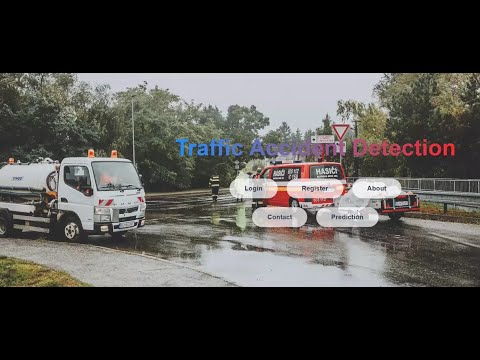
To make the system accessible to non-technical users and traffic authorities, a Tkinter-based GUI is integrated into the system. The interface allows users to upload video files or access live camera feeds, view detection results visually, and receive instant audio-visual alerts whenever an accident
Block Diagram
H/W SYSTEM CONFIGURATION
1) Processor - Pentium –III
2) Speed - 1.1 GHz
3) RAM - 1GB (min)
4) Hard Disk - 200 GB
5) Floppy Drive - 1.44 MB
6) Key Board - Standard Windows Keyboard
7) Mouse - Two or Three Button Mouse
8) Monitor - SVGA
Requirement Specification
Software requirement
The development of the Electronics Recommendation Assistant requires a robust software environment to ensure seamless integration of conversational AI with a product recommendation system. The application is implemented using Python 3.11, which provides the core programming environment and supports the integration of advanced libraries. The Flask web framework serves as the backbone for building the web application, enabling lightweight, scalable, and flexible interaction between the client and server. For artificial intelligence and natural language processing, the system integrates the Google Gemini API through the google-generativeai Python library, which allows the chatbot to understand user queries and respond in a natural conversational manner. The backend database is implemented using MySQL, which provides efficient data storage, retrieval, and management of structured product information. Additionally, a JSON dataset is utilized to store laptop and smartphone specifications, allowing easy filtering and retrieval based on product type, designation, and budget. Various supporting Python libraries such as Werkzeug (for security and authentication), difflib (for similarity matching in queries), and os/json modules (for data handling) are employed to enhance system efficiency. The web interface is designed using HTML, CSS, and JavaScript, integrated within Flask templates to provide an interactive user experience. To support deployment and testing, the project requires a stable Windows or Linux operating system with compatible package managers like pip for library installations. Overall, the combination of Flask, Gemini API, MySQL, and Python libraries provides a comprehensive software stack for building a reliable, scalable, and user-friendly recommendation assistant.