Abstract
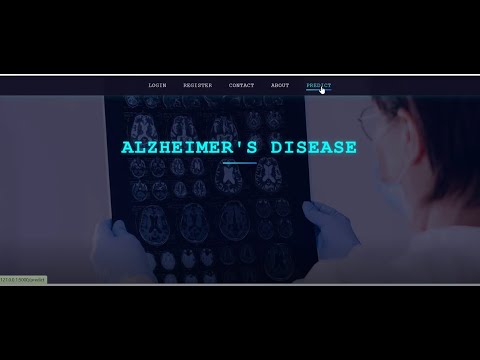
Alzheimer’s disease is a progressive neurodegenerative disorder that gradually impairs memory, cognition, and functional ability. Timely detection plays a crucial role in clinical decision-making, yet traditional diagnosis depends on manual MRI interpretation, which is subjective, slow, and requires expert radiological skills. This project proposes an automated Alzheimer detection framework using a Convolutional Neural Network (CNN) trained on MRI brain images. The system preprocesses input images, extracts discriminative spatial features, and classifies them into Normal or Alzheimer-affected categories. The trained model is deployed through two user-friendly interfaces: a Flask-based web application for online screening and a Tkinter desktop GUI for offline use. Both environments ensure consistent inference, rapid prediction, and simple interaction suitable for clinical and non-clinical contexts. The proposed approach increases diagnostic accuracy, reduces dependence on manual analysis, and improves accessibility for early-stage Alzheimer identification.
Keywords: Alzheimer’s Disease, Deep Learning, Convolutional Neural Network, MRI Classification, Flask Application, Tkinter GUI, Medical Image Analysis, Automated Diagnosis.
Introduction
Alzheimer’s disease (AD) is the most common cause of dementia and is characterised by progressive synaptic loss, accumulation of amyloid-β plaques and tau tangles, and measurable structural and functional brain changes long before clinical symptoms become disabling. Structural MRI captures macroscopic patterns of atrophy — notably hippocampal shrinkage, medial temporal lobe degeneration and cortical thinning — that correlate with disease stage and cognitive decline. Modern neuroimaging studies therefore treat MRI-derived features as essential biomarkers for early detection and prognosis. Large multicentre longi tudinal repositories such as the Alzheimer’s Disease Neuroimaging Initiative (ADNI) and OASIS provide standardized MRI volumes, clinical scores and follow-up labels; these datasets underpin most contemporary AI studies and enable comparisons across methods.
Recent years have seen deep learning — especially convolutional neural networks (CNNs) — supplant handcrafted feature pipelines in MRI-based AD classification. Surveys of the field show consistent themes: (1) 3D volumetric models can exploit full spatial context but require more data and compute; (2) slice-based 2D CNNs or hybrid CNN+sequence models (e.g., CNN features passed to RNN/transformer layers) offer strong trade-offs between accuracy and practicality; and (3) transfer learning and careful data augmentation are critical when labeled medical datasets are limited. Reviews also emphasize that multi-modal inputs (MRI + PET + clinical scores) typically yield better clinical performance than single-modality models, though they raise data-harmonization and missing-modality challenges.
Objectives
The major objectives of the project are:
1. To design and develop a deep learning–based Alzheimer detection system using MRI images.
2. To construct a CNN model capable of extracting spatial features and performing binary classification.
3. To implement preprocessing techniques that normalize and standardize MRI inputs.
4. To deploy the trained model through a Flask web application with secure authentication and image upload facilities.
5. To develop a Tkinter-based desktop application enabling offline Alzheimer detection.
6. To evaluate the system using accuracy, loss, confusion matrix, sensitivity, and specificity.
7. To ensure the framework is scalable, interpretable, and user-friendly for diverse use environments.
Block Diagram
SOFTWARE AND HARDWARE REQUIREMENTS
Software Requirements
The software environment for the Alzheimer Disease Detection System is built primarily on the Python 3.x programming ecosystem due to its extensive support for scientific computing, deep learning, and rapid application development. The system relies on TensorFlow and its high-level API Keras to construct, train, and deploy the Convolutional Neural Network (CNN), enabling efficient tensor computation and GPU-accelerated model execution. Supporting libraries such as NumPy and Pandas manage numerical arrays and dataset handling, while OpenCV and Pillow (PIL) are employed for MRI image preprocessing, enhancement, resizing, and conversion into machine-readable formats. For deployment, the Flask web framework facilitates server-side model inference, user authentication, image uploads, and real-time result rendering through dynamic HTML templates, whereas Tkinter provides a lightweight, offline-capable graphical interface for standalone desktop usage. SQLite3 serves as the integrated database system for securely storing user credentials and interaction logs without requiring an external server. Additional tools such as Matplotlib and Scikit-Learn assist in visualizing model performance metrics and generating diagnostic evaluation plots. Development environments including Jupyter Notebook and Visual Studio Code support iterative experimentation, debugging, and modular code organization. Together, these software components form a cohesive ecosystem that enables seamless model development, deployment, and user interaction.
Hardware Requirements
The Alzheimer Disease Detection System requires a stable and moderately powerful hardware configuration to ensure efficient preprocessing of MRI images, smooth deep learning inference, and reliable operation of both web and desktop interfaces. A multi-core processor such as an Intel i5/i7 or AMD Ryzen series is recommended to handle concurrent tasks including data loading, user interaction, and backend computation. Although the trained CNN model can run on a CPU during inference, the training phase benefits substantially from a CUDA-enabled NVIDIA GPU (GTX or RTX series), which accelerates convolution operations and reduces overall training time. The system should ideally have a minimum of 8 GB RAM to manage MRI datasets, store intermediate processing variables, and run the deep learning model without latency; however, 16 GB RAM provides a smoother multitasking experience, especially during model development. Approximately 20–30 GB of free storage is required to store MRI datasets, trained model weights, user-uploaded images, logs, and essential software libraries. A modern operating system such as Windows 10/11, Ubuntu Linux, or macOS ensures compatibility with TensorFlow, Flask, and other required dependencies. Additionally, a high-resolution display is beneficial for viewing MRI images clearly during testing, making the system suitable for clinical review and academic demonstration.